Nigst, Lorenz, Maxim Romanov, Sarah Bowen Savant, Masoumeh Seydi, and Peter Verkinderen. OpenITI: A Machine-Readable Corpus of Islamicate Texts, Primary Version. Version 2025.1.9. Zenodo, 2026. doi.org/10.5281/zenodo.18613982
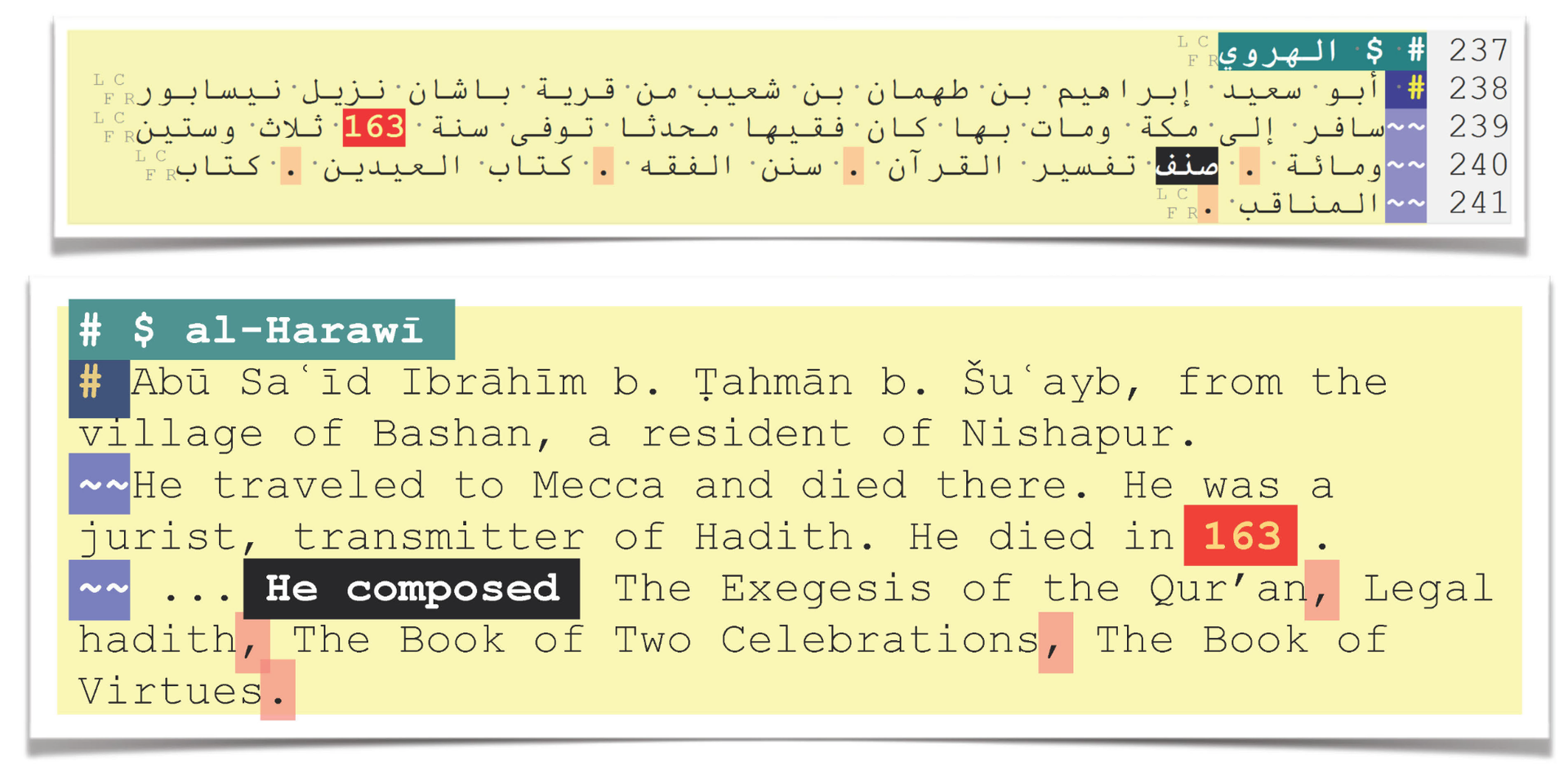
onomastic section; birth [date &] place; teachers, students, contribution, miscellaneous facts, death date & place, reaction of the community
Richness of Onomastics
ʿAbd al-Raḥmãn b. ʿAlī b. Muḥammad b. ʿUbayd Allãh b. ʿAbd Allãh b. Ḥamādá b. Muḥammad b. Jaʿfar b. ʿAbd Allãh b. al-Qāsim b. al-Naḍar b. al-Qāsim b. Muḥammad b. ʿAbd Allãh b. ʿAbd al-Raḥmãn b. al-Qāsim b. Muḥammad b. Abī Bakr al-Ṣiddīq (may God be pleased with him!) al-Qurašī al-Taymī al-Bakrī al-Baġdādī al-Ḥāfiẓ al-Mufassir al-Ḥanbalī al-Wāʿiẓ al-Ṣaffār, Jamāl al-Dīn, Abū al-Faraj, known as Ibn al-Jawzī (d. 597/1201 CE)
Traditional Arabic Name: 1. Lineage (nasabنسب)
ʿAbd al-Raḥmãn b.ʿAlīb.Muḥammadb.ʿUbayd Allãhb.ʿAbd Allãhb.Ḥamādáb.Muḥammadb.Jaʿfarb.ʿAbd Allãhb.al-Qāsimb.al-Naḍarb.al-Qāsimb.Muḥammadb.ʿAbd Allãhb.ʿAbd al-Raḥmãnb.al-Qāsimb.Muḥammadb.AbīBakral-Ṣiddīq(may God be pleased with him!) al-Qurašī al-Taymī al-Bakrī al-Baġdādī al-Ḥāfiẓ al-Mufassir al-Ḥanbalī al-Wāʿiẓ al-Ṣaffār, Jamāl al-Dīn, Abū al-Faraj, known as Ibn al-Jawzī (d. 597/1201 CE)
Traditional Arabic Name: 2. Given name (ismاسم)
ʿAbd al-Raḥmãn b. ʿAlī b. Muḥammad b. ʿUbayd Allãh b. ʿAbd Allãh b. Ḥamādá b. Muḥammad b. Jaʿfar b. ʿAbd Allãh b. al-Qāsim b. al-Naḍar b. al-Qāsim b. Muḥammad b. ʿAbd Allãh b. ʿAbd al-Raḥmãn b. al-Qāsim b. Muḥammad b. Abī Bakr al-Ṣiddīq (may God be pleased with him!) al-Qurašī al-Taymī al-Bakrī al-Baġdādī al-Ḥāfiẓ al-Mufassir al-Ḥanbalī al-Wāʿiẓ al-Ṣaffār, Jamāl al-Dīn, Abū al-Faraj, known as Ibn al-Jawzī (d. 597/1201 CE)
Traditional Arabic Name: 3. “Father of …” (kunyaŧكنية)
ʿAbd al-Raḥmãn b. ʿAlī b. Muḥammad b. ʿUbayd Allãh b. ʿAbd Allãh b. Ḥamādá b. Muḥammad b. Jaʿfar b. ʿAbd Allãh b. al-Qāsim b. al-Naḍar b. al-Qāsim b. Muḥammad b. ʿAbd Allãh b. ʿAbd al-Raḥmãn b. al-Qāsim b. Muḥammad b. AbīBakr al-Ṣiddīq (may God be pleased with him!) al-Qurašī al-Taymī al-Bakrī al-Baġdādī al-Ḥāfiẓ al-Mufassir al-Ḥanbalī al-Wāʿiẓ al-Ṣaffār, Jamāl al-Dīn, Abūal-Faraj, known as Ibn al-Jawzī (d. 597/1201 CE)
Traditional Arabic Name: 4. Title, nickname (laqabلقب)
ʿAbd al-Raḥmãn b. ʿAlī b. Muḥammad b. ʿUbayd Allãh b. ʿAbd Allãh b. Ḥamādá b. Muḥammad b. Jaʿfar b. ʿAbd Allãh b. al-Qāsim b. al-Naḍar b. al-Qāsim b. Muḥammad b. ʿAbd Allãh b. ʿAbd al-Raḥmãn b. al-Qāsim b. Muḥammad b. Abī Bakr al-Ṣiddīq (may God be pleased with him!) al-Qurašī al-Taymī al-Bakrī al-Baġdādī al-Ḥāfiẓ al-Mufassir al-Ḥanbalī al-Wāʿiẓ al-Ṣaffār, Jamālal-Dīn, Abū al-Faraj, known as Ibn al-Jawzī (d. 597/1201 CE)
Traditional Arabic Name: 5. “Byname” (šuhraŧشهرة)
ʿAbd al-Raḥmãn b. ʿAlī b. Muḥammad b. ʿUbayd Allãh b. ʿAbd Allãh b. Ḥamādá b. Muḥammad b. Jaʿfar b. ʿAbd Allãh b. al-Qāsim b. al-Naḍar b. al-Qāsim b. Muḥammad b. ʿAbd Allãh b. ʿAbd al-Raḥmãn b. al-Qāsim b. Muḥammad b. Abī Bakr al-Ṣiddīq (may God be pleased with him!) al-Qurašī al-Taymī al-Bakrī al-Baġdādī al-Ḥāfiẓ al-Mufassir al-Ḥanbalī al-Wāʿiẓ al-Ṣaffār, Jamāl al-Dīn, Abū al-Faraj, known as Ibn al-Jawzī (d. 597/1201 CE)
Traditional Arabic Name: 6. Descriptors (nisbaŧنسبة)
ʿAbd al-Raḥmãn b. ʿAlī b. Muḥammad b. ʿUbayd Allãh b. ʿAbd Allãh b. Ḥamādá b. Muḥammad b. Jaʿfar b. ʿAbd Allãh b. al-Qāsim b. al-Naḍar b. al-Qāsim b. Muḥammad b. ʿAbd Allãh b. ʿAbd al-Raḥmãn b. al-Qāsim b. Muḥammad b. Abī Bakr al-Ṣiddīq (may God be pleased with him!)al-Qurašīal-Taymīal-Bakrīal-Baġdādīal-Ḥāfiẓal-Mufassiral-Ḥanbalīal-Wāʿiẓal-Ṣaffār, Jamāl al-Dīn, Abū al-Faraj, known as Ibn al-Jawzī (d. 597/1201 CE)
Traditional Arabic Name: Descriptors (nisbaŧنسبة)
al-Qurašī
of the tribe of Qurayš (tribal)
al-Taymī
of the clan of Taym (tribal)
al-Bakrī
of descent from Abū Bakr al-Ṣiddīq (ancestral)
al-Baġdādī
of the city of Baġdād (geographical)
al-Ḥāfiẓ
“Preserver”, master of ḥadīṯ (religious specialization)
al-Mufassir
exegete of the Qurʾān (religious specialization)
al-Ḥanbalī
jurist of the Ḥanbalī legal school (religious affiliation)
al-Wāʿiẓ
public preacher (religious specialization)
al-Ṣaffār
coppersmith (occupational, familial)
al-Jawzī
“of the man with the nut tree” (ancestral)
Biographical Collections: a typical biography
al-Ḏahabī and his Tārīḫ al-islām
Šams al-dīn al-Ḏahabī (d. 748/1348): historian, ḥadīṯ scholar, biographer.
Tārīḫ al-islām — a universal chronicle-cum-biographical collection covering seven centuries of Islamic history (1–700 AH / 622–1301 CE), organized decade by decade.
c. 30,000 biographies
c. 3 million words
Two modern editions: 50 vols. (Tadmurī) and 16 vols. (Maʿrūf)
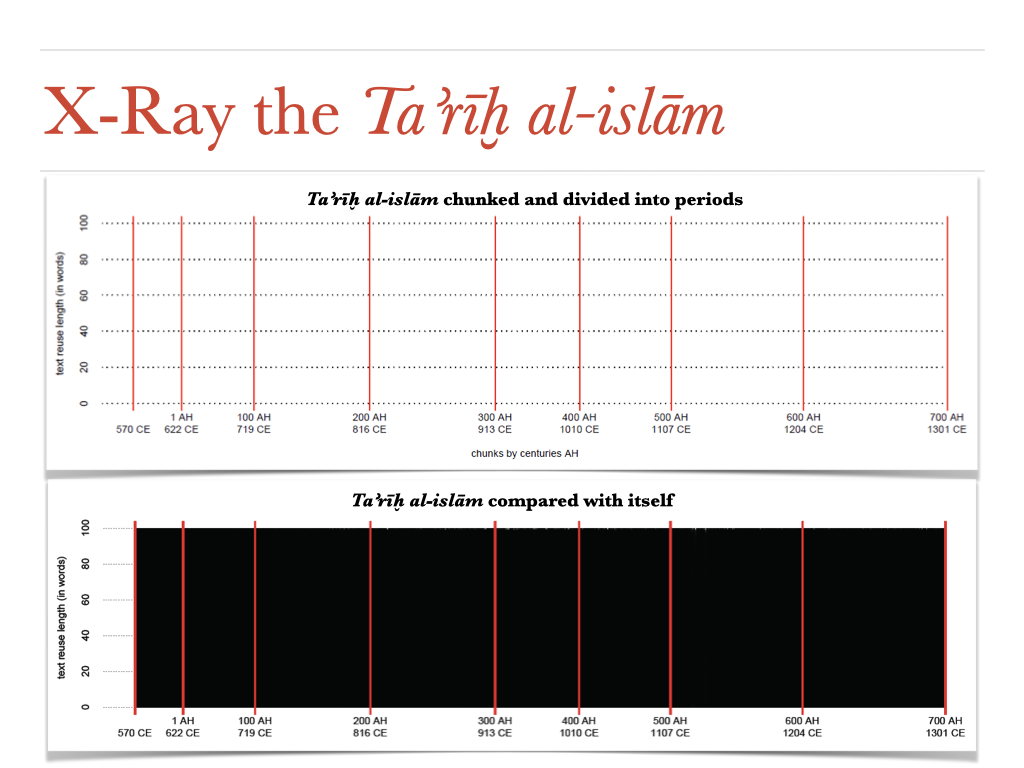
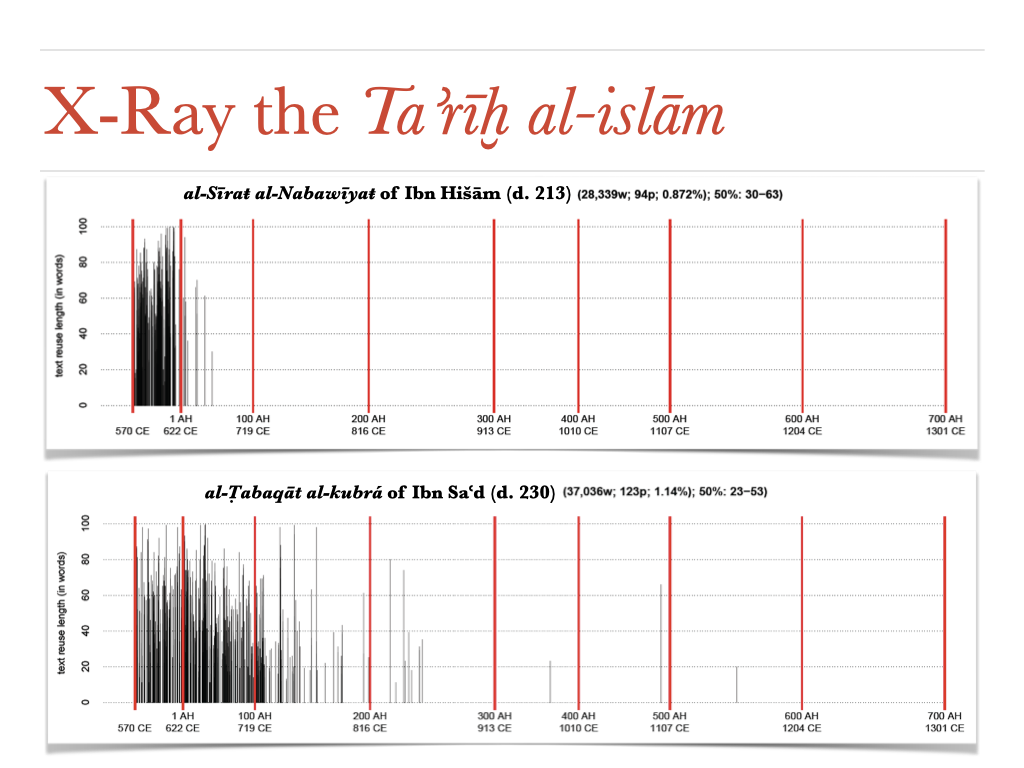
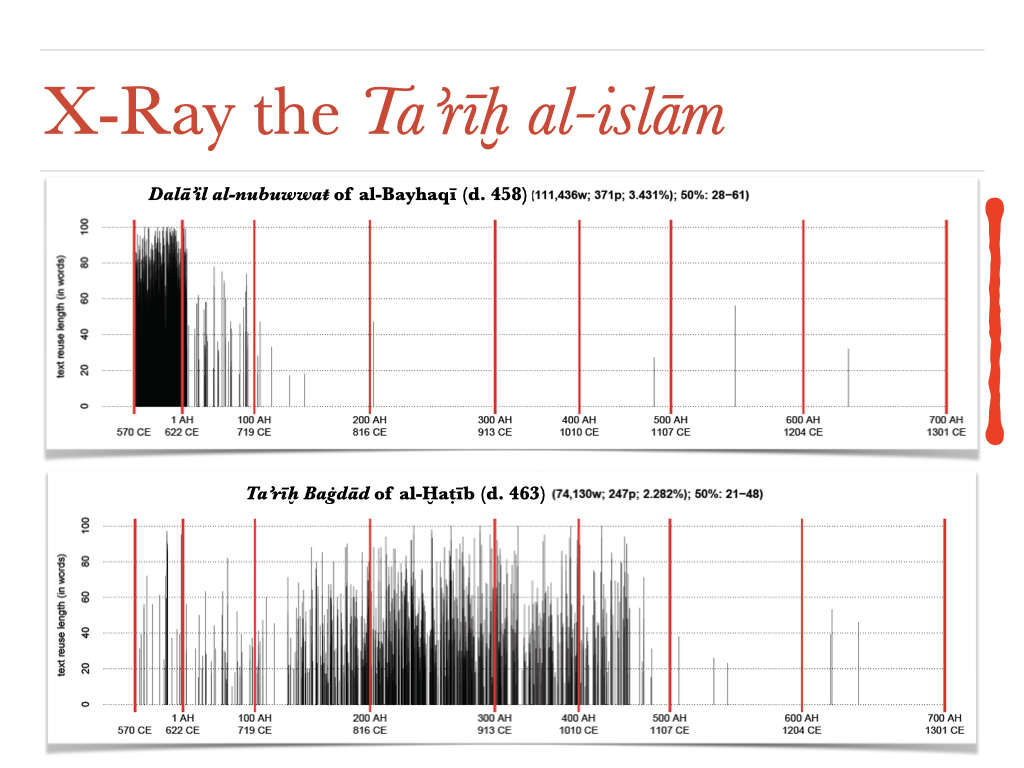
Built largely from earlier sources — an ideal test case for text-reuse detection at scale.
Biographies into Data Points
Dates → graphs
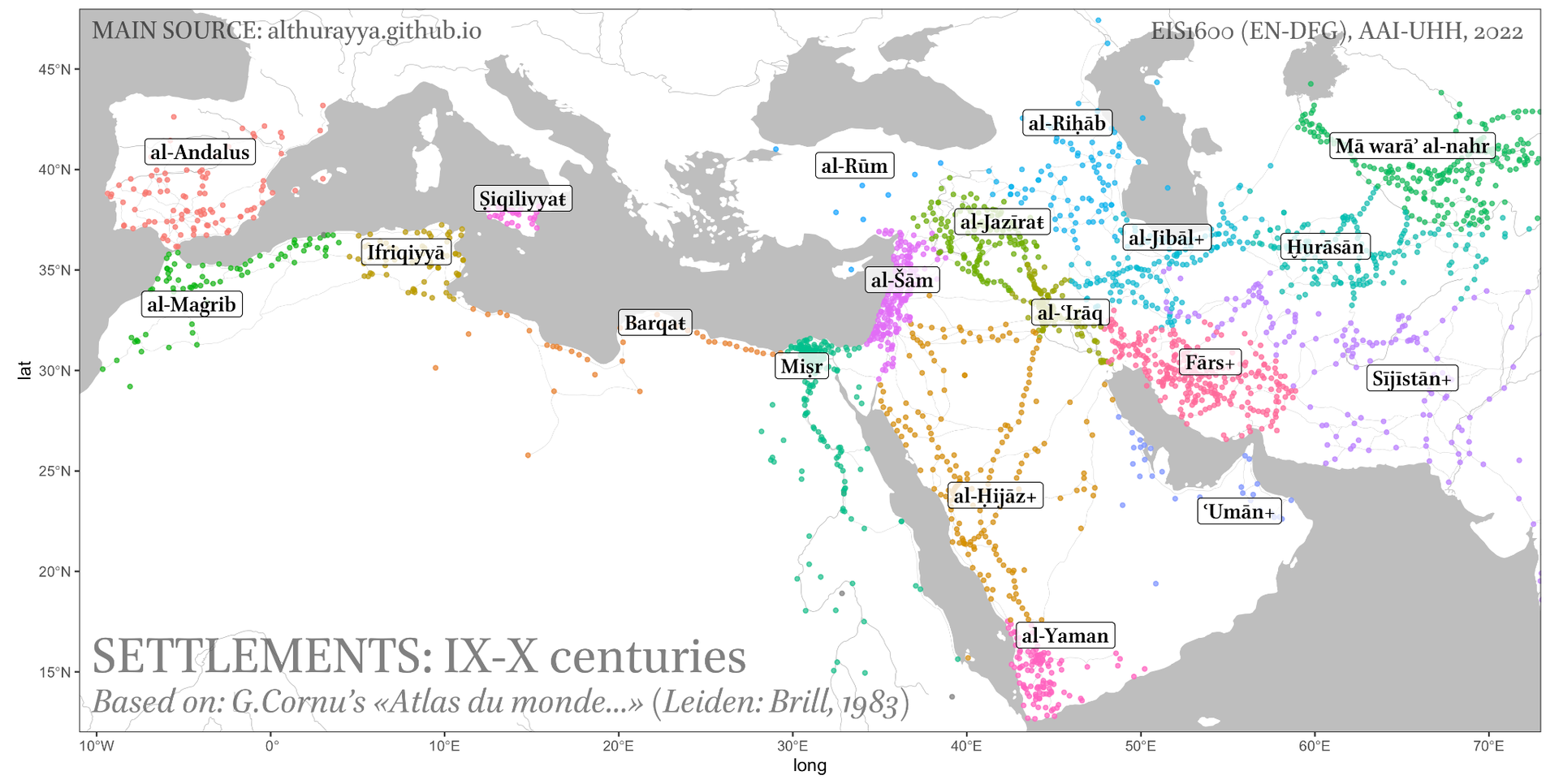
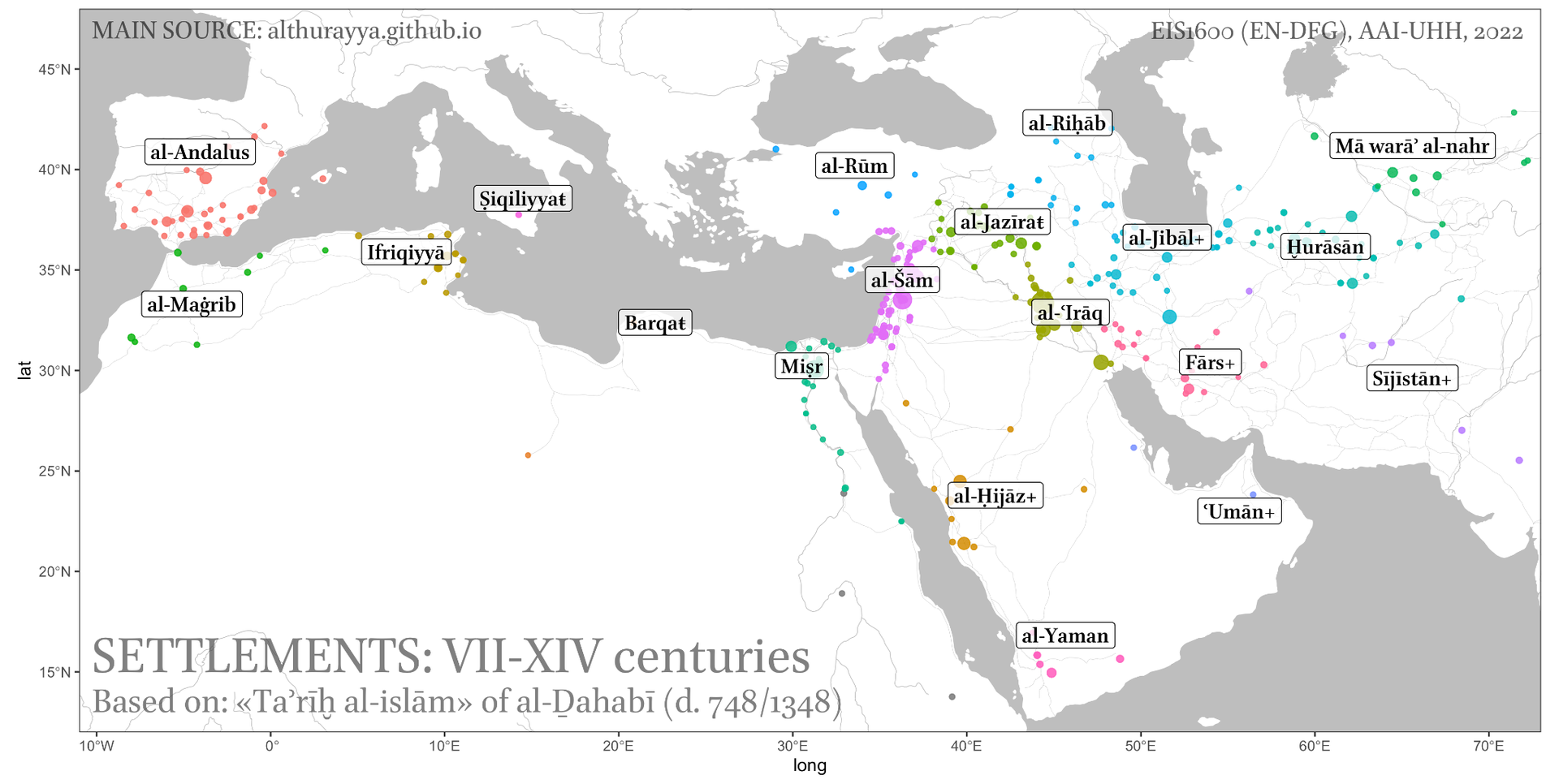
Places (explicit toponyms or toponymic nisbaŧs) → maps
Places + Dates → chronological maps
Social markers (nisbaŧs) + Dates → social graphs
Social markers (nisbaŧs) + Dates + Places → social chronological maps
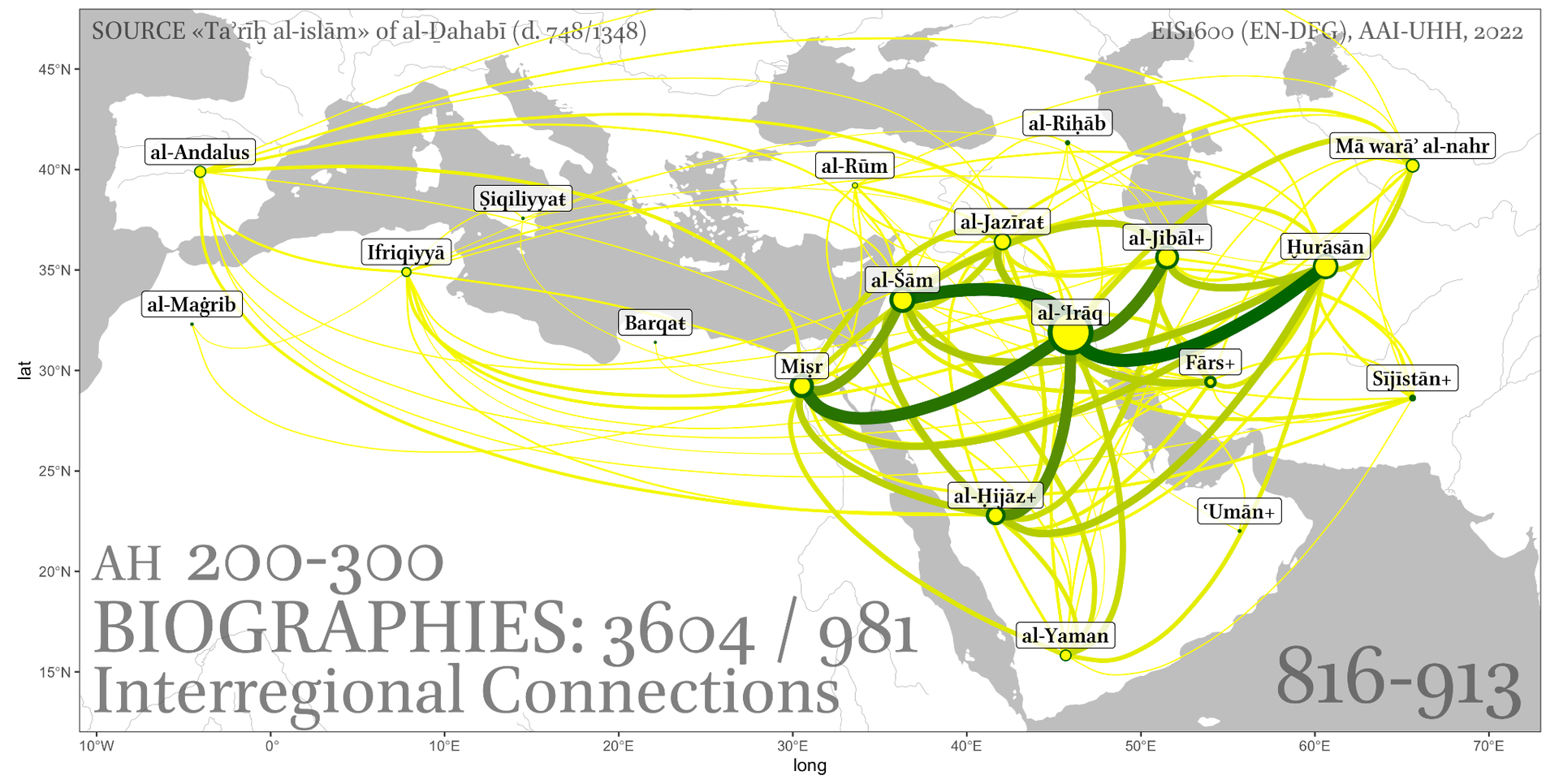
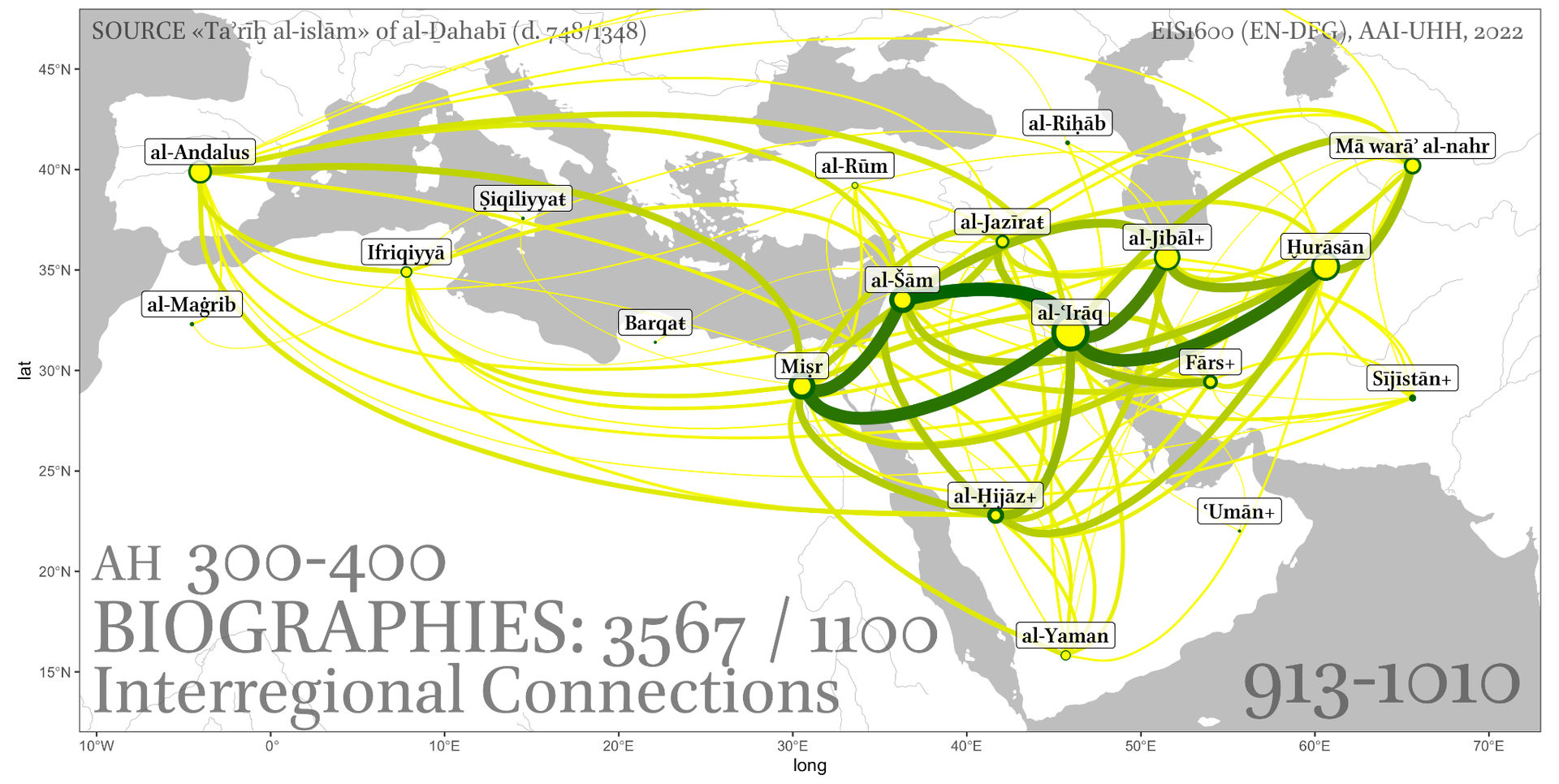
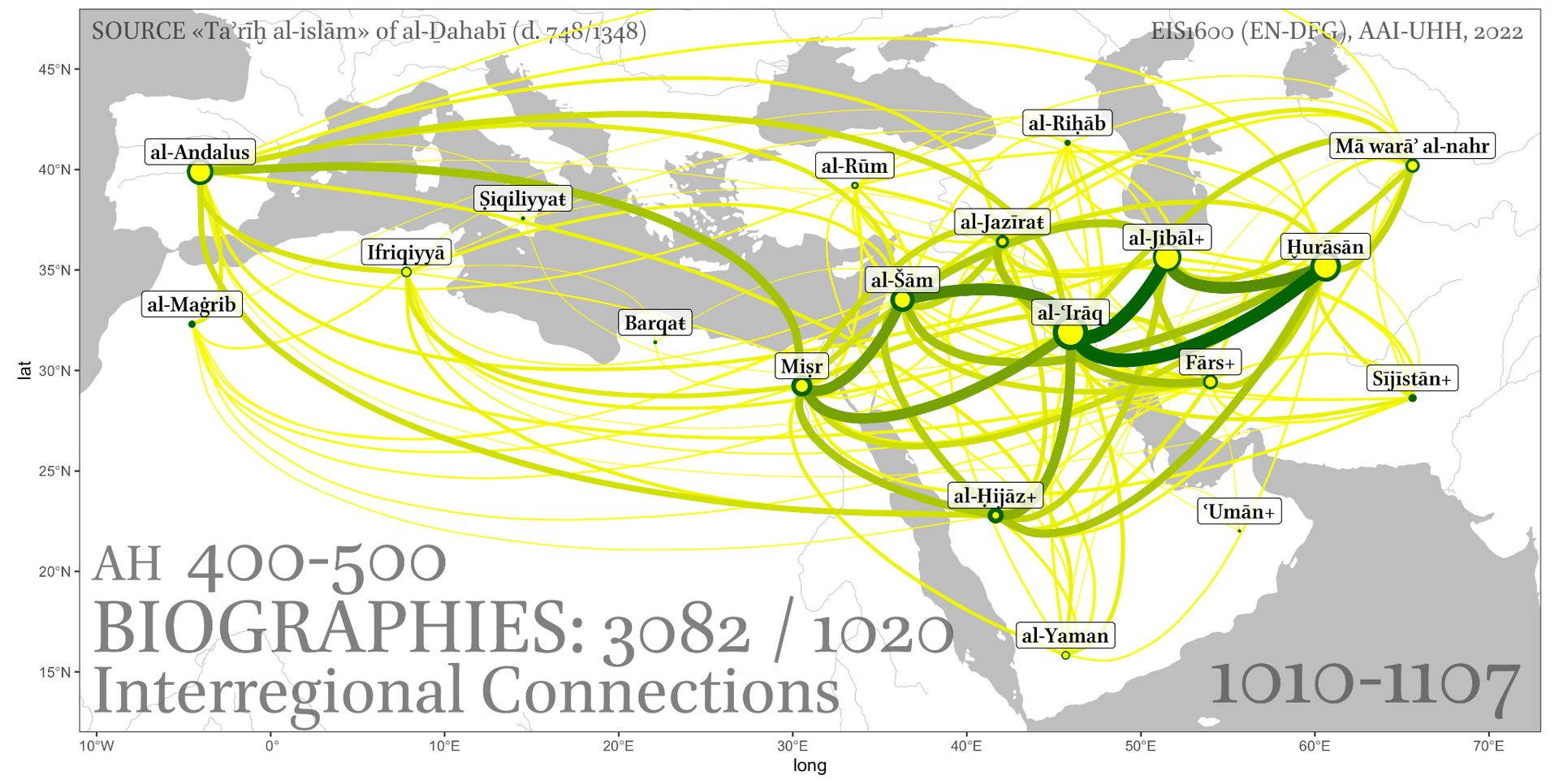
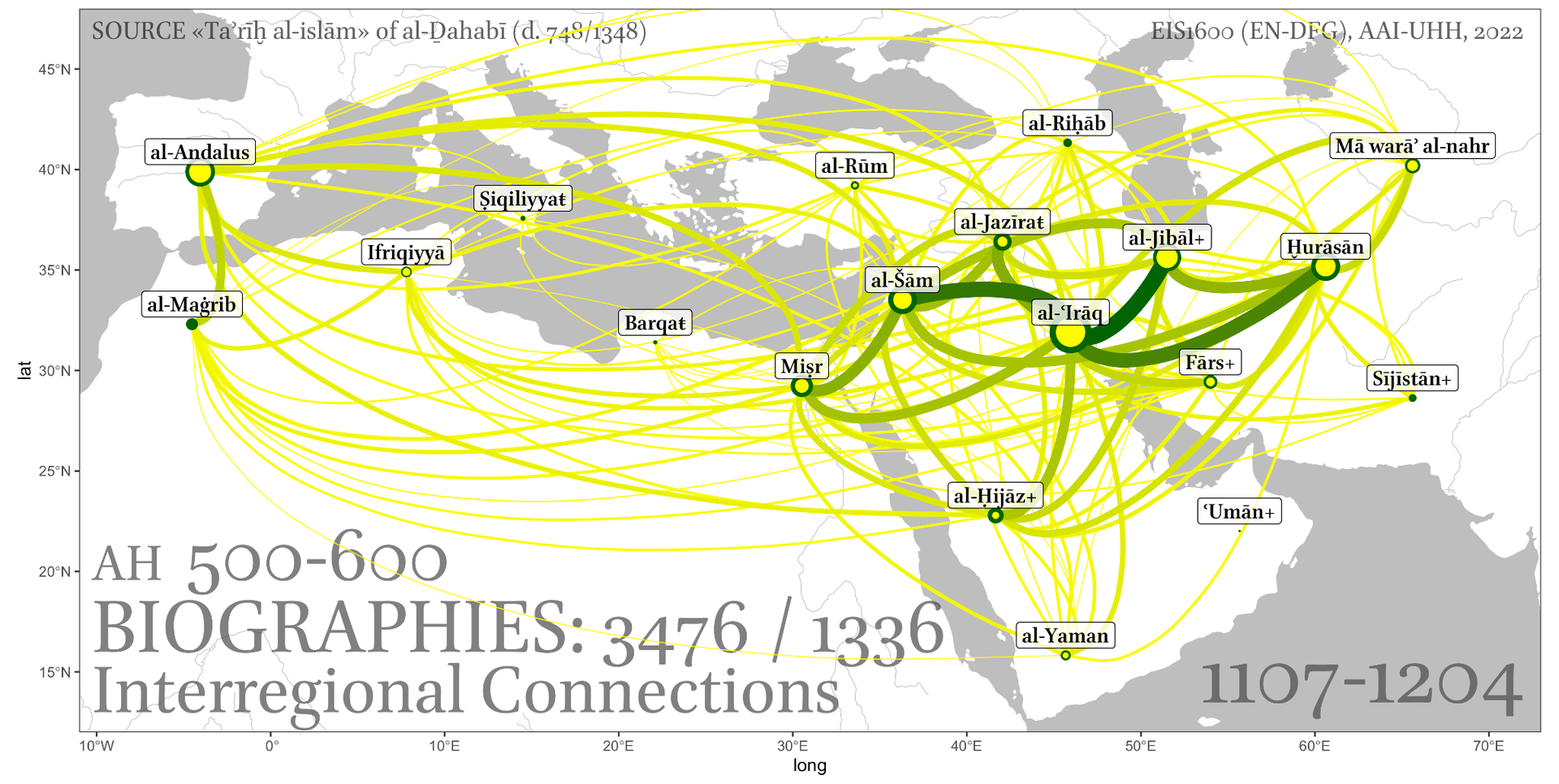
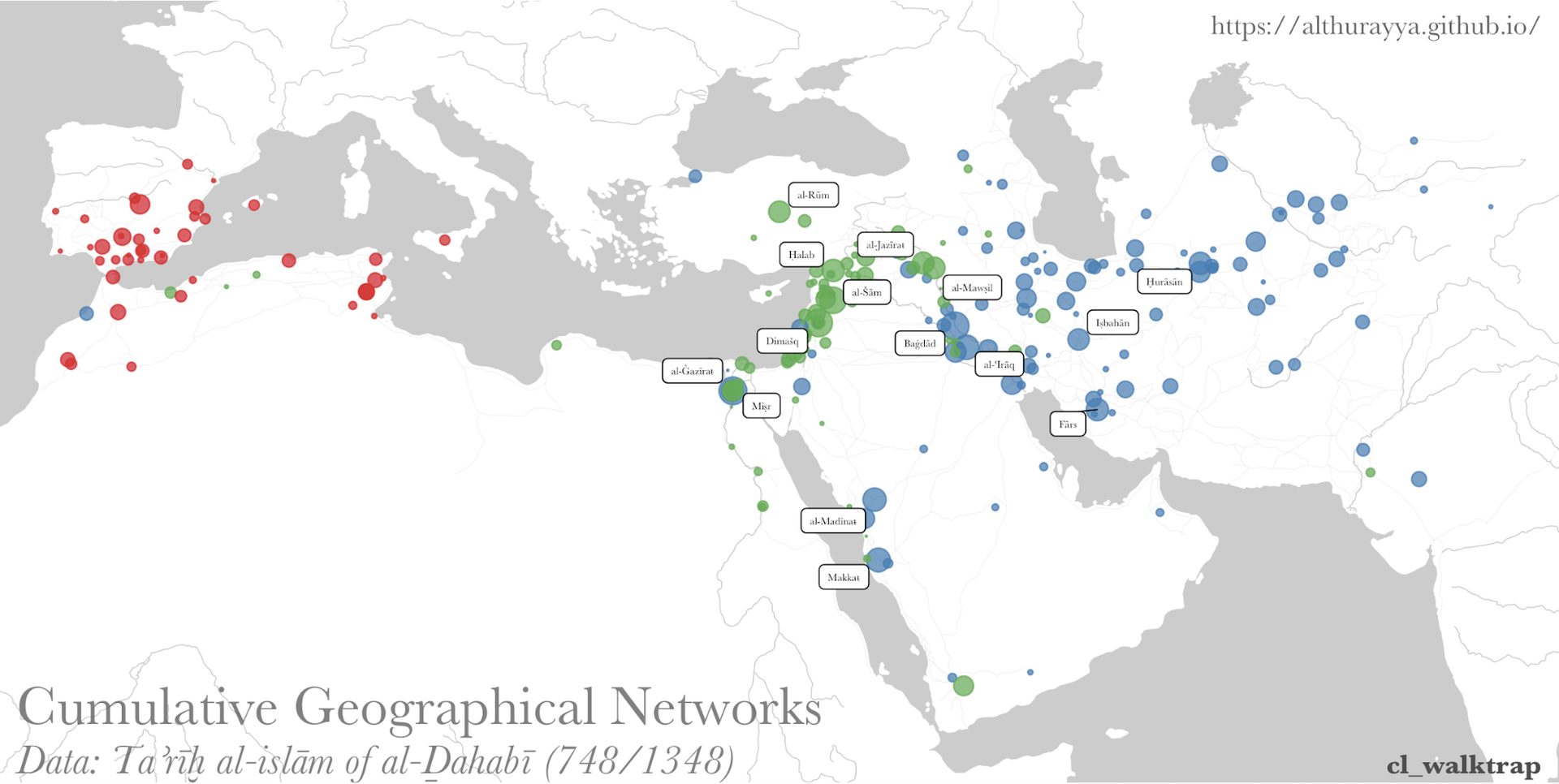
Places of individuals + Dates → geographical networks of connections
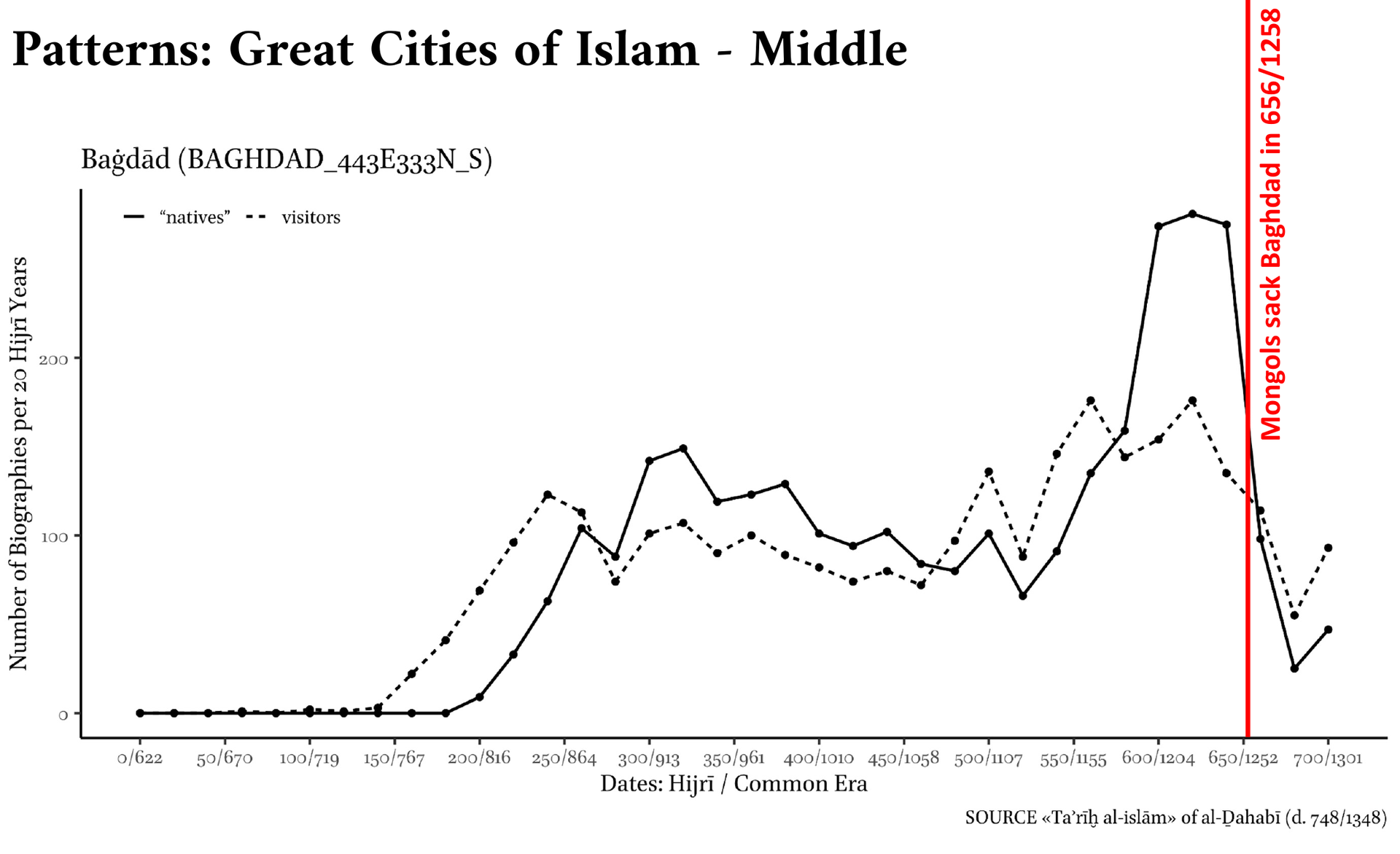
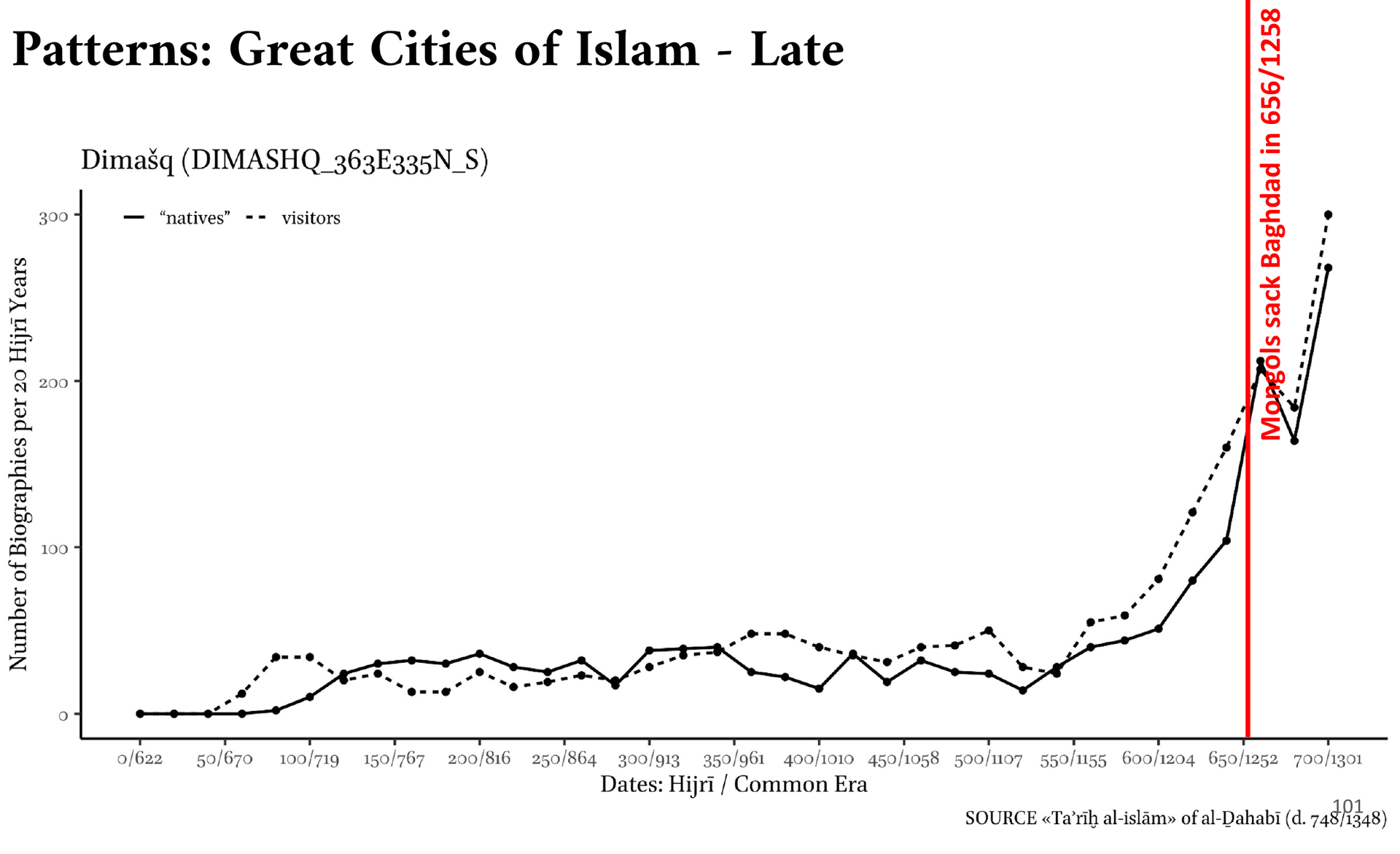
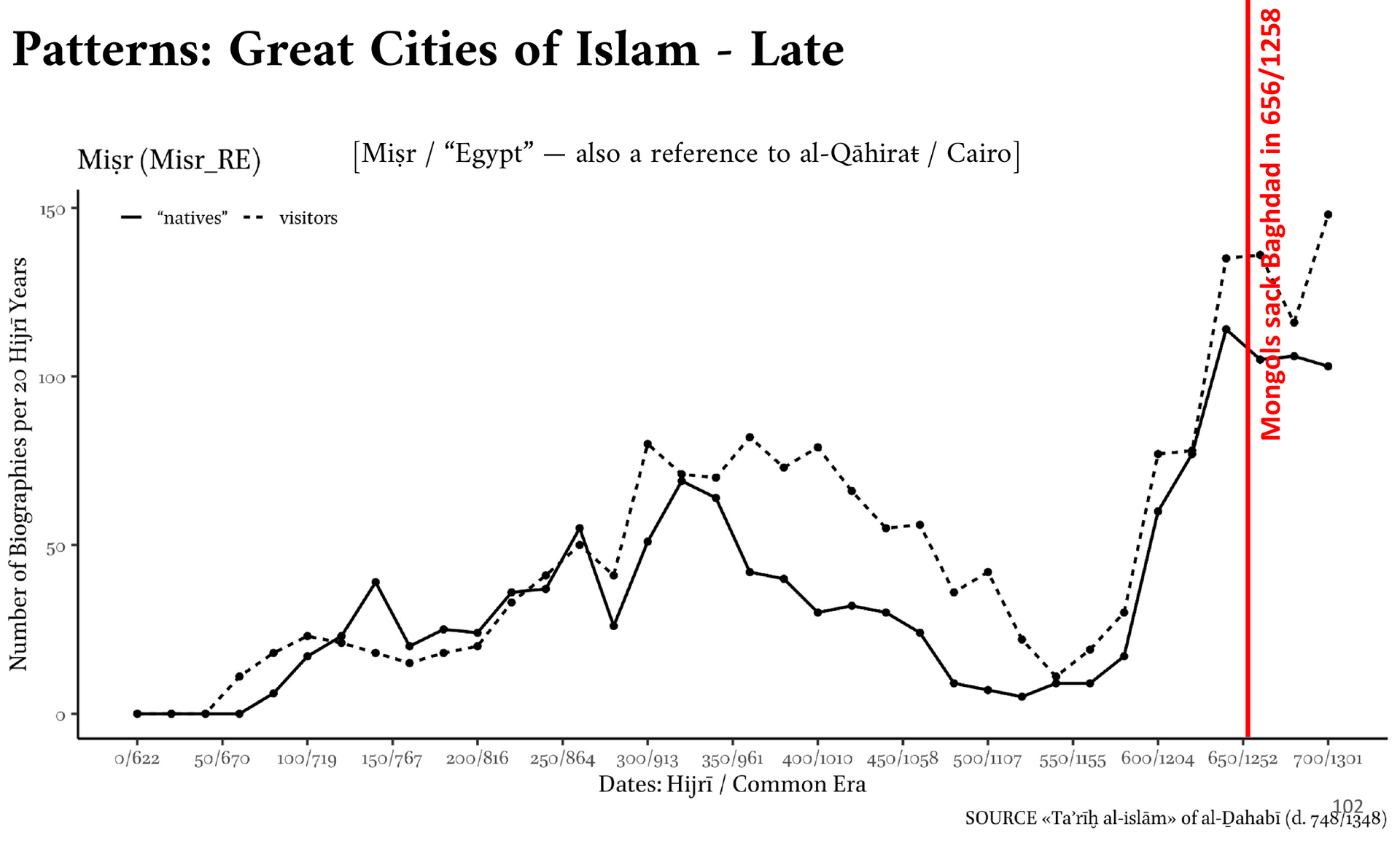
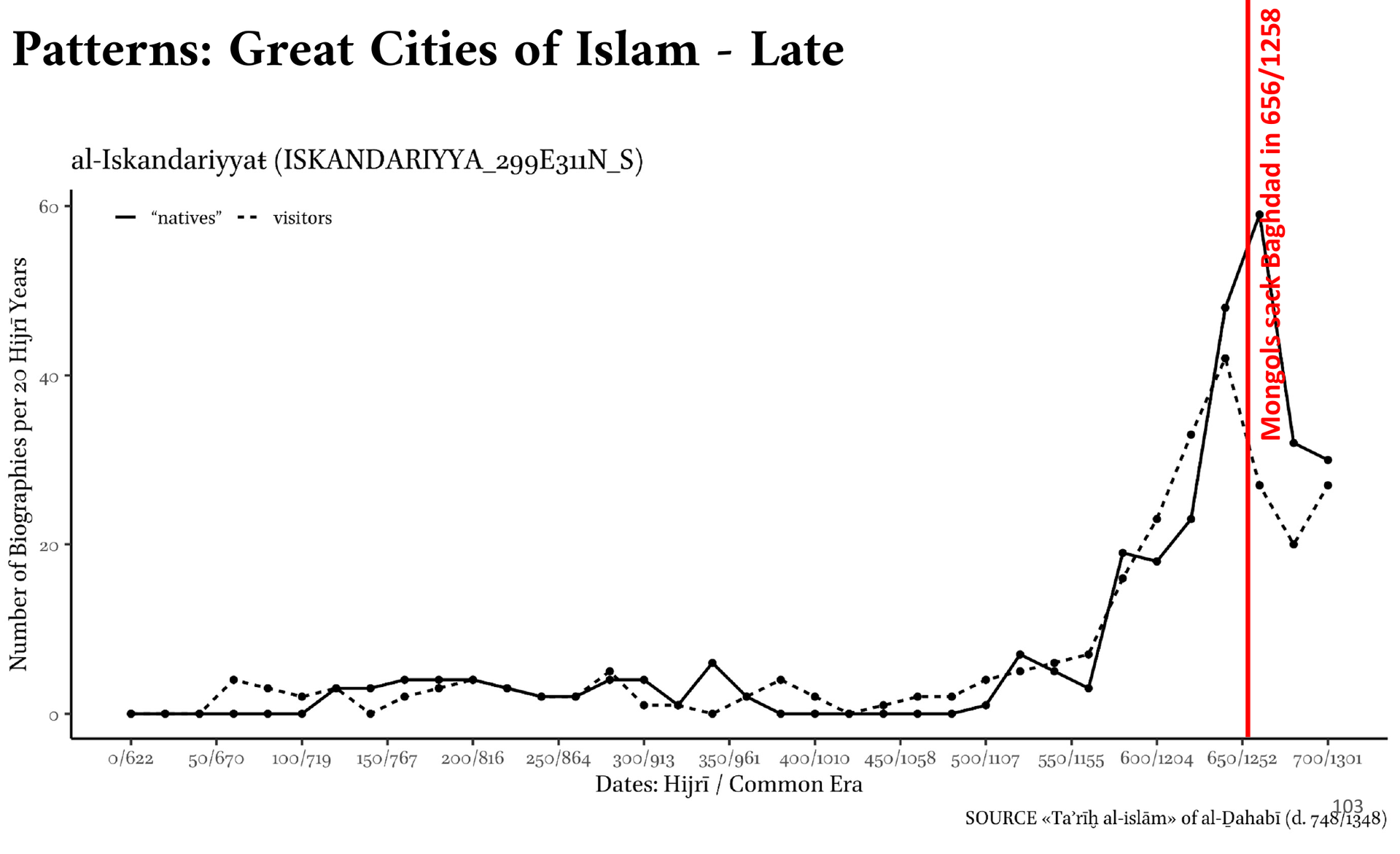
Patterns: Geography of the Islamic World - Geographical Texts
Patterns: Geography of the Islamic World - Biographical Texts
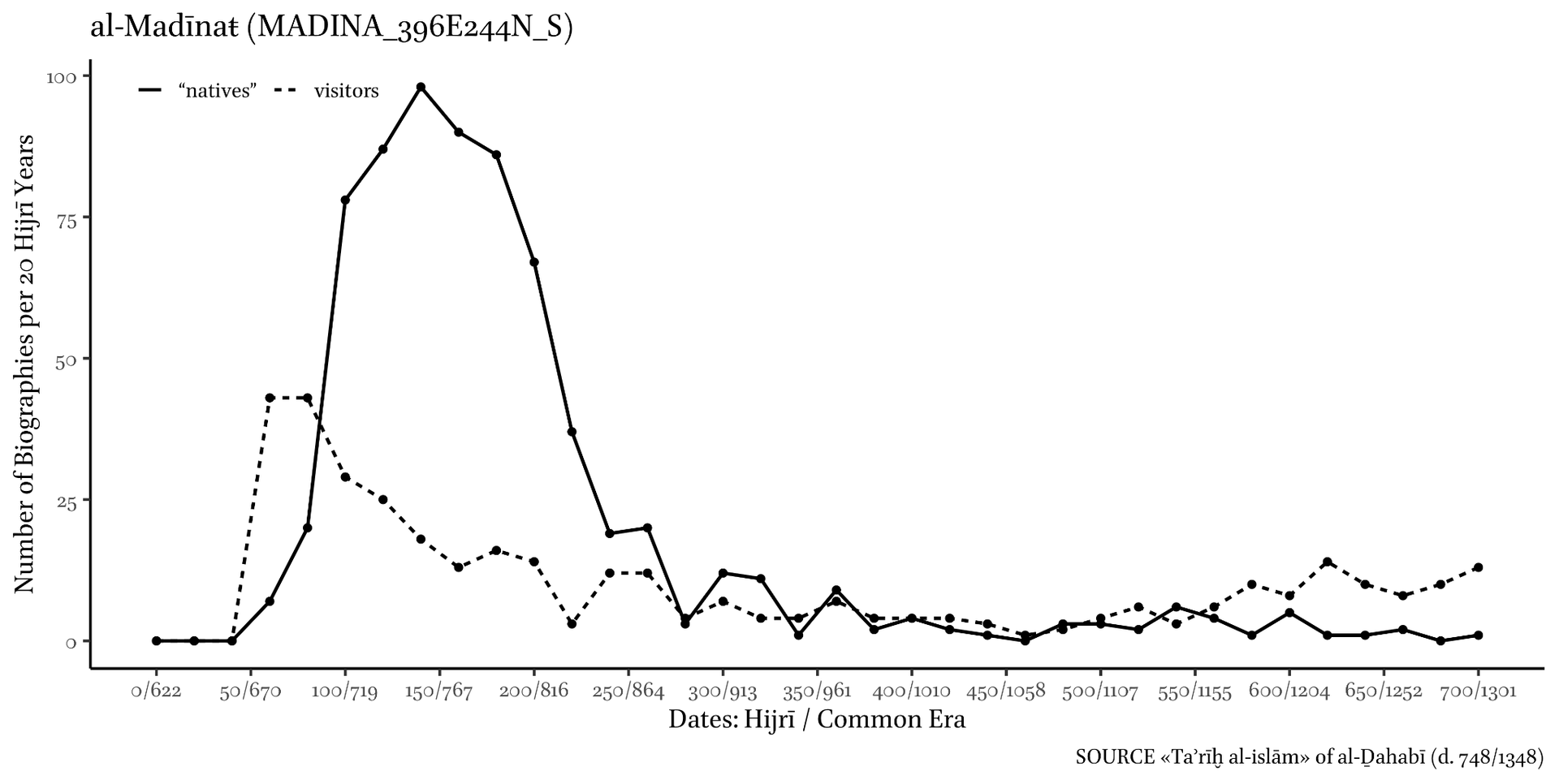
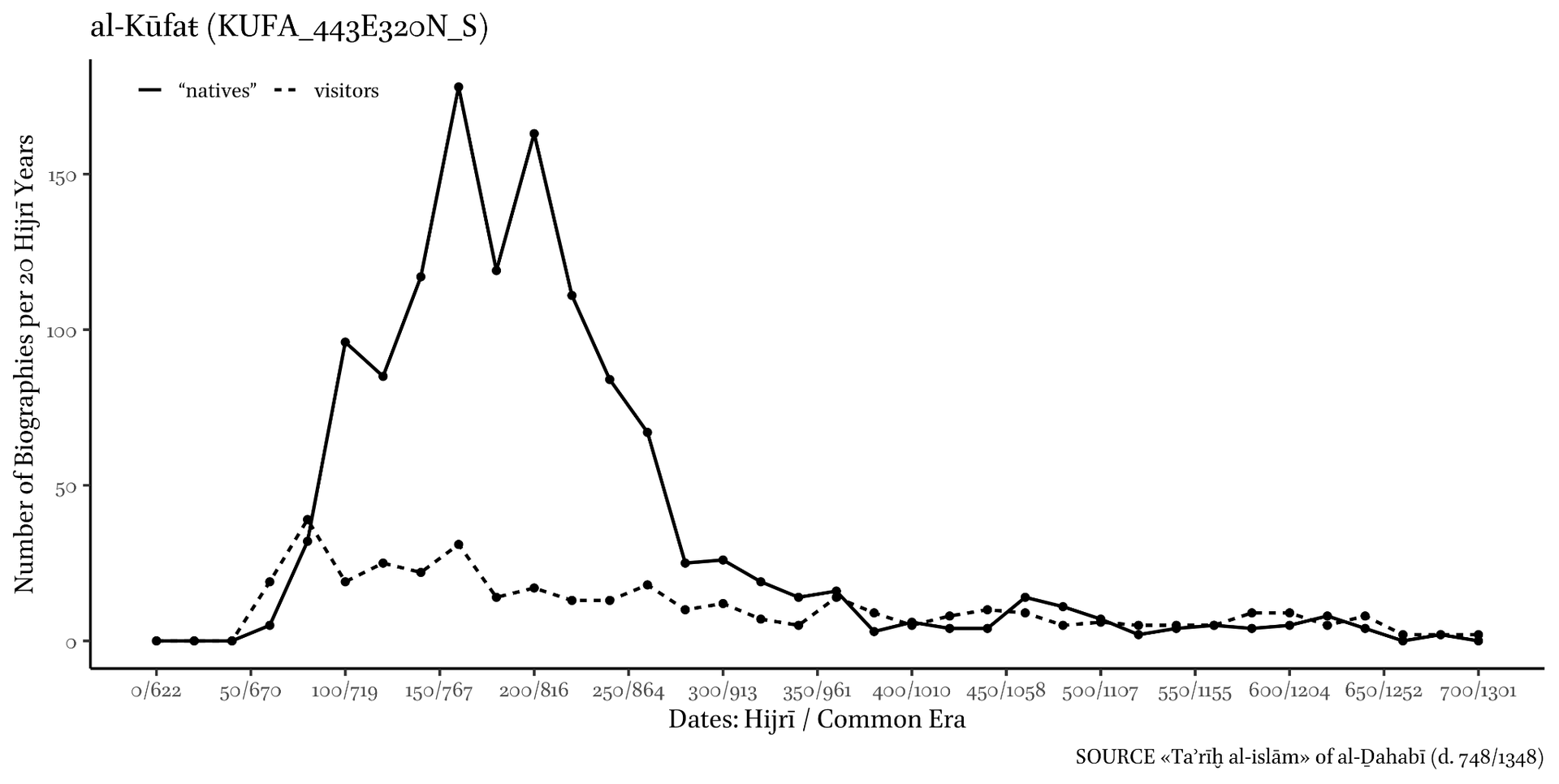
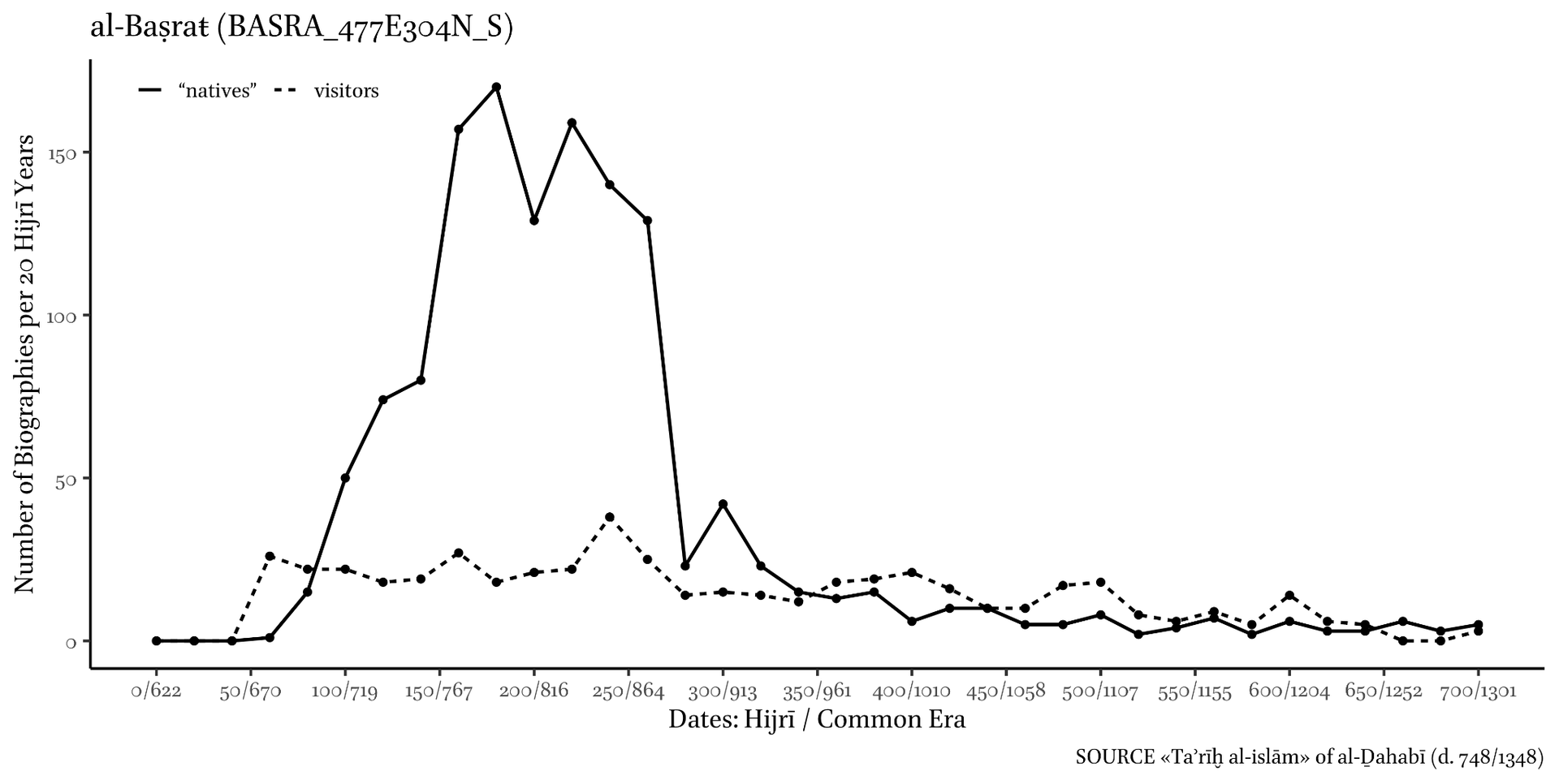
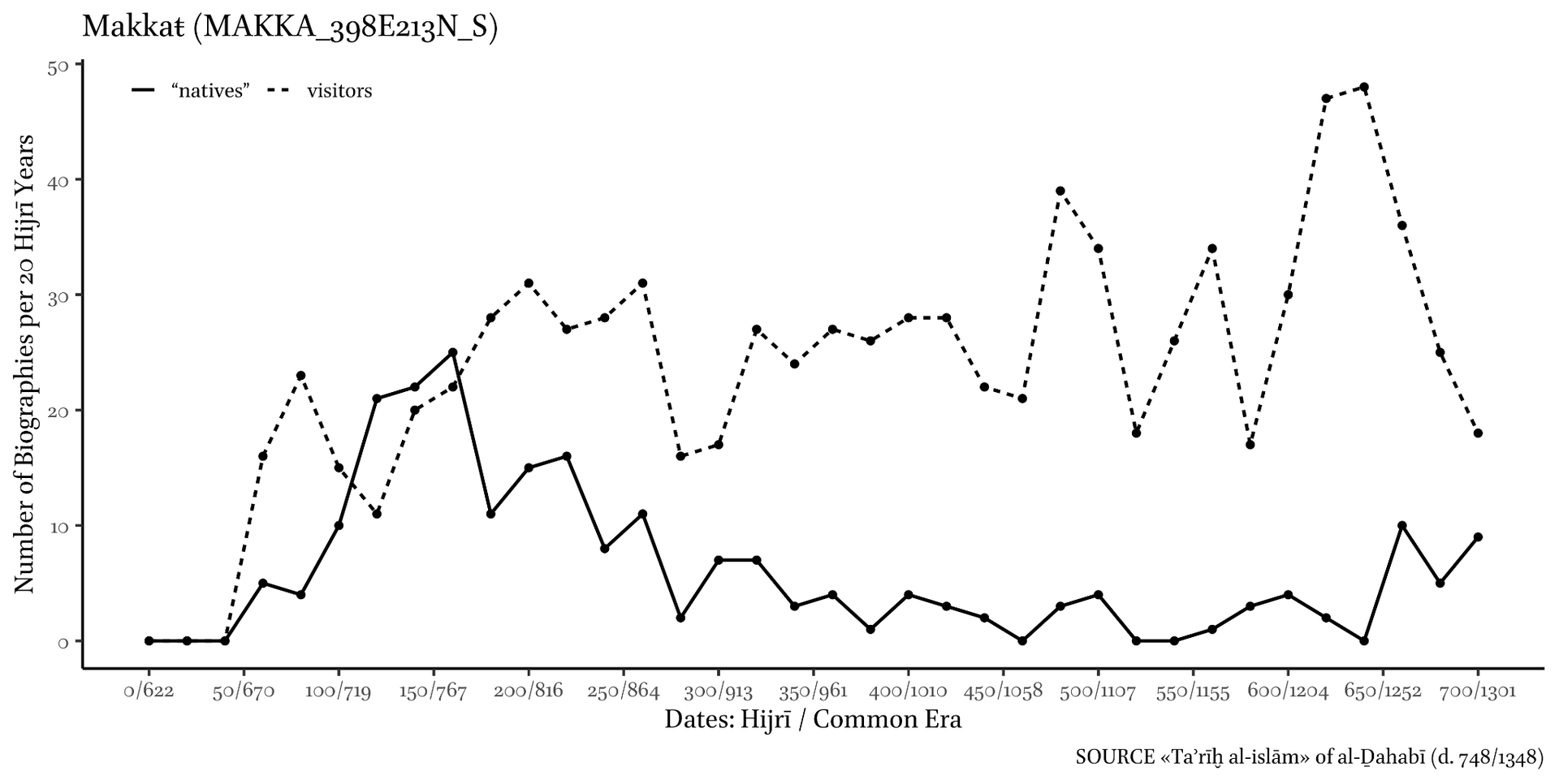
Patterns: Great Cities of Islam - Early
Patterns: Great Cities of Islam - Early
Patterns: Great Cities of Islam - Early
Patterns: Great Cities of Islam - Early
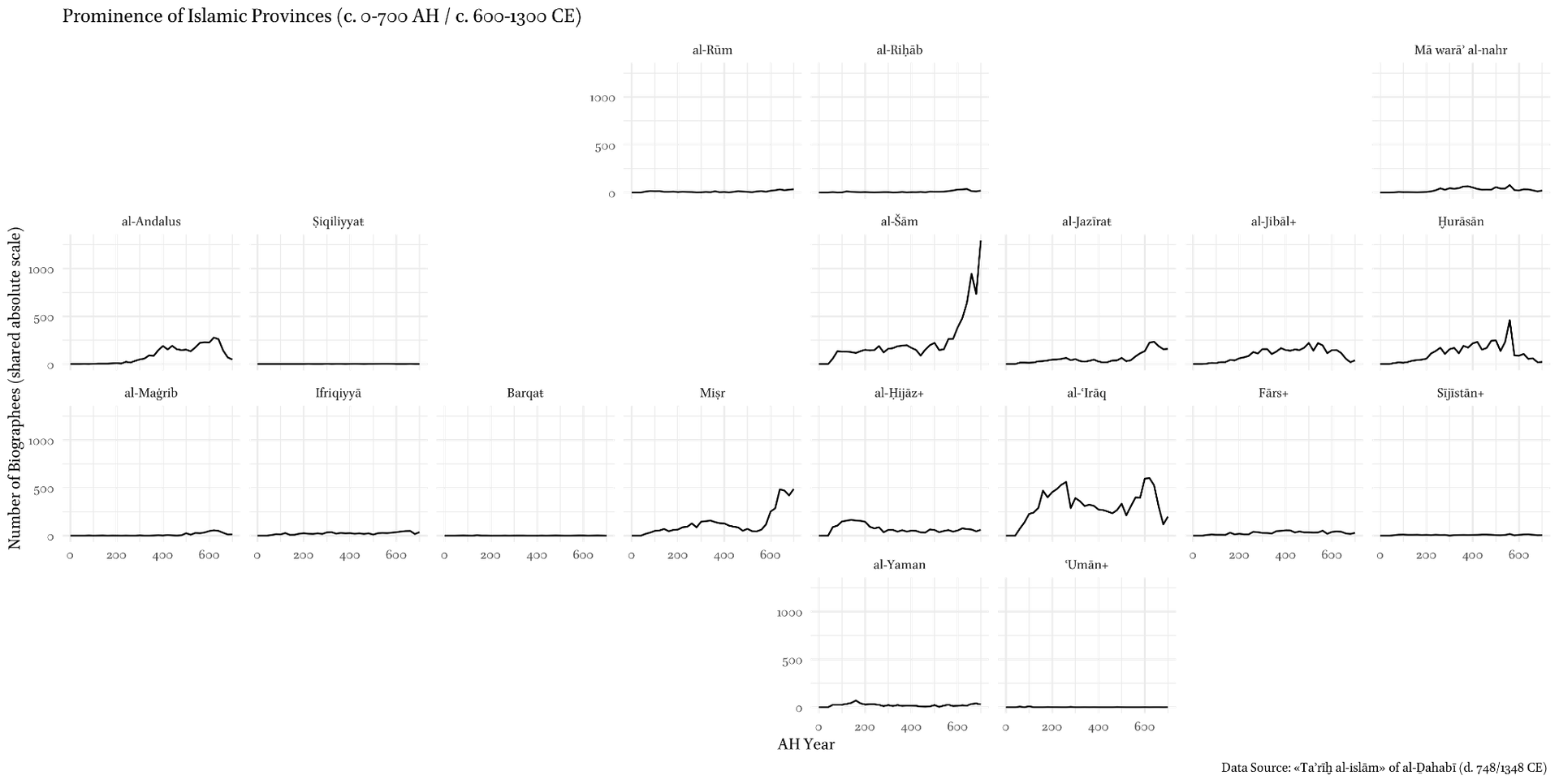
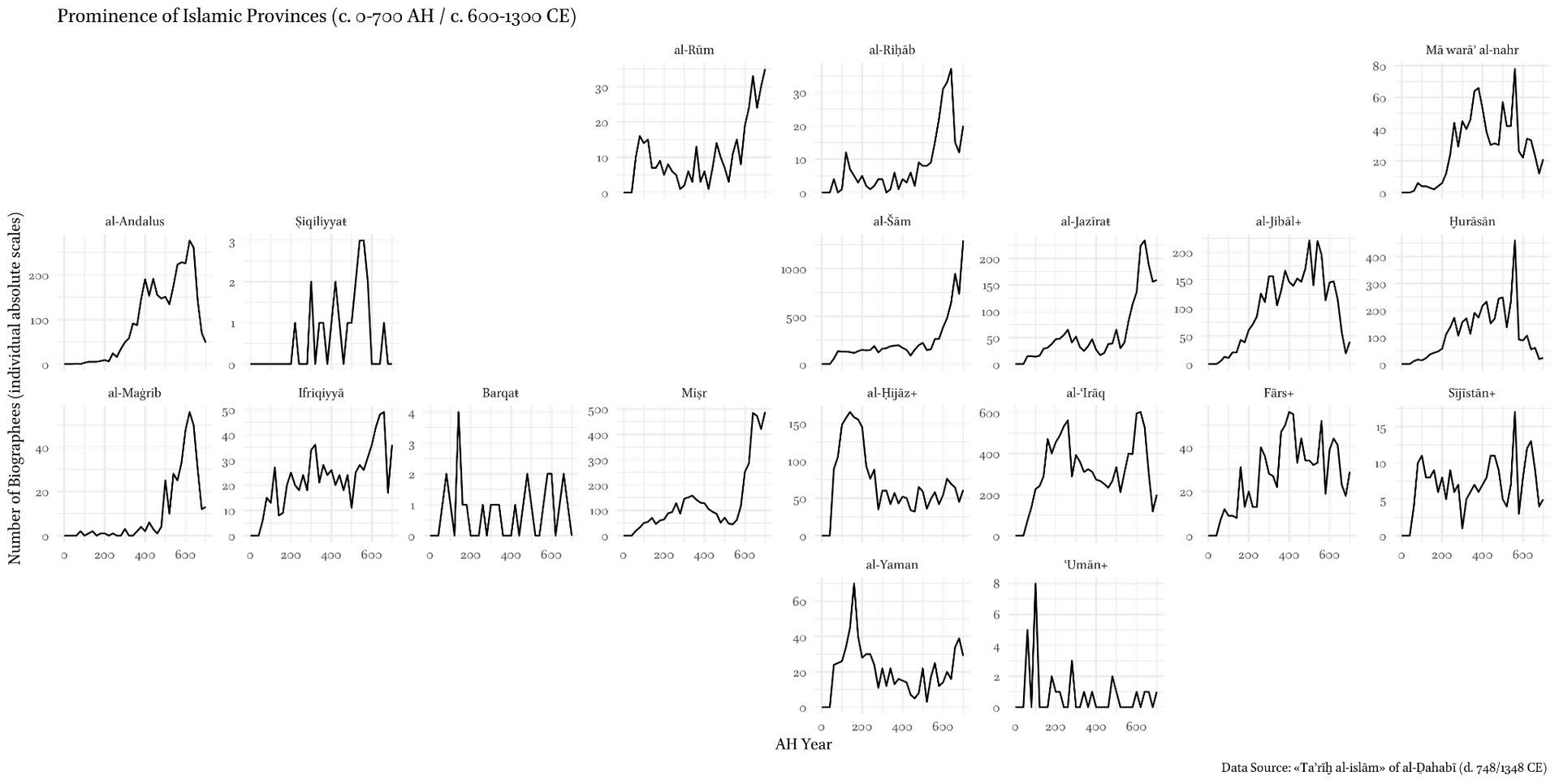
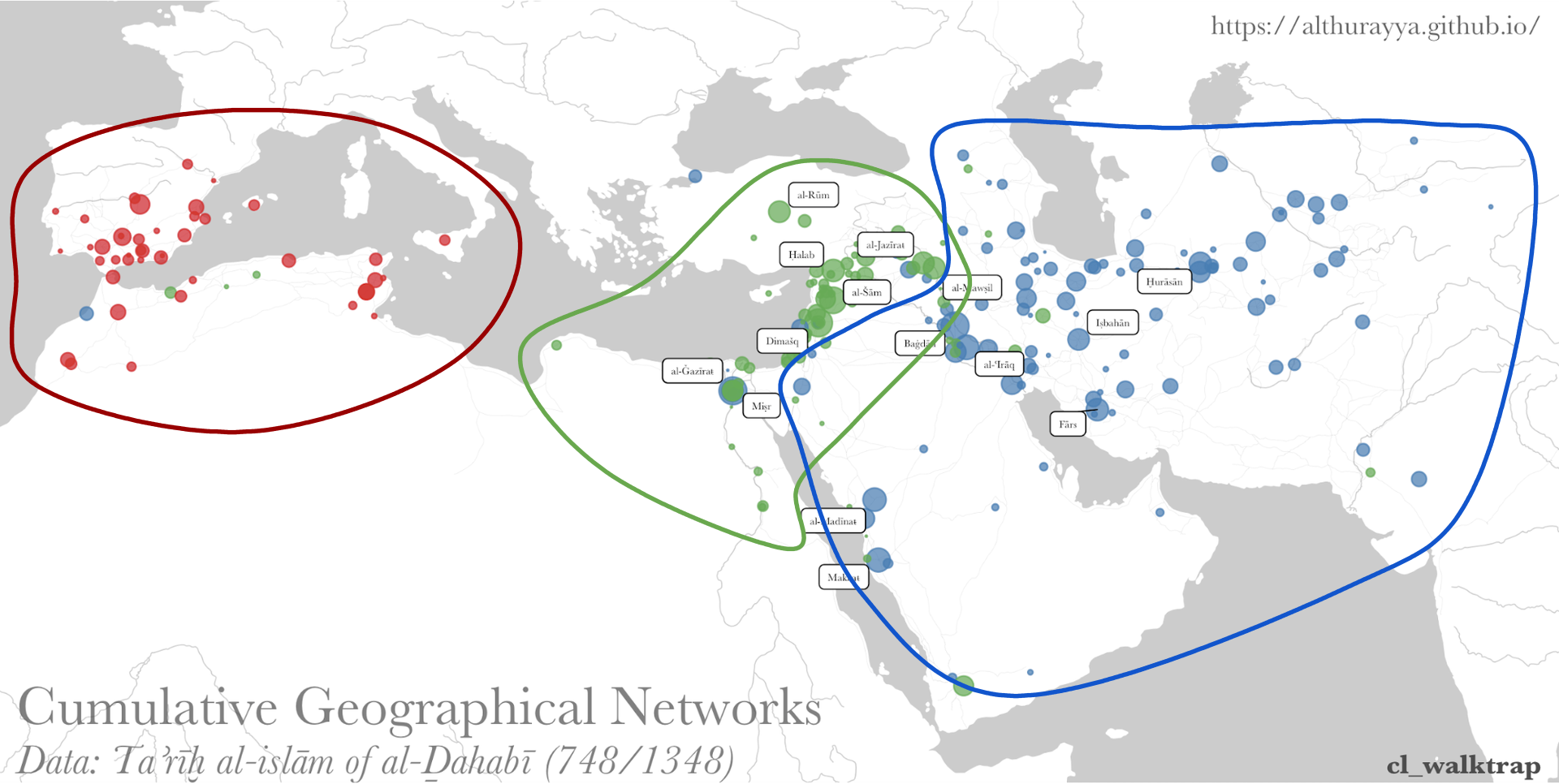
Patterns: Regional Representations / Floruits (?)
Patterns: Regional Representations / Floruits (?)
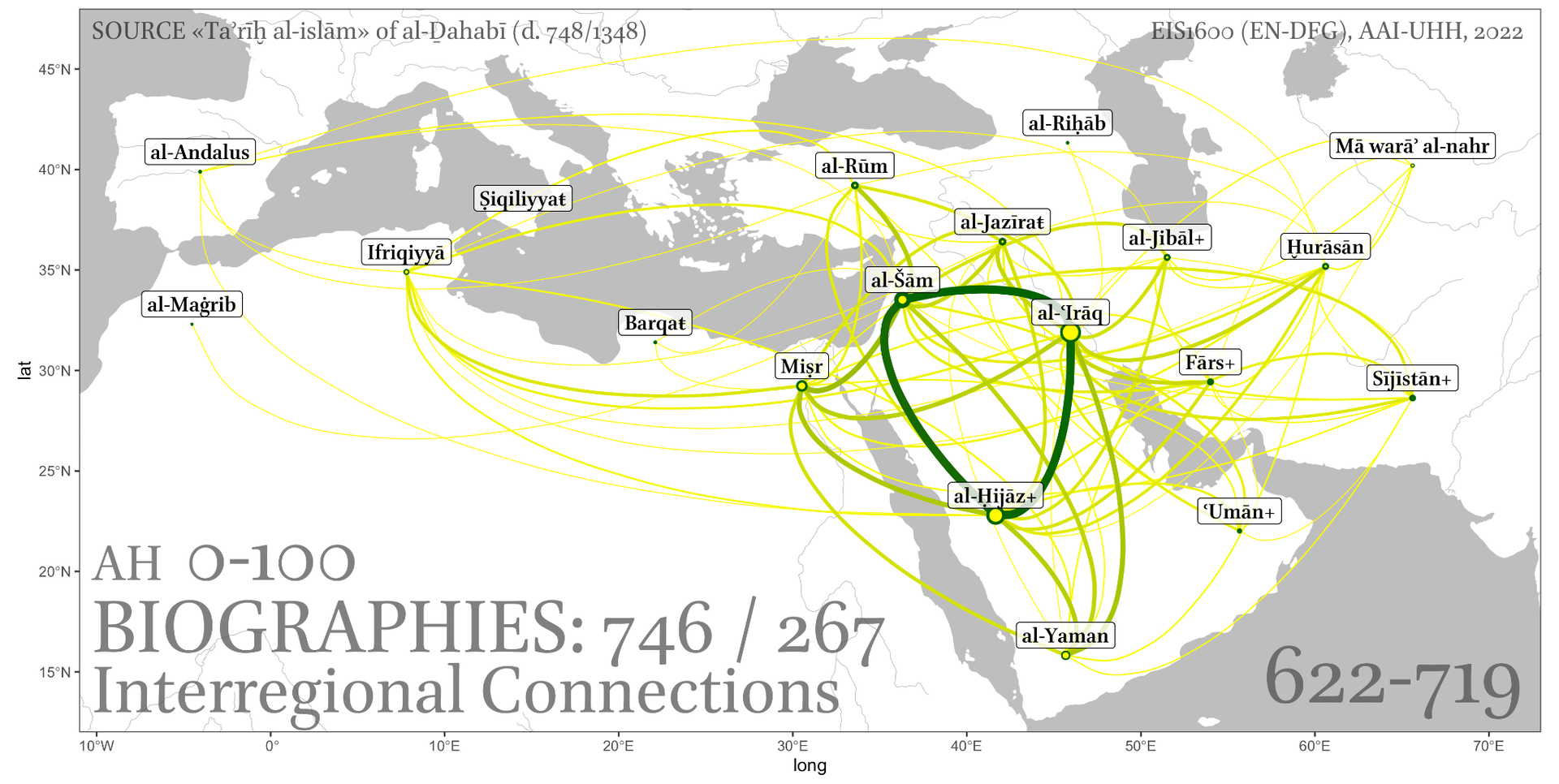
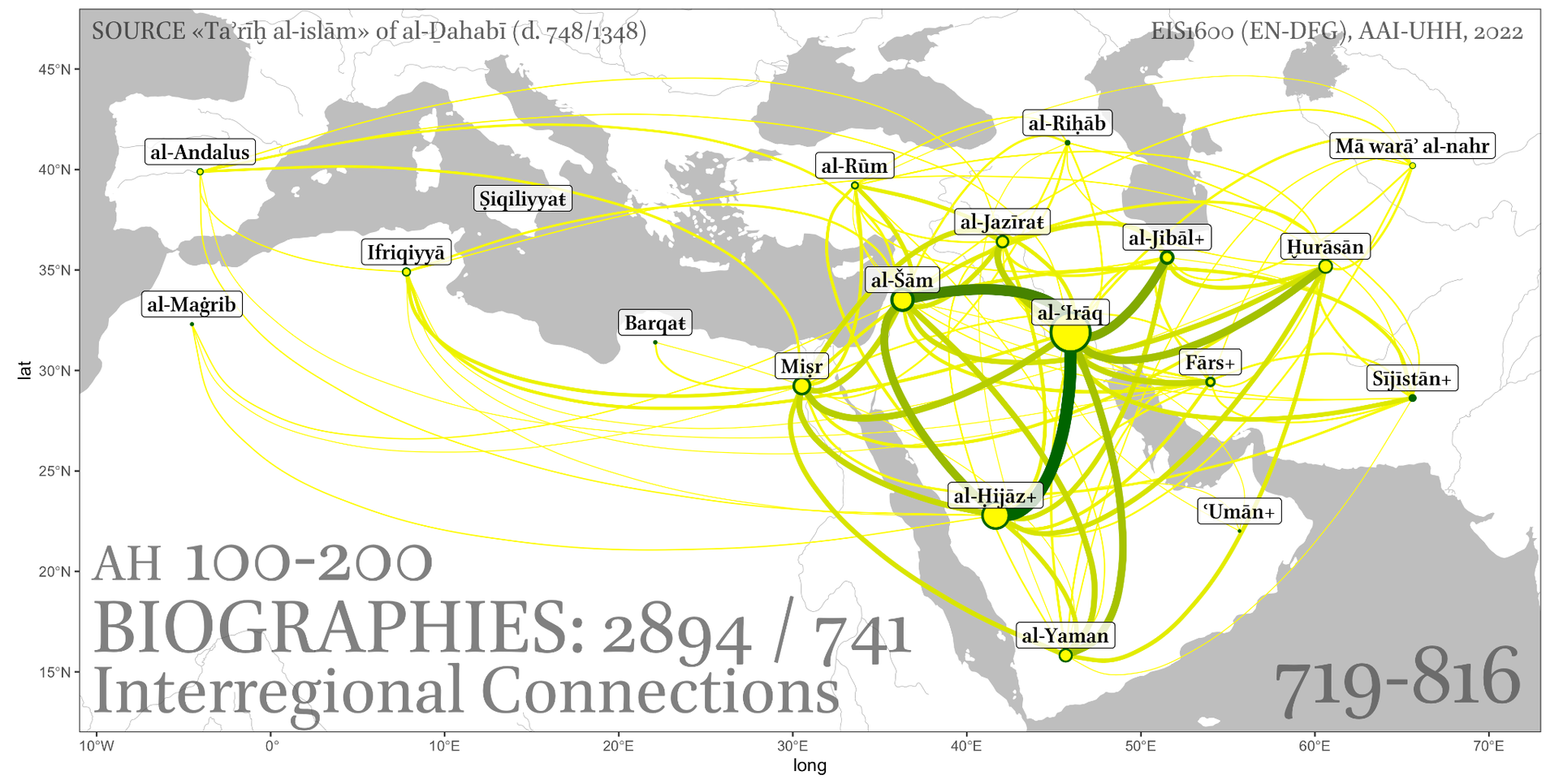
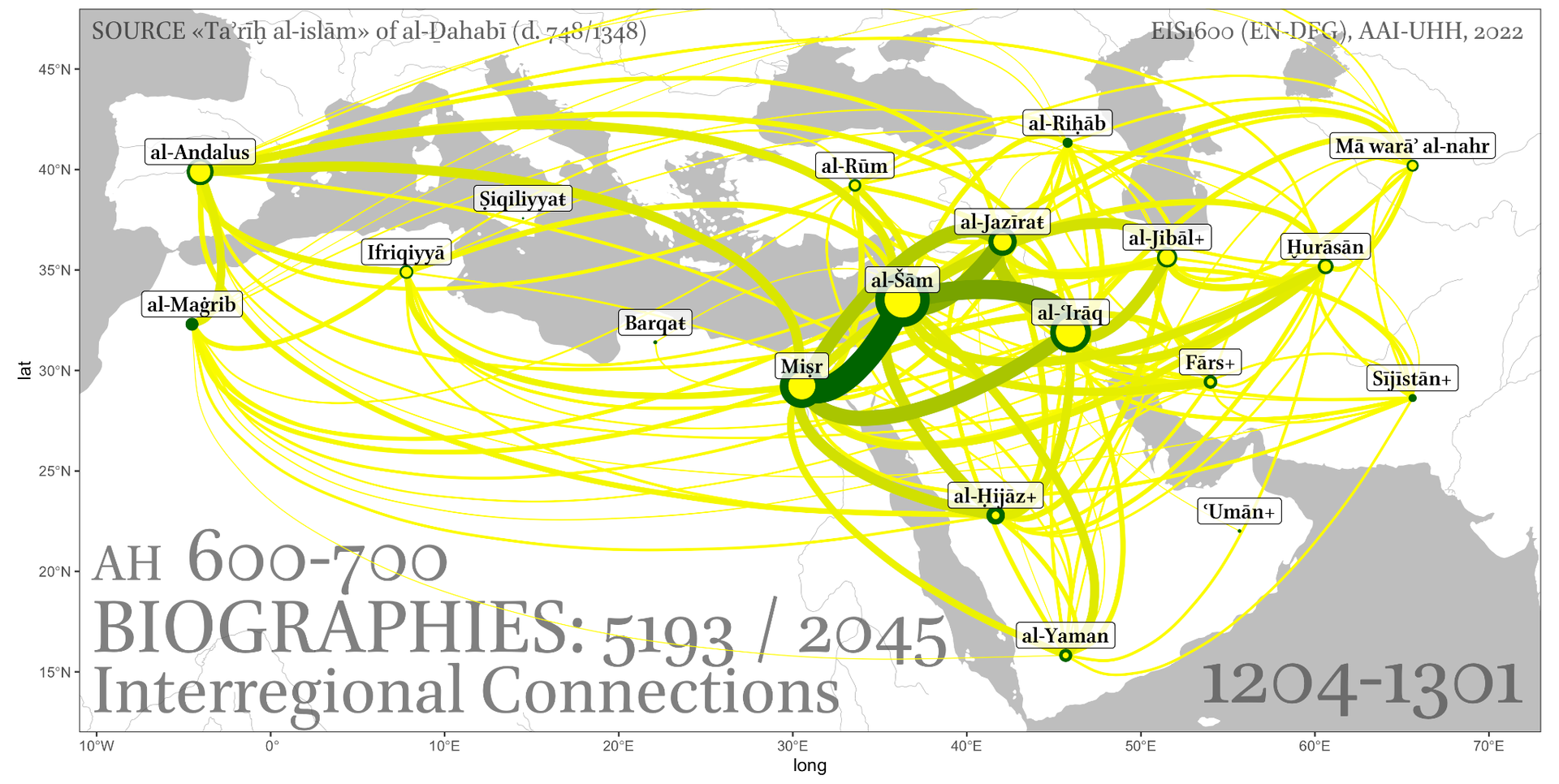
Patterns: Connections
Patterns: Connections
Patterns: Connections
Patterns: Connections
Patterns: Connections
Patterns: Connections
Patterns: Connections
Patterns: Connections in the 6th century AH
Patterns: Connections in the 6th century AH
Relevance?
Prominence of cities and regions (modeled from cities);
Connectednes of cities and regions (modeled from cities);
Social transformations and composition of Islamic elites;
Development of professional and religious groups;
General and particular views of mobility;
Broad variety of problems that can be modeled from this data (demographical questions, family structures, onomastic questions, various historical phenomena)
your imagination is the limit!
Part
2
“Golden Sample” Case Study
Historiography
Historiographical Issues
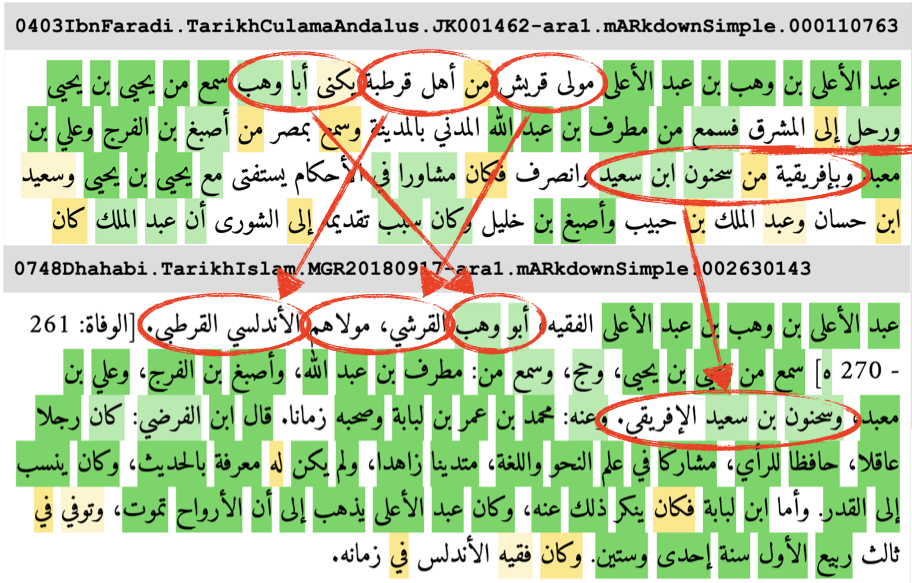
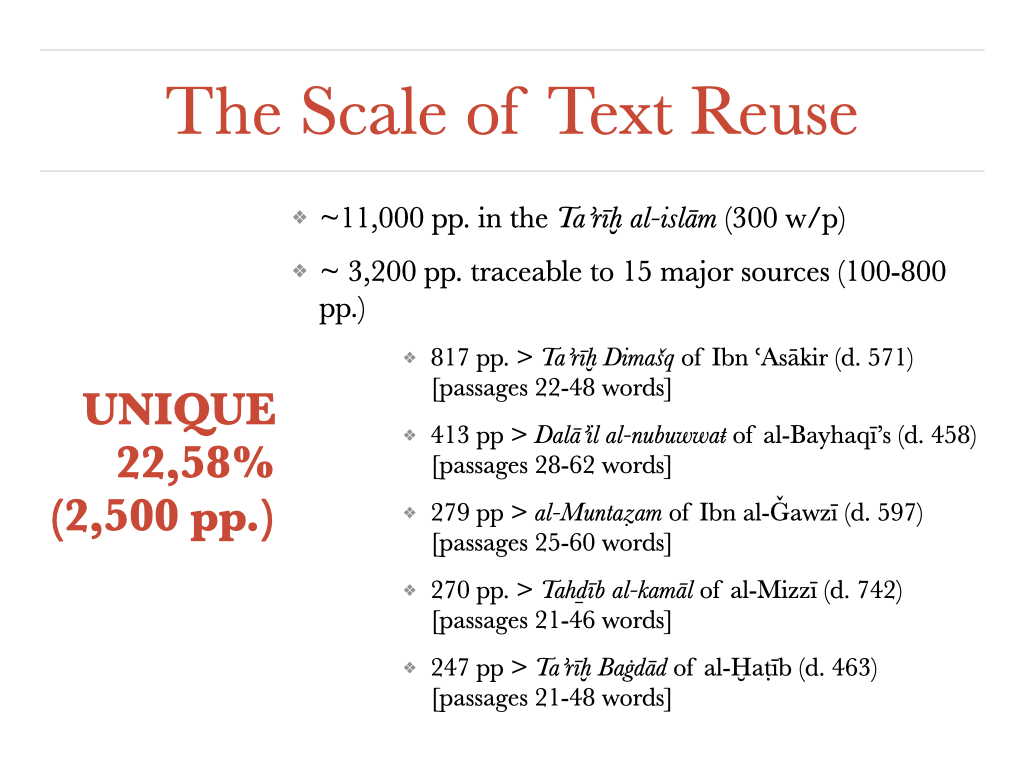
Hundreds of BIO Collections > Thousands of duplicate BIOs
Problem: Convert BIO > Persons
Solutions:
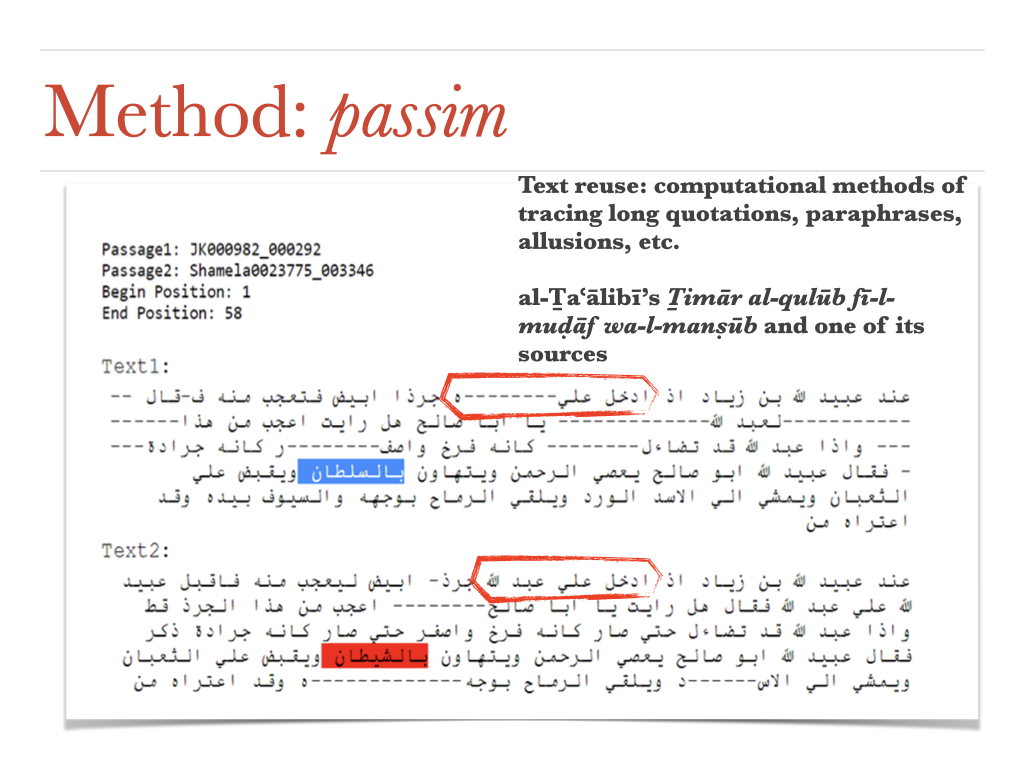
KITAB: Text Reuse Detection
EIS1600: Same Biography Identification with different computational methods, further enhanced with latest LLMs
al-Ḏahabī and his Tārīḫ al-islām
Šams al-dīn al-Ḏahabī (d. 748/1348): historian, ḥadīṯ scholar, biographer.
Tārīḫ al-islām — a universal chronicle-cum-biographical collection covering seven centuries of Islamic history (1–700 AH / 622–1301 CE), organized decade by decade.
c. 30,000 biographies
c. 3 million words
Two modern editions: 50 vols. (Tadmurī) and 16 vols. (Maʿrūf)
Built largely from earlier sources — an ideal test case for text-reuse detection at scale.
How does one write a 50-volume book in 14th-century Damascus?
How to assess authors’ methodology?
Which works did they use as their sources?
How did they select biographies? What were their criteria?
How did he modify those biographies? What did he add? What did he drop?
Among them was Abd Allãh b. Ḫāzim al-Sulamī, the governor of Ḫurāsān for Abd Allãh b. al-Zubayr. What was remarkable about him was that he was extremely brave and resourceful, yet he was terrified of mice. One day, while he was with ʿUbayd Allãh b. Ziyād, a white rat was brought before him and he was astonished. ʿUbayd Allãh said to ʿAbd Allãh, ‘O Abū Ṣāliḥ, have you ever seen anything more astonishing than this?’ And there was Abd Allãh, who had shrunk as if he were a chick and turned yellow as if he were a male locust. ʿUbayd Allãh then said, “Abū Ṣaliḥ disobeys the Merciful, takes lightly the authority, seizes the snake, walks toward the blooming lion, faces spears with his face and swords with his hands, and yet, he is overcome by a rat as you see. I testify that Allãh is capable of everything.
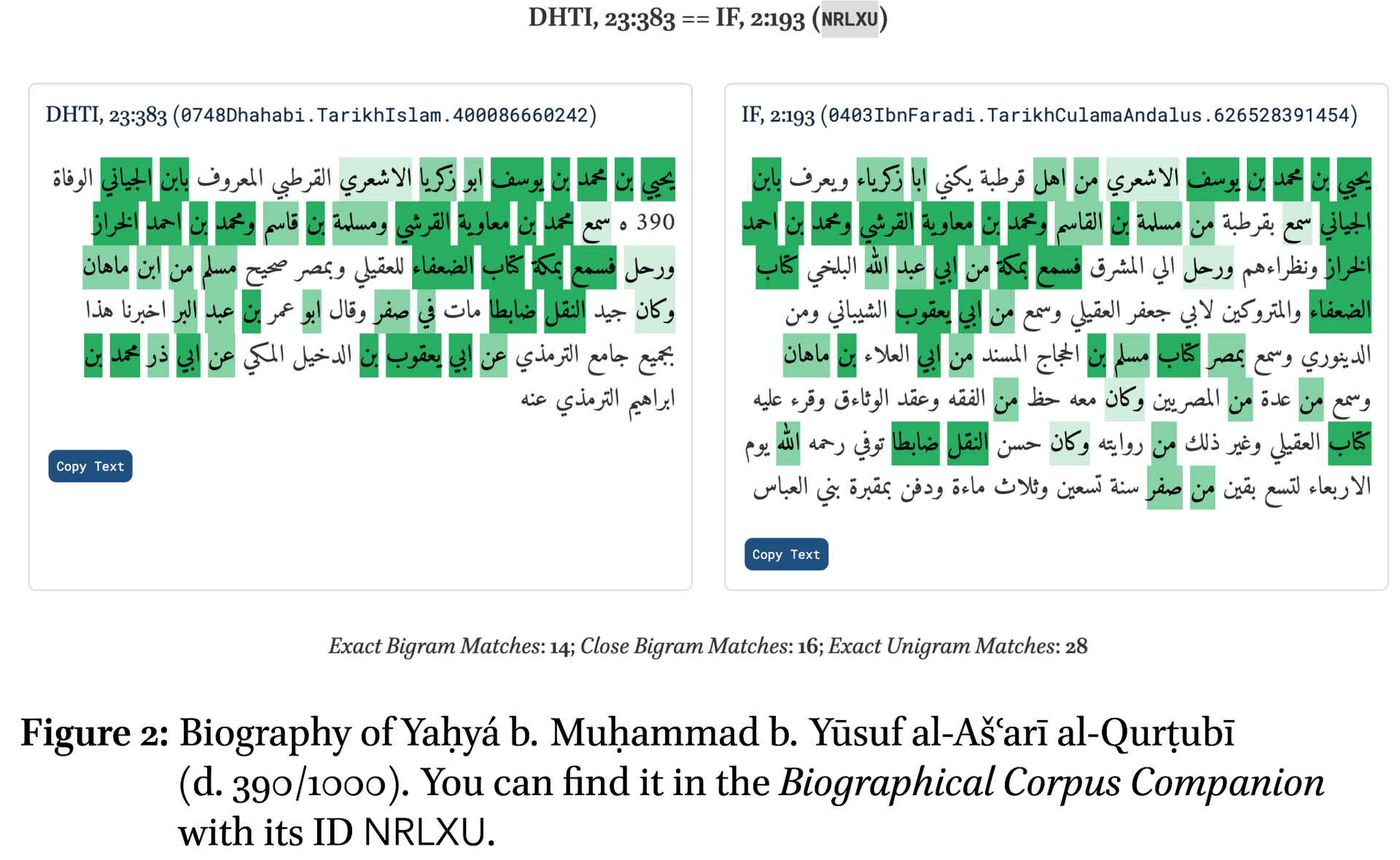
KITAB: Text Reuse Detection — quite successful…
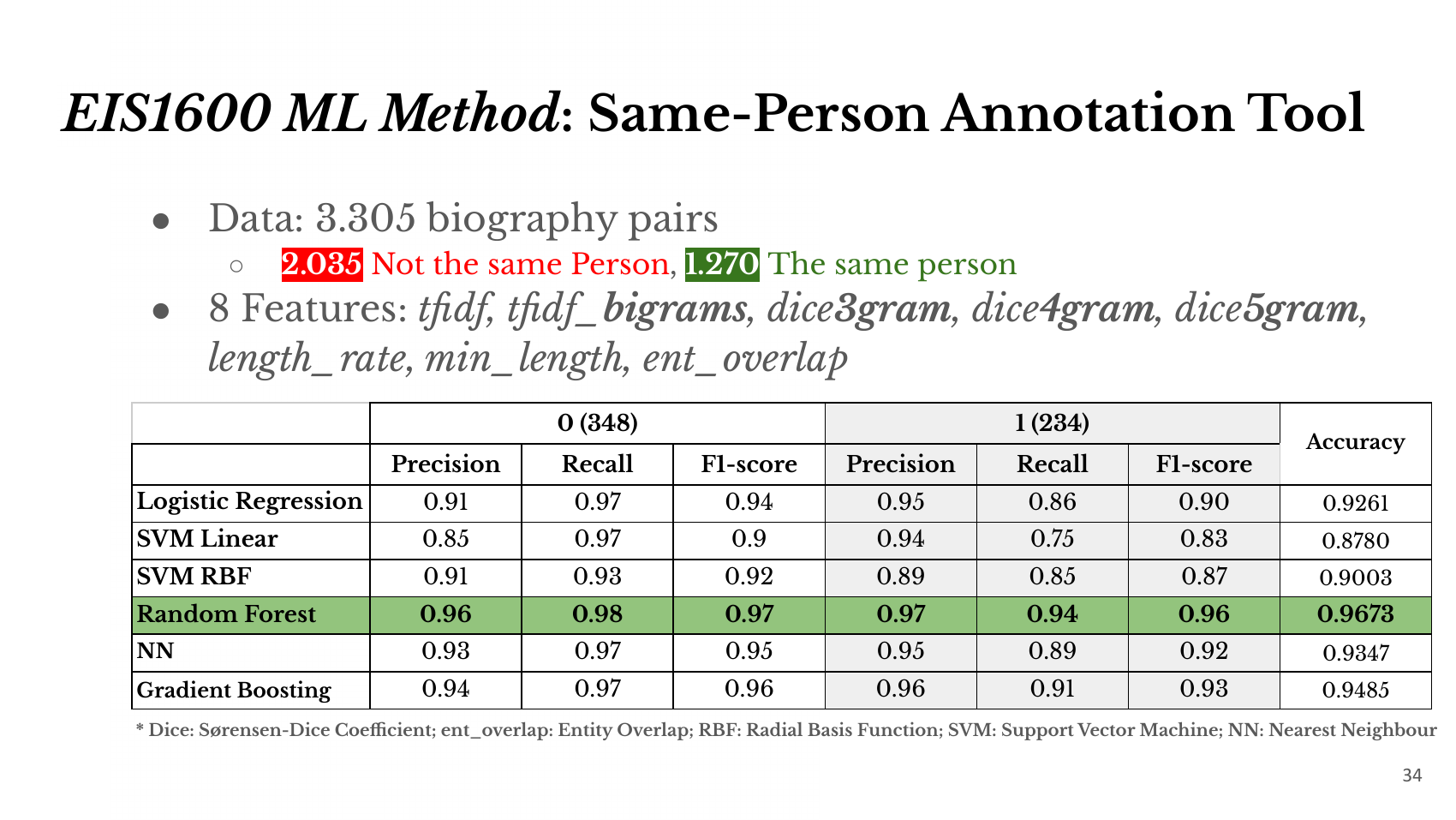
EIS1600 ML Method
Pregenerate possible matches (ngram overlap)
Review these pairs > create ground truth
Train a series of models, to identify the best performing one experimentally
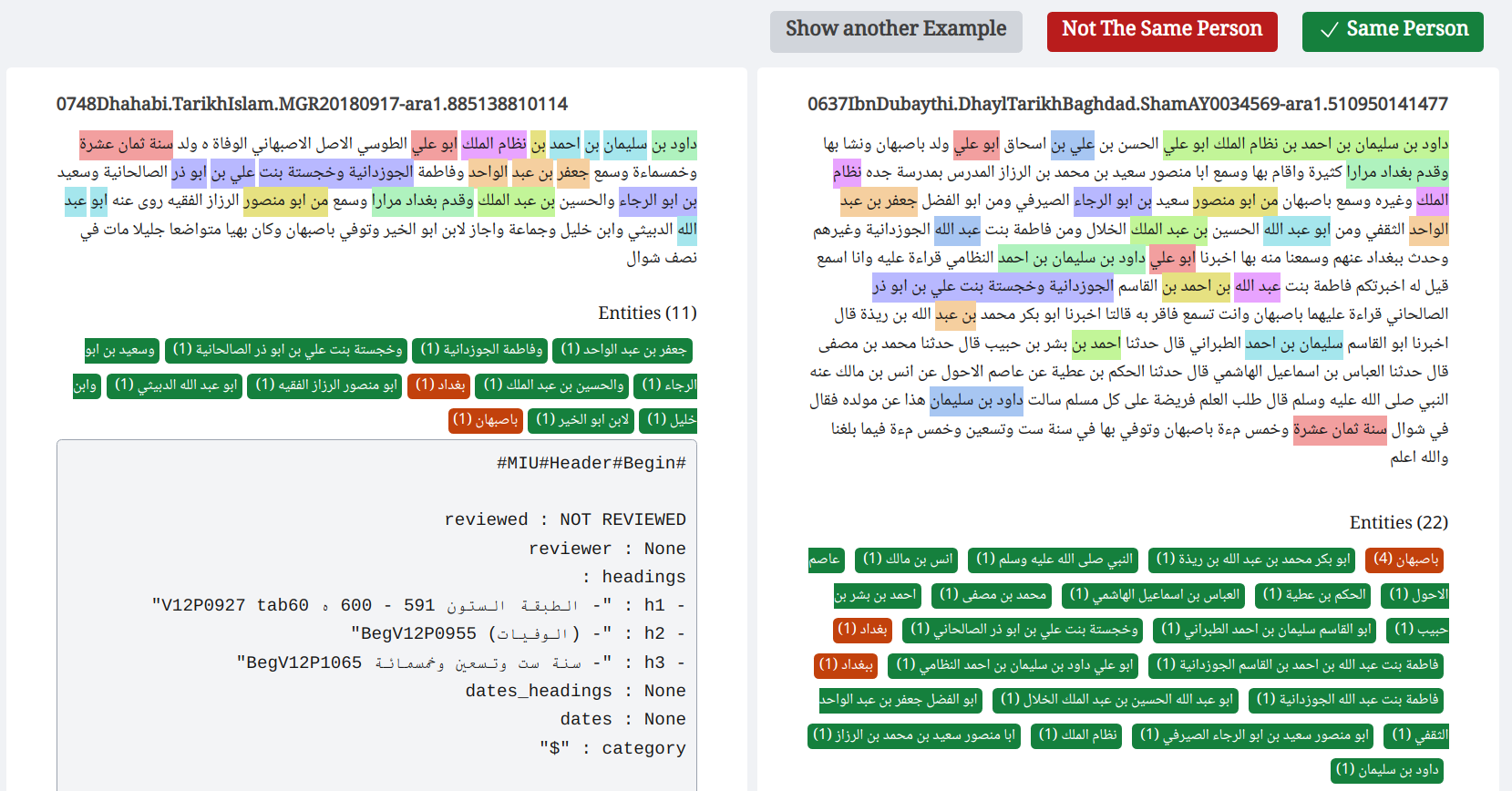
EIS1600 ML Method: Same-Person Annotation Tool
EIS1600 ML Method
Pregenerate possible matches (ngram overlap)
Review these pairs > create ground truth
Train a series of models, to identify the best performing one experimentally
Results: good-ish, but:
Not as good, when applied to new data
Difficult to determining the cut-off threshold
Differences in length of biographies create most problems
EIS1600 ML Method + ChatGPT
We generate possible matches with B25 (pyserini for python)
We pull 350 top matches for each biography
In most cases the number of matches is significantly smaller; 350 is the maximum possible number of duplicates (the number of texts in the EIS1600 subcorpus; technically 350-1);
Reduces the number of 186 billion pairs (610,000 squared) to 143 million pairs (theoretically);
Remove “matches” within the same text > 79 million pairs;
For al-Ḏahabī’s sample > only about 29,000 pairs;
“Crowd-sourcing” with ChatGPT (gpt4o-mini) with a prompt to compare pairs, reply ‘yes’ or ‘no’ and give the confidence of evaluation if the answer is ‘yes’; return results in a specific format to simplify post-processing;
Accuracy assessment (on human annotated data): 96% — disagreement on 124 pairs of 2,092; review: there are mistakes on both Team Machine and Team Human
Understanding the historian
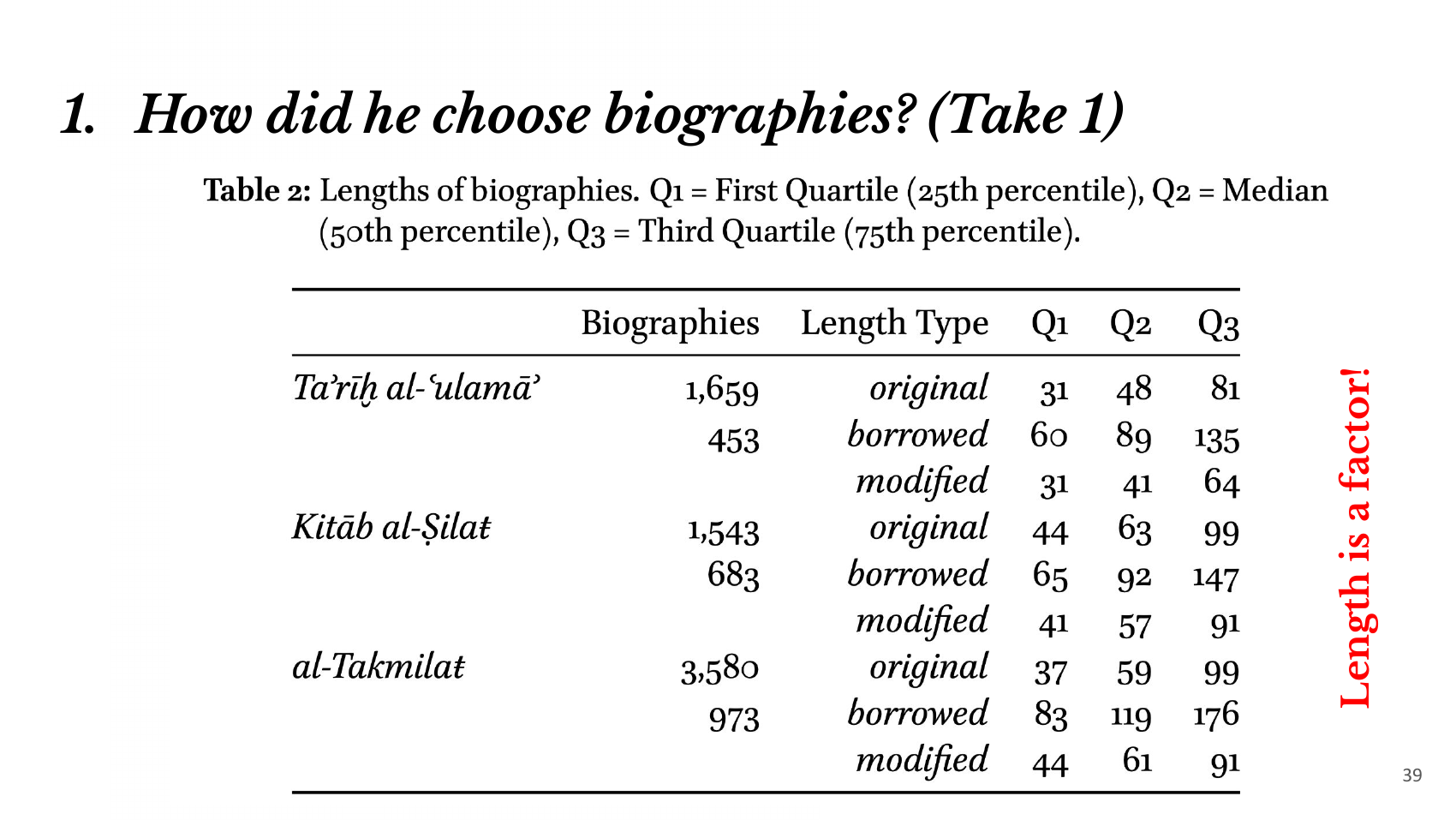
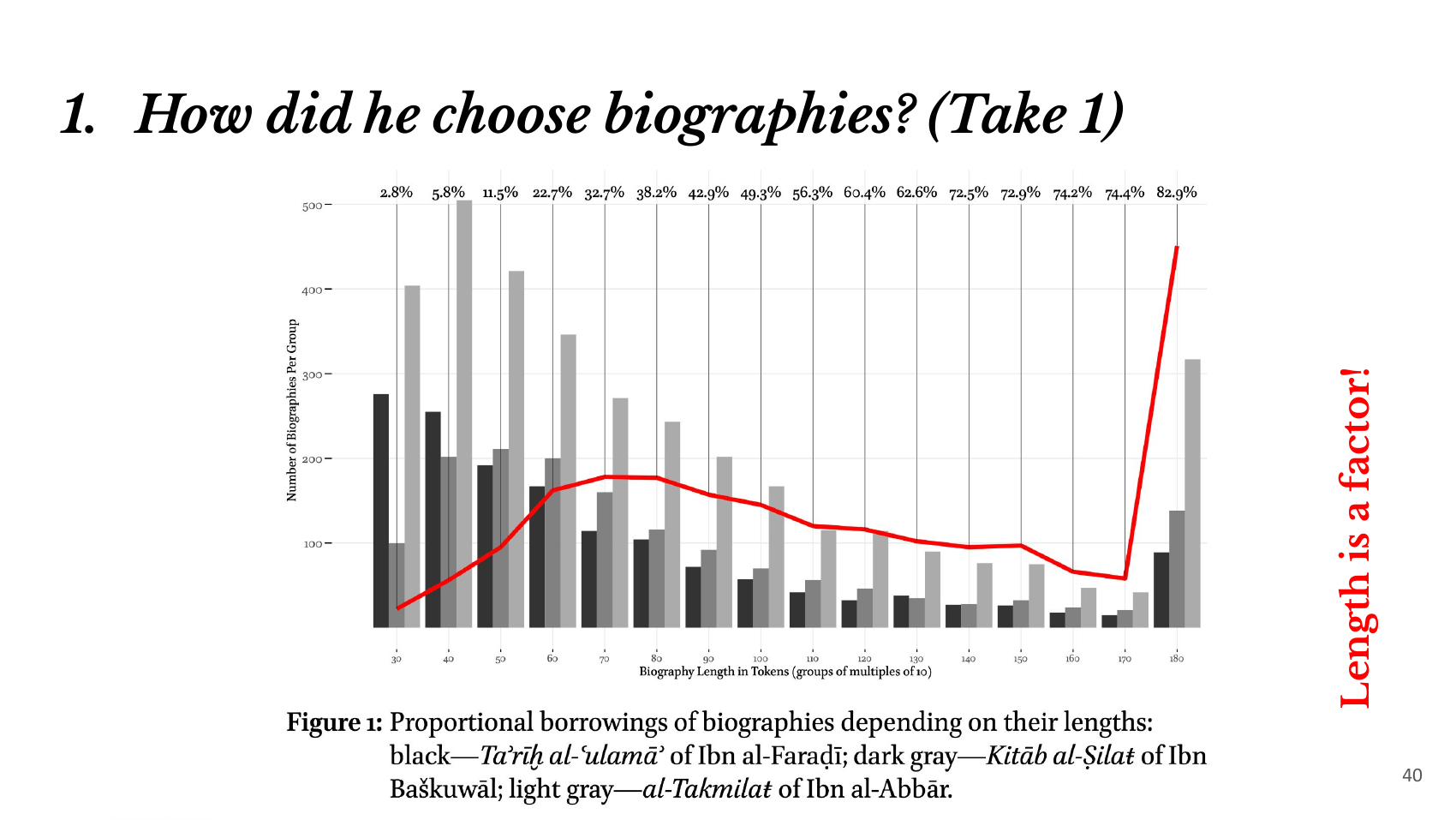
How did he choose biographies? (Take 1)
How did he change them?
Did he make biographees look better, worse, or kept them the same?
Why he omitted “obvious” candidates?
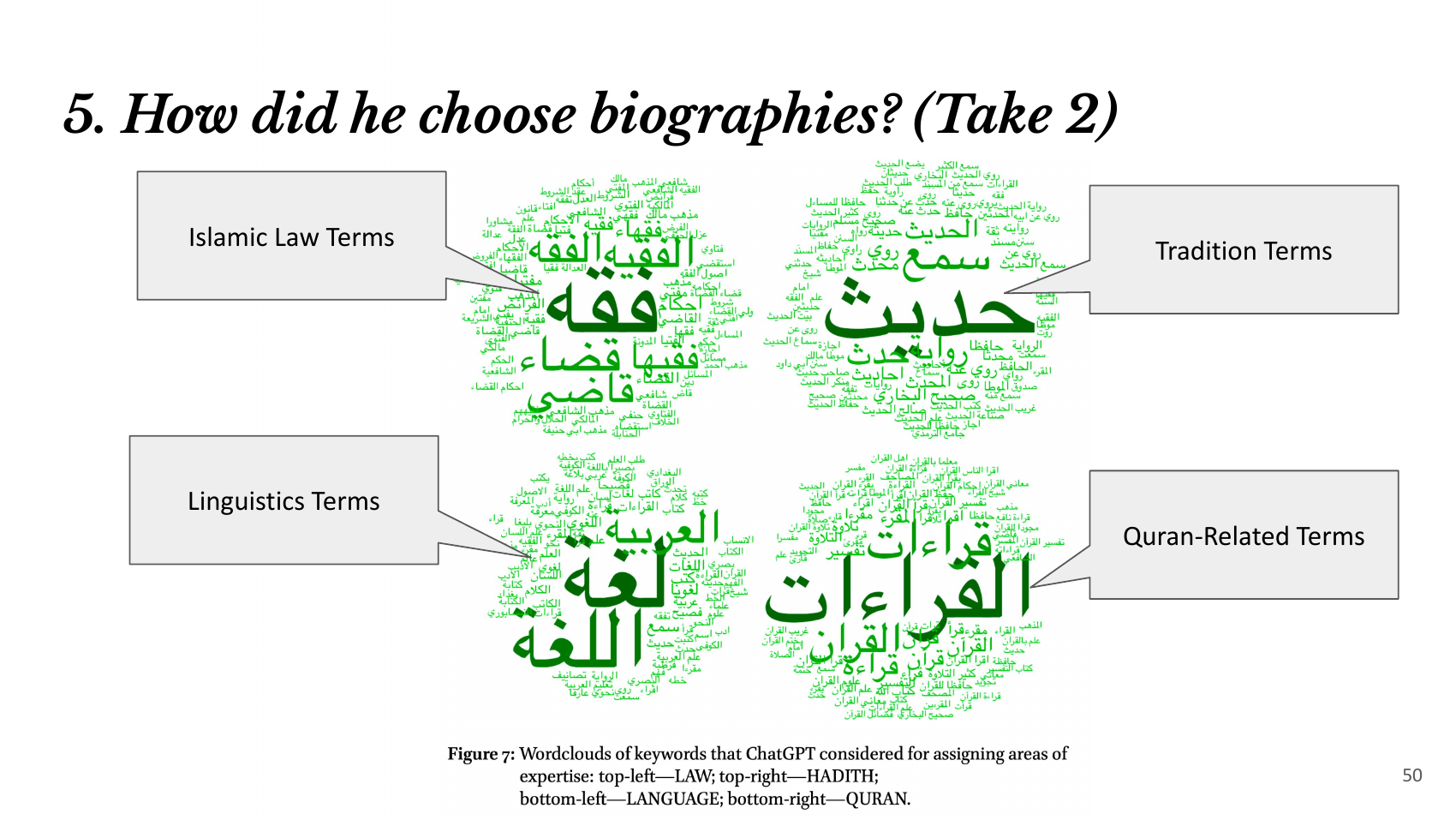
How did he choose biographies? (Take 2)
2. How did he change them?
2. How did he change them?
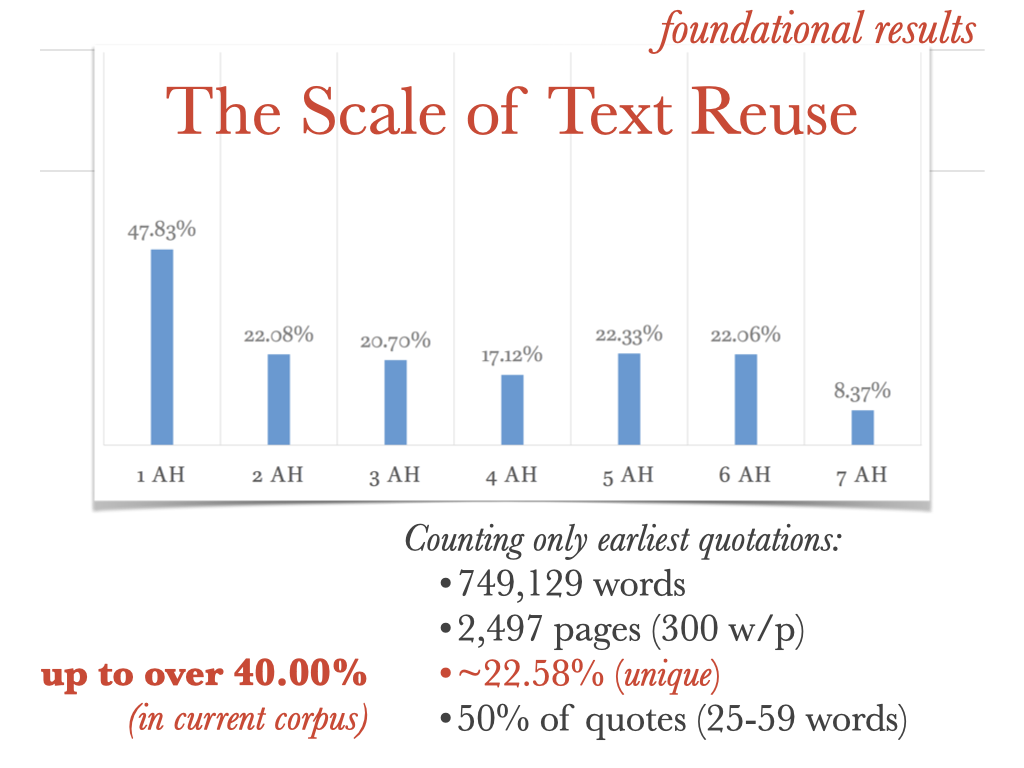
al-Ḏahabī picked longer biographies more frequently than shorter ones
Method: length comparison
2. How did he change them?
al-Ḏahabī adjusted some wording very consistently
“From the people of Grenada” > “Grenadian”;
Simplification of Abū-names;
Dropping references to al-Mašriq (the core lands of the Islamic world);
Overall reduction in verbosity, omission of details
Omission of lesser known individuals
Method: ngram matching
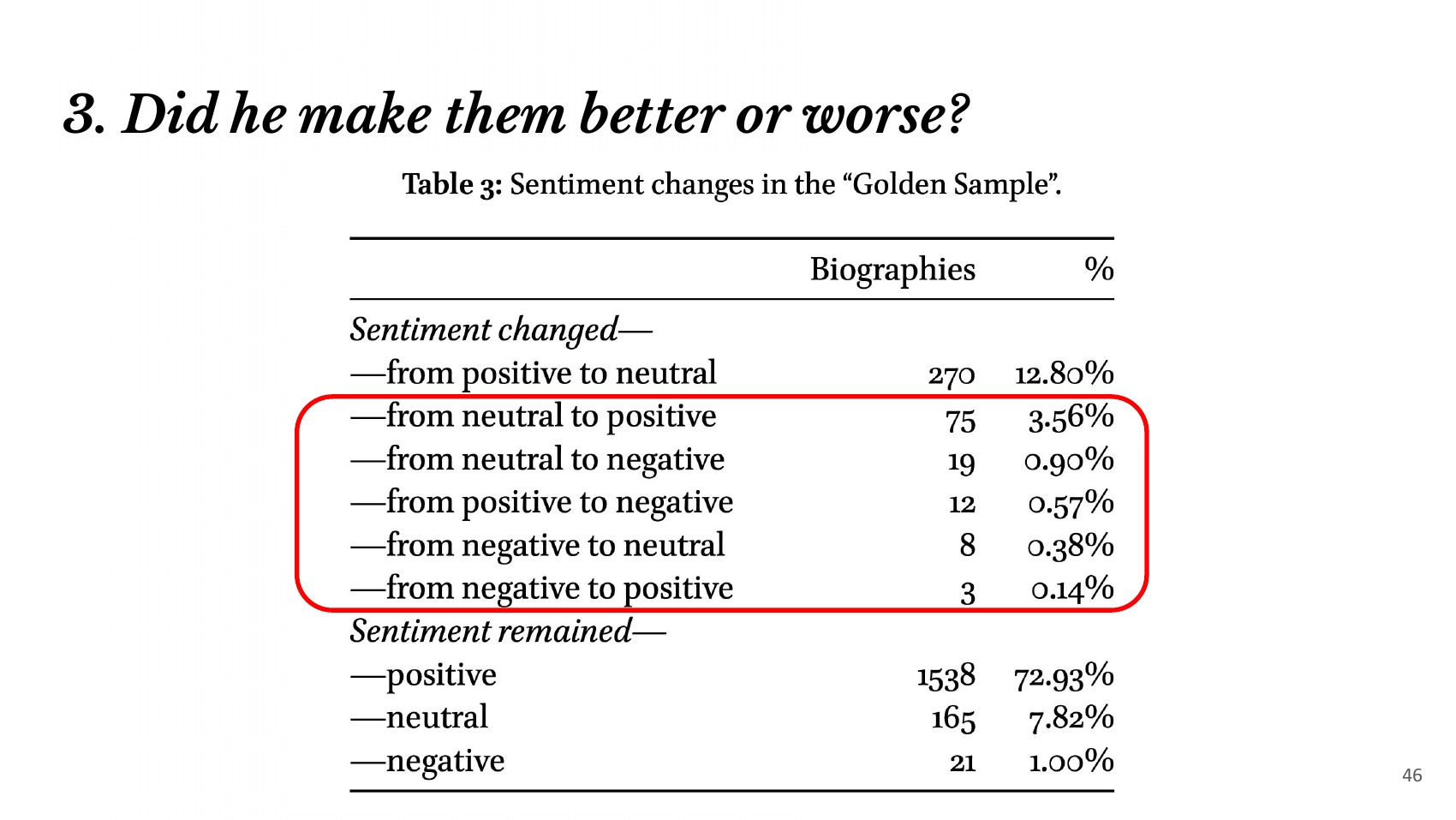
3. Did he make them better or worse?
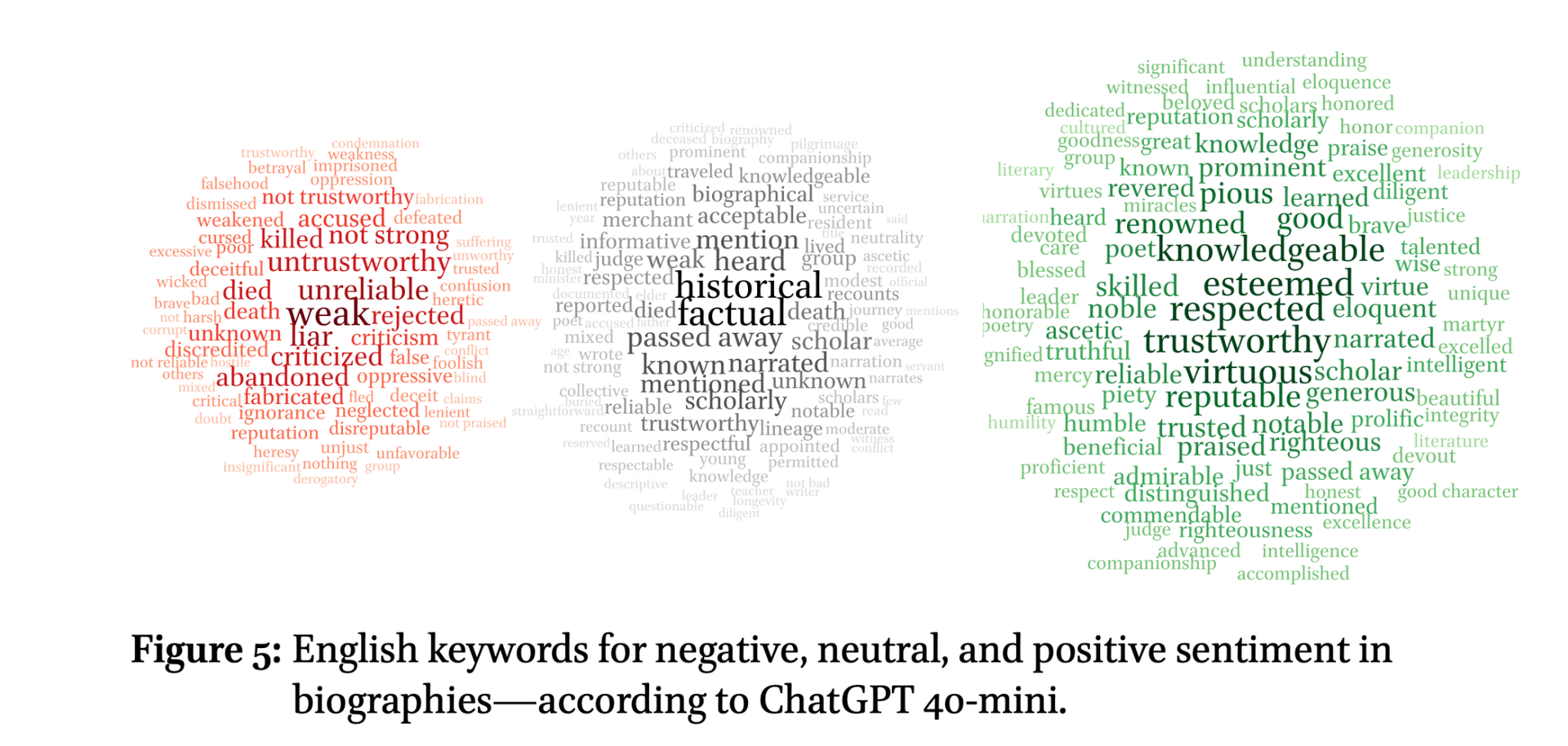
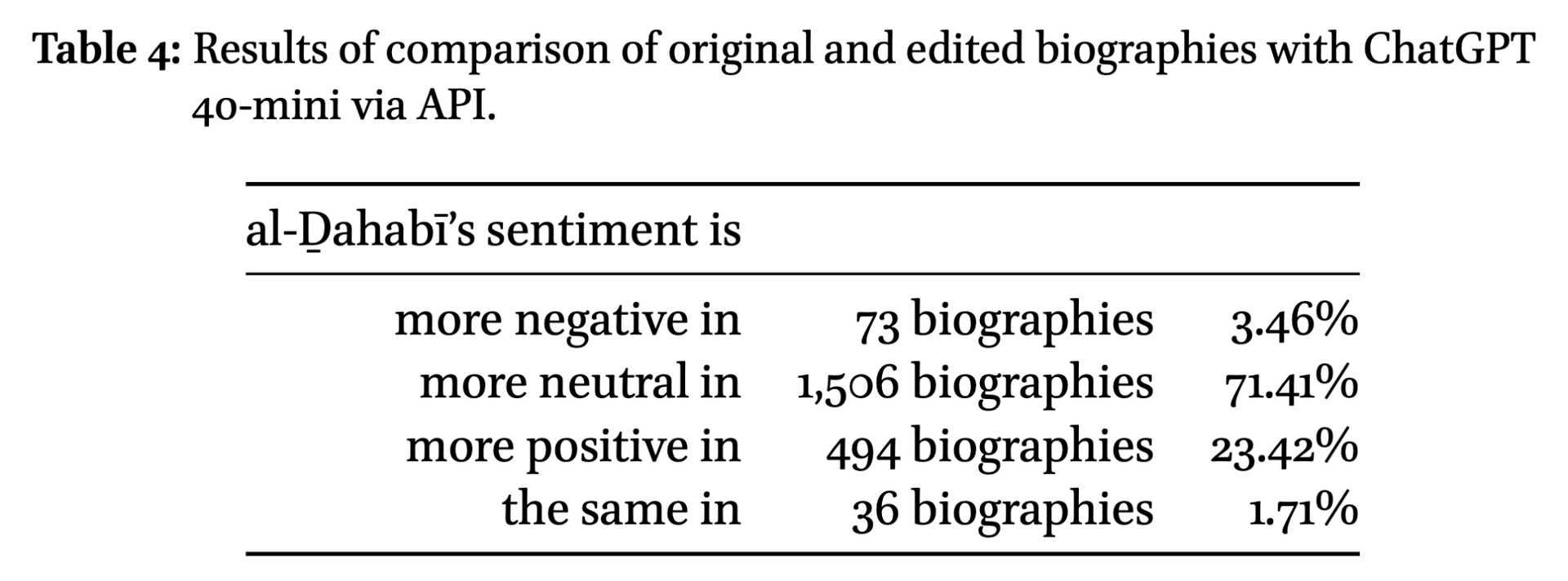
How did the sentiment in biographies change?
al-Ḏahabī’s biographies are:
more positive?
more negative?
the same?
Method: sentiment assessment with ChatGPT
3. Did he make them better or worse?
3. Did he make them better or worse?
4. Why he omitted “obvious” candidates?
Preference for longer biographies?
From the longest biographies in his sources, he omitted biographies of individuals:
whose reputations was less solid
whose achievements were less significant
whose biographies has less details.
Method: ChatGPT assessment
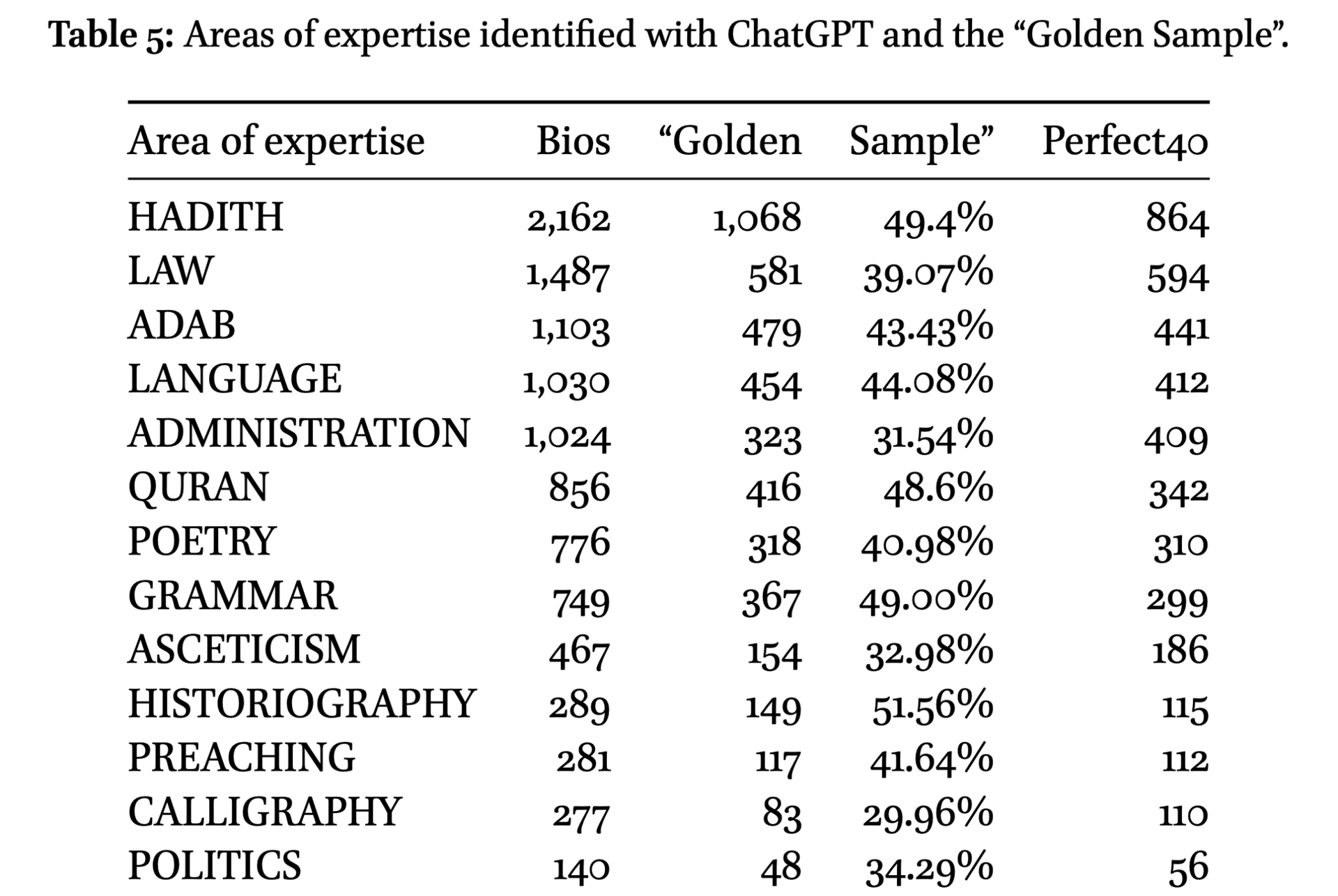
5. How did he choose biographies? (Take 2)
Did disciplinary profile play any role in his selection?
ChatGPT identified disciplinary profiles
We then compare how the distribution of profiles changed in his sample
The null hypothesis: al-Ḏahabī’s selection is purely random.
p-value test quantifies the probability of obtaining the observed result if the null hypothesis were true.
p-value < 0.05 (5%), the observed result is not random.
p-value for our simulated data is 0.000228, or 0.0228%
In humanese, this means that out of all al-Ḏahabīs across 1,000,000 parallel universes, only 228 arrived at a sample that was more representative than the selection of our al-Ḏahabī.
In statistical terms, his selection was deliberate and methodical.
al-Ḏahabī and his Andalusian sources
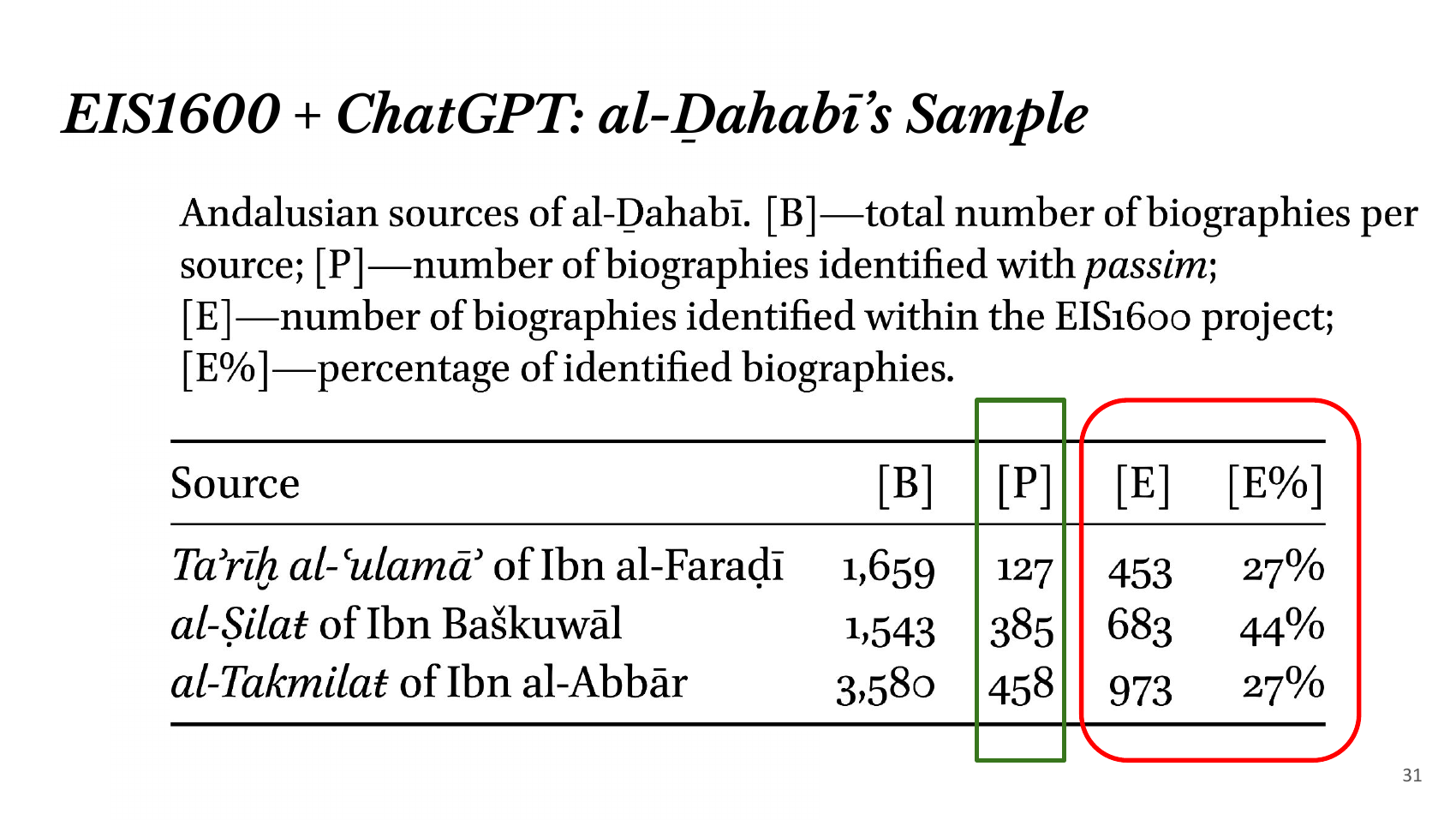
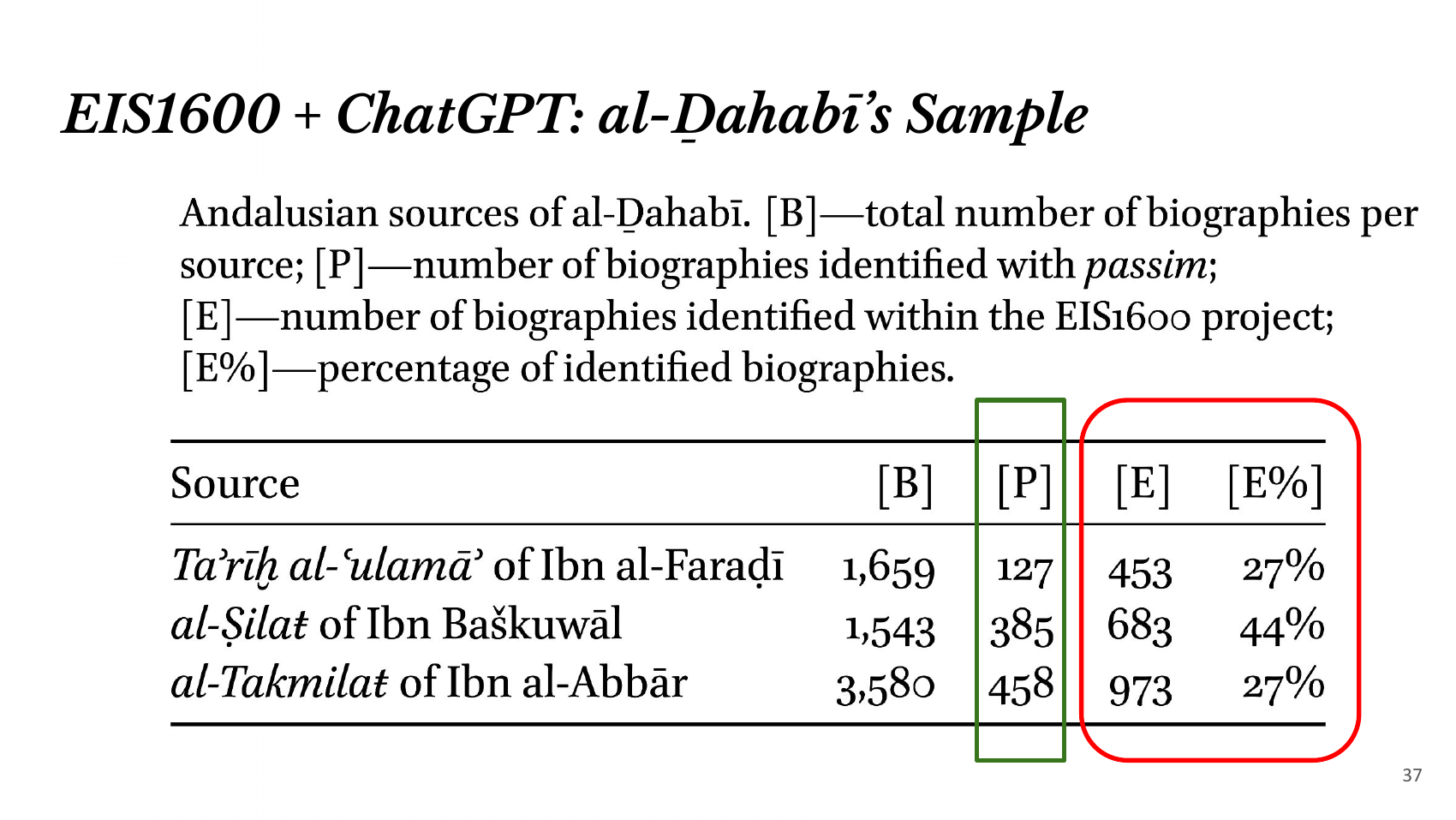
al-Ḏahabī took 2,109 of 6,782 (31%) biographies from the three Andalusian collections by Ibn al-Faraḍī, Ibn Baškuwāl, and Ibn al-Abbār. Altogether, his Tārīḫ al-islām amassed 30,000 biographies
did not select only longest biographies (not only the elite);
optimized biographies, without tarnishing or embellishment;
aimed at simplification and unification of the language;
shortened them:
24-38% reduction per biography
Cutting just 4 words from each biography saves 120,000 words: three copies of “The Ring of the Dove” of Ibn Ḥazm (d. 456/1064).
al-Ḏahabī and his Andalusian sources
seems to have “dehumanized” people:
simplification of the language improves retrievability
genuinely tried to represent al-Andalus in his History
by preserving the distribution of “disciplinary” profiles (comparable % of jurists, grammarians, etc.);
by preserving chronological distribution: his data follows the overall curve of al-Andalus;
Part
3
Generative LLMs as assistants
Method
The irony of new media
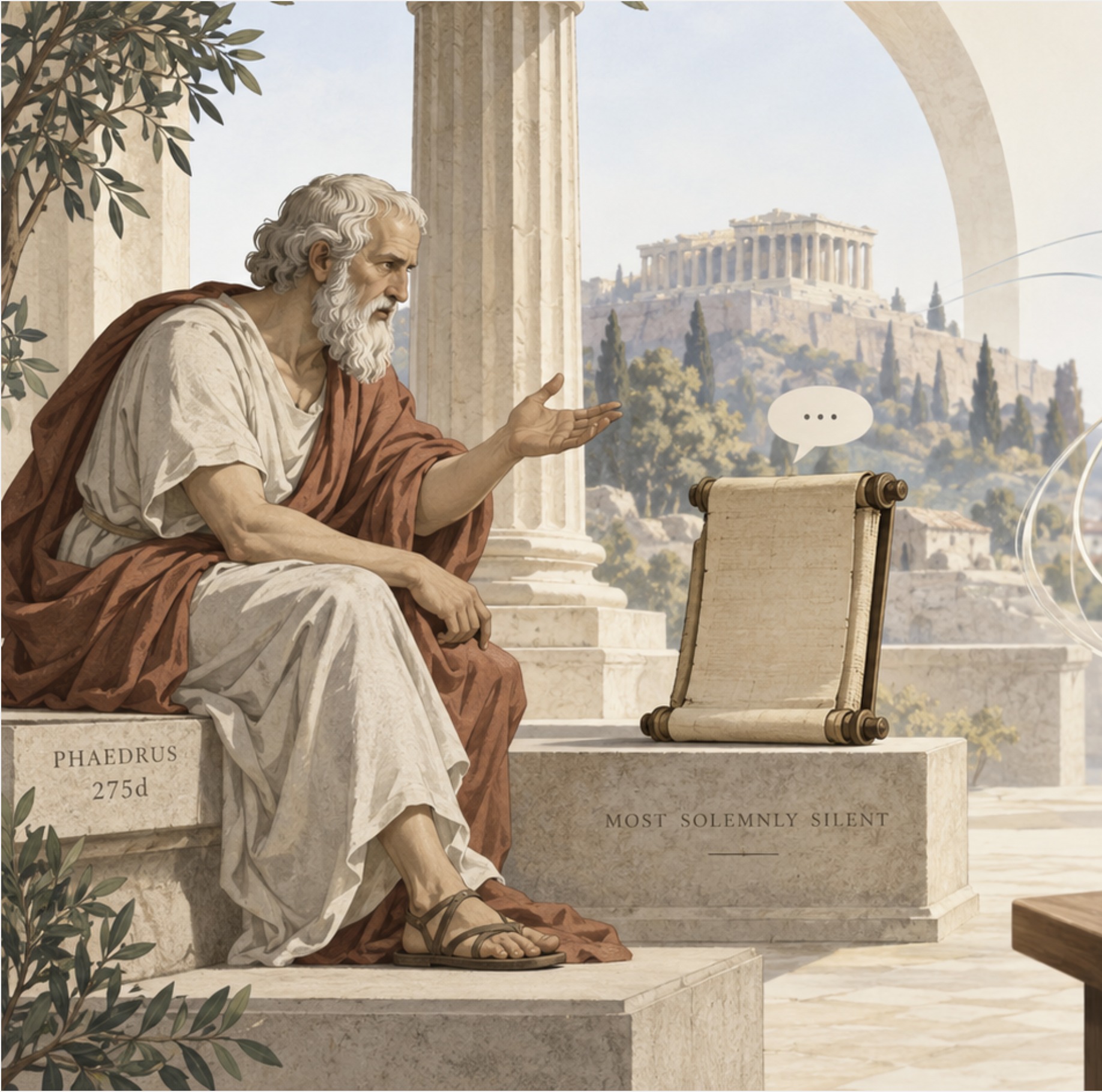
The classical critique of books
“If anyone asks them anything, they remain most solemnly silent.”
Plato, Phaedrus 275d
Writing was once suspect; today written texts are our scholarly gold standard.
The modern parallel
Now, knowledge from LLMs is suspect…
…yet LLMs bring dialogue back to reading.
The ultimate irony: technology restores the interactive conversation Plato feared was lost.
What an LLM is (humanistically speaking)
A system that produces fluent text — including text that looks like reasoning, and sometimes is
Not a database, not a person, not a finished reasoner
Treat outputs as well-formed drafts that need your judgment to become reliable
Unusually good at form, unevenly good at content
LLMs are catalysts — catalysts need substrate (1)
A catalyst accelerates a reaction that is already possible
It does not create the reaction from nothing
LLMs work the same way: they accelerate the work you can already do, in fields where you can judge the output
I can use an LLM to read Arabic faster — I have the training to catch its mistakes
I cannot use an LLM to read Chinese historical texts reliably — I have no substrate to check it against
LLMs are research assistants, not cheating devices
Designing:
start with a question about your research problem;
arrive at detailed working methodological solutions;