Unlocking Arabic Manuscripts: The Potential of Digital Humanities for Egypt’s Collections
The Case for a Unified Arabic Corpus
Maxim Romanov

September 27–28, 2026 · Cairo · The Evolution of Islamic Societies (c. 600–1600 CE), Universität Hamburg


ملخّصٌ مفصّل للمحاضرة بالعربية، مع شرحٍ موجز لكل شريحة.
امسحوا الرمز لقراءته.
maximromanov.github.io/slides/
2026-09-28-Cairo/companion-ar.html
We know it from what surrounds it.
The instrument
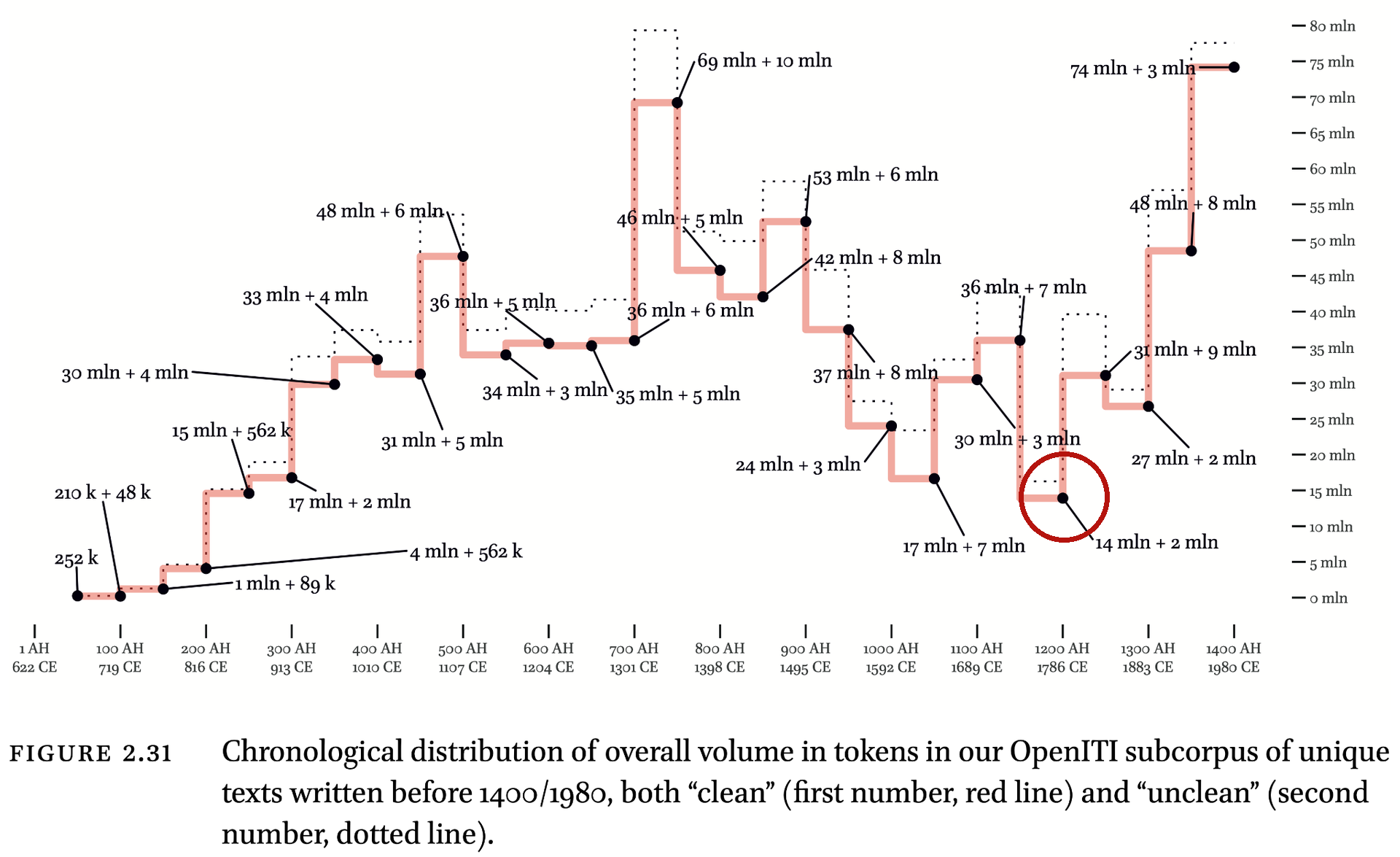
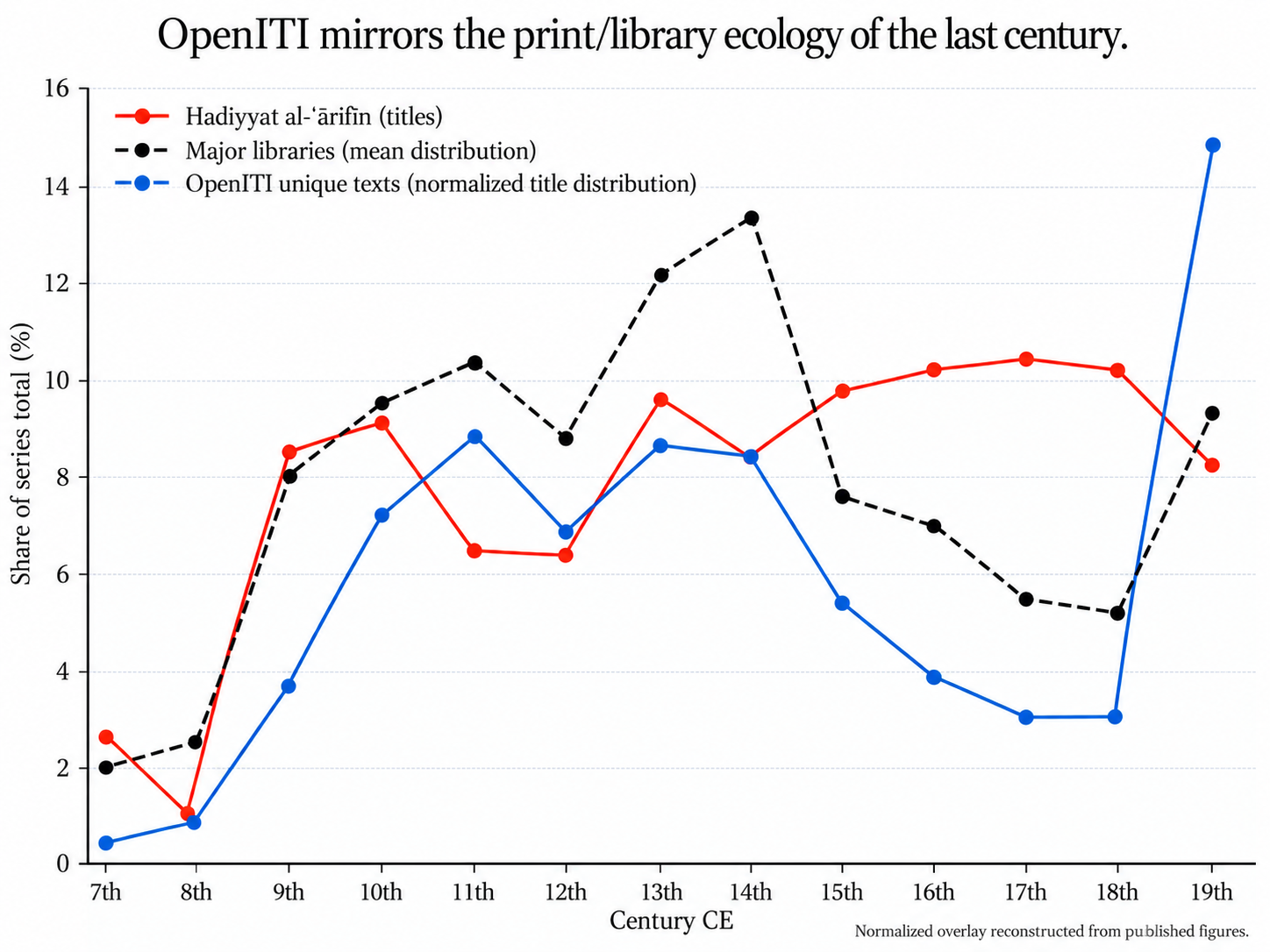
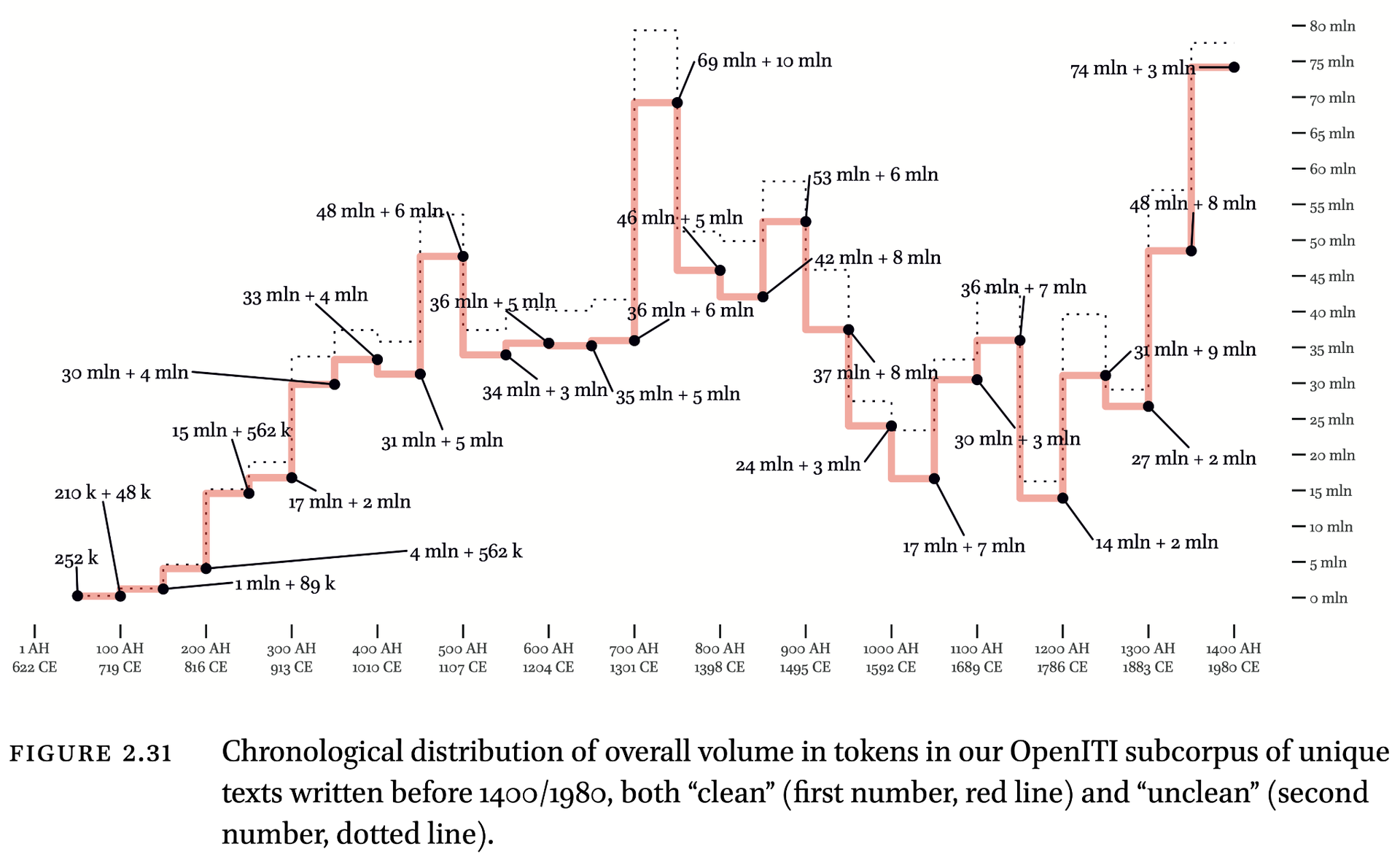
OpenITI as a chronological and geographical representation
Nigst, Lorenz, Maxim Romanov, Sarah Bowen Savant, Masoumeh Seydi, and Peter Verkinderen. OpenITI: A Machine-Readable Corpus of Islamicate Texts, Primary Version. Version 2025.1.9. Zenodo, 2026. doi.org/10.5281/zenodo.18613982
Our final subcorpus, based on version 2023.1.8, consisting solely of “clean” unique texts written up to 1400/1980:


Case 1
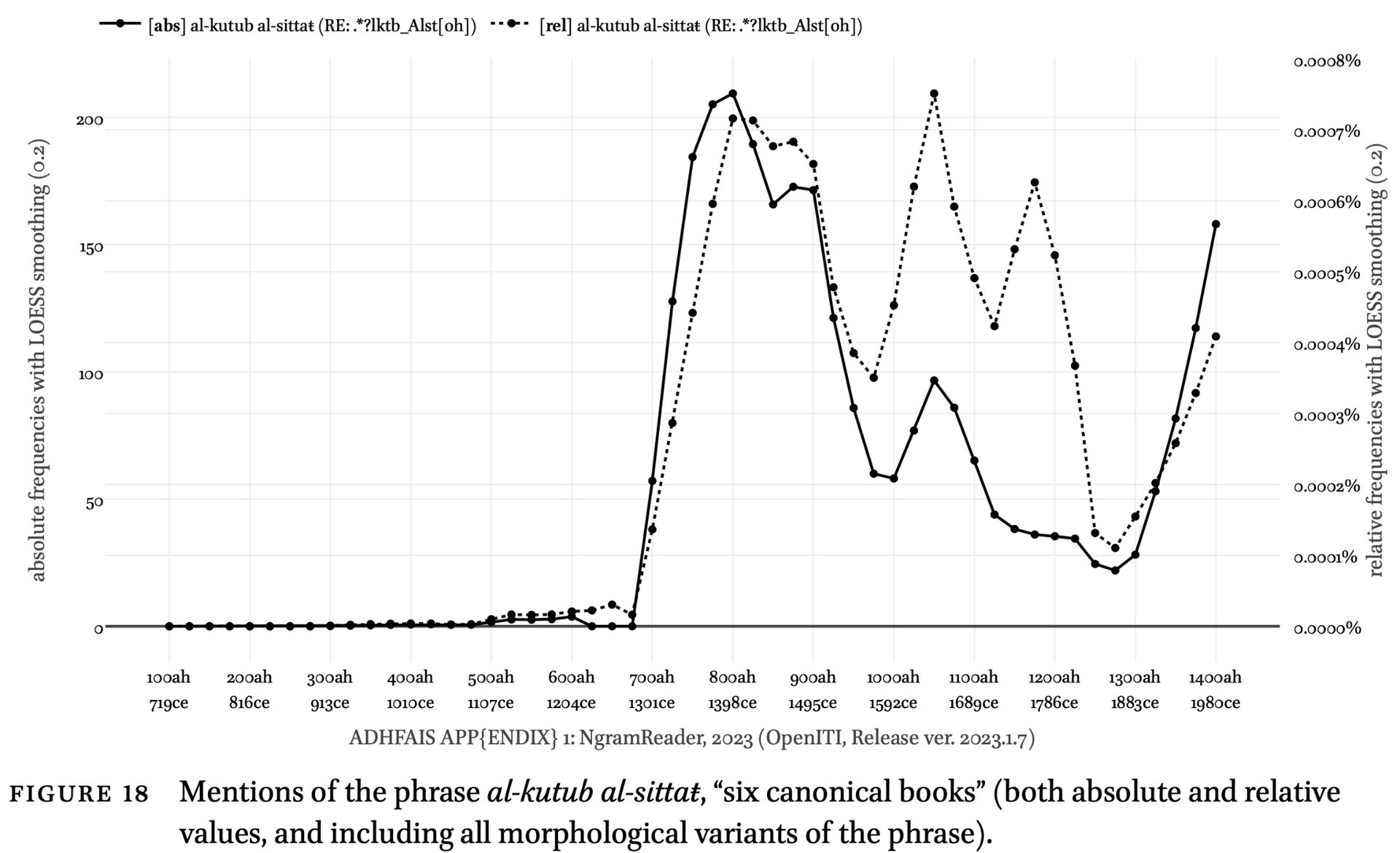
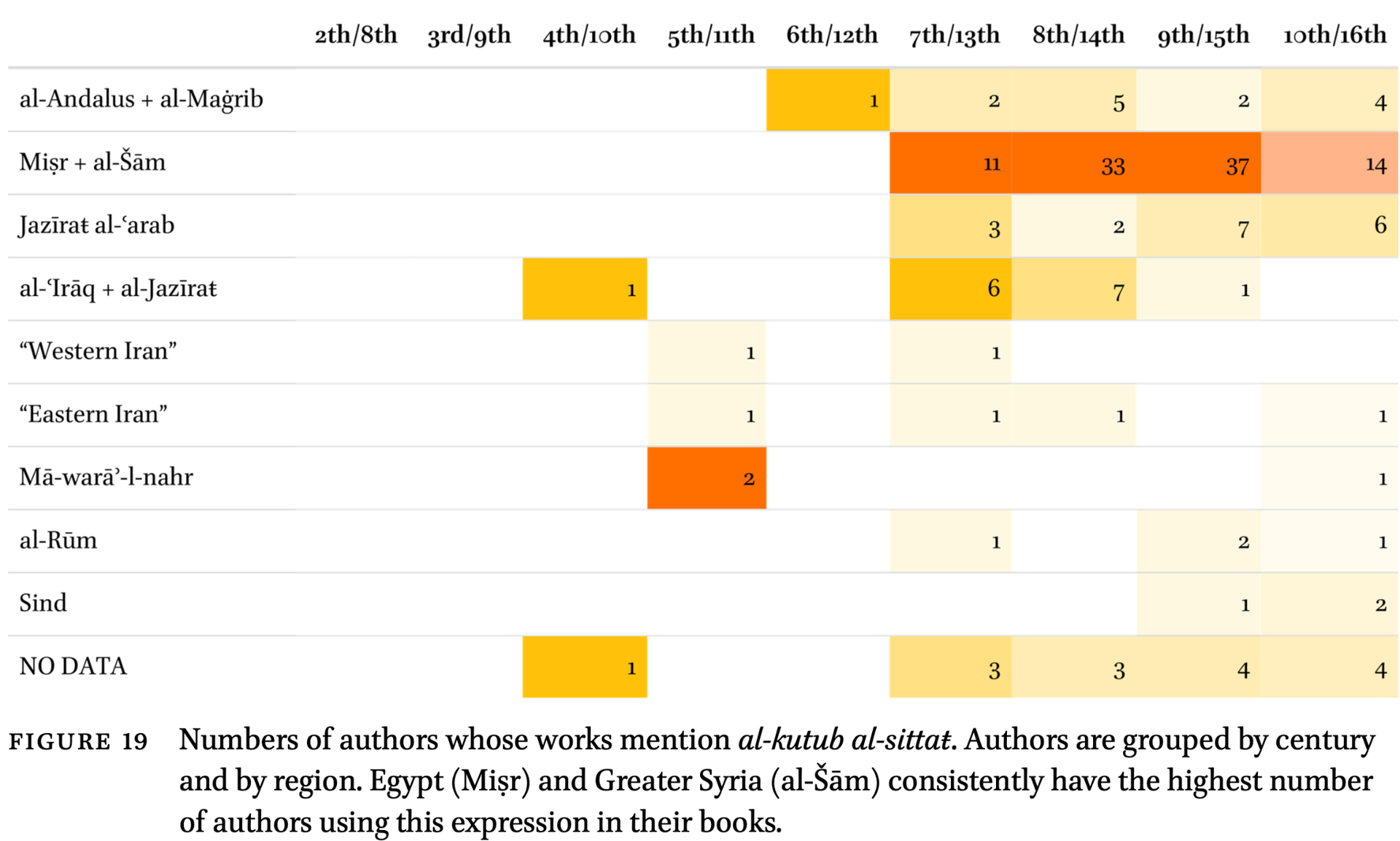
When did al-kutub al-sittaŧ come to be?
In “The Devil’s Delusions” (Talbīs Iblīs), Ibn al-Jawzī (d. 597/1201) uses lots of ḥadīṯs:
- No isnāds for: Muslim, al-Buḫārī, and Abū Dāwūd
- Full isnāds for: al-Tirmiḏī, Ibn Mājah, and al-Nasāʾī
No notion of al-kutub al-sittaŧ in the end of the 6th/12th century in Baġdād.


Case 2
Text reuse and the modeling of text types
Case 2a
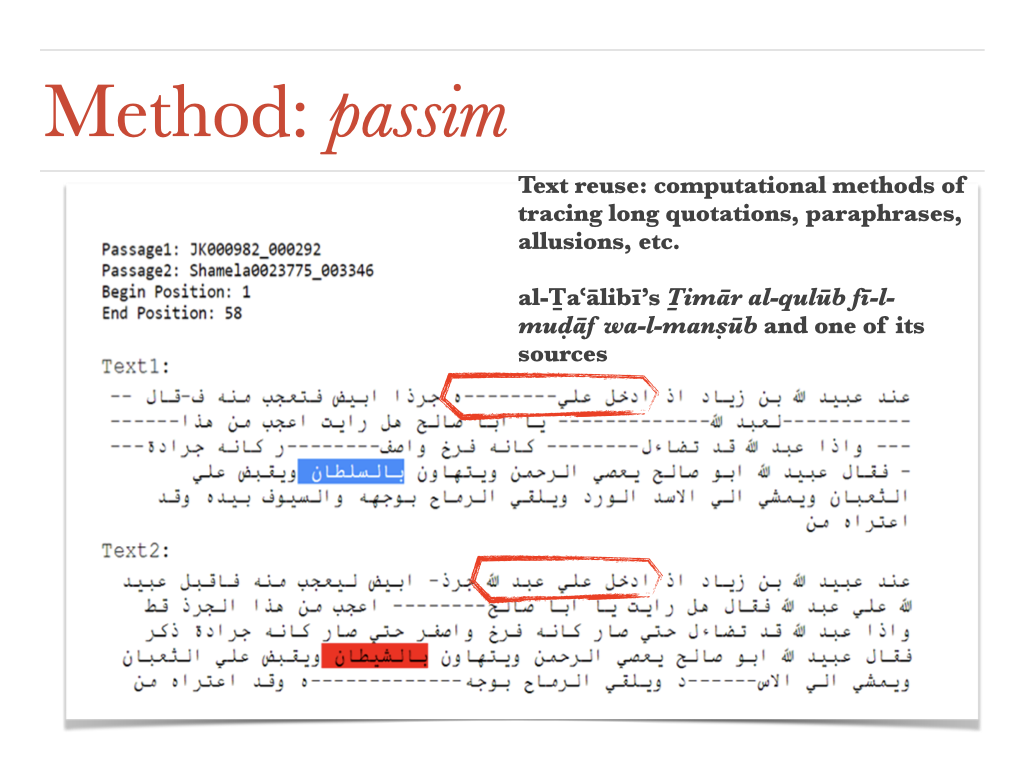
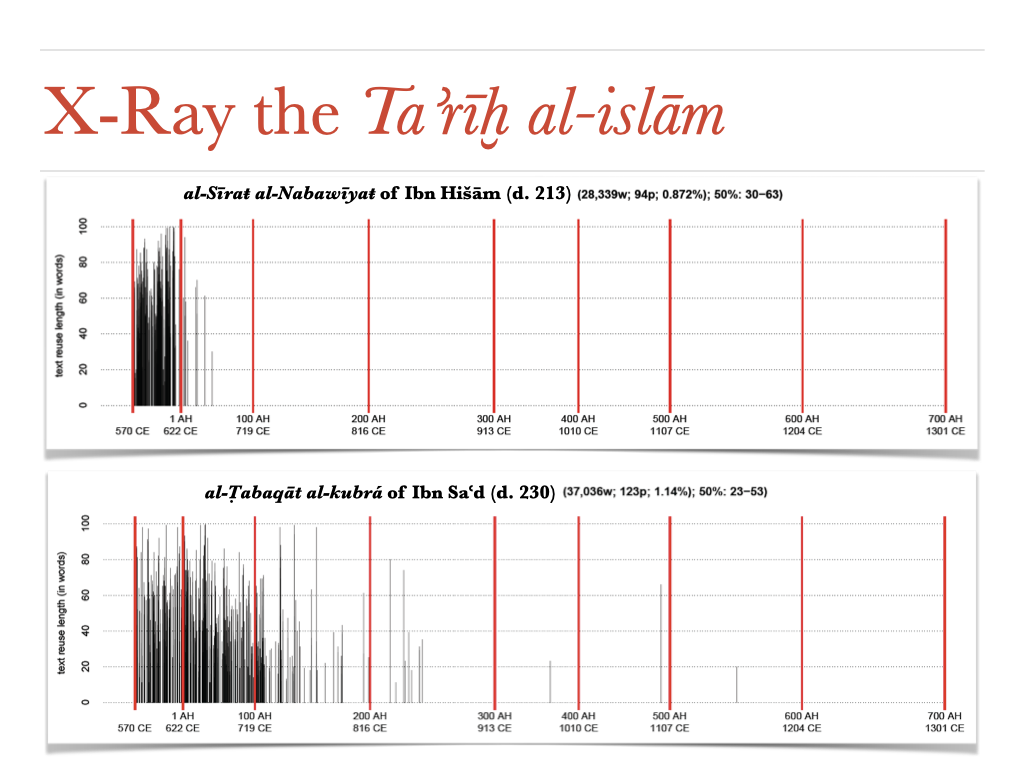
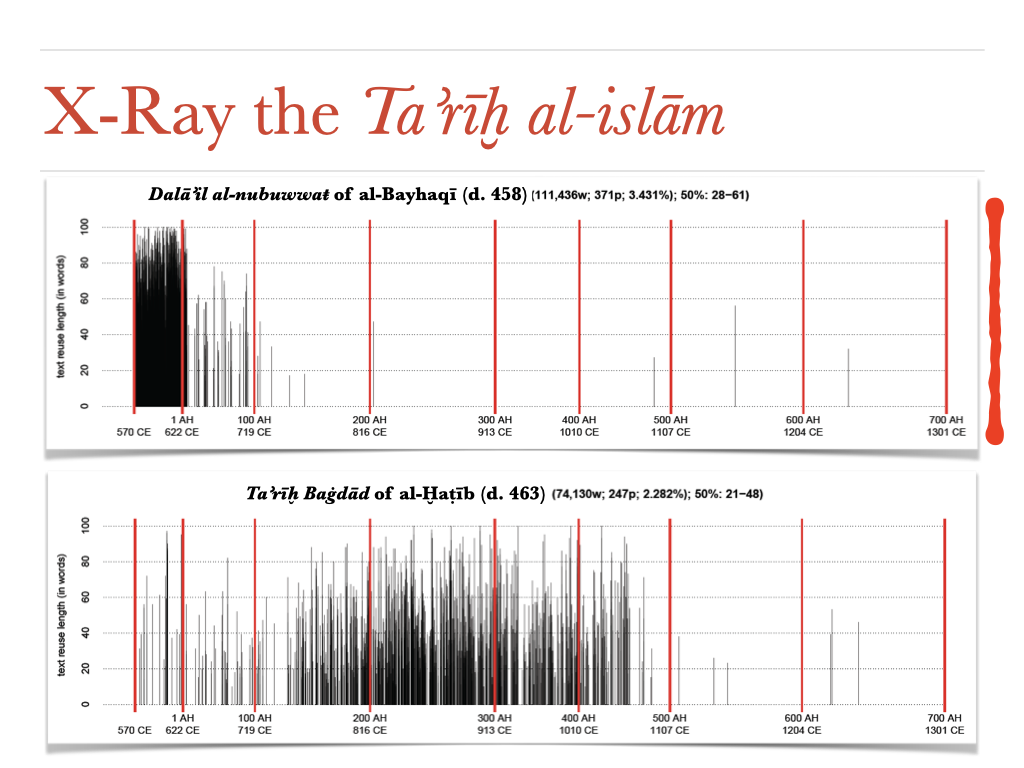
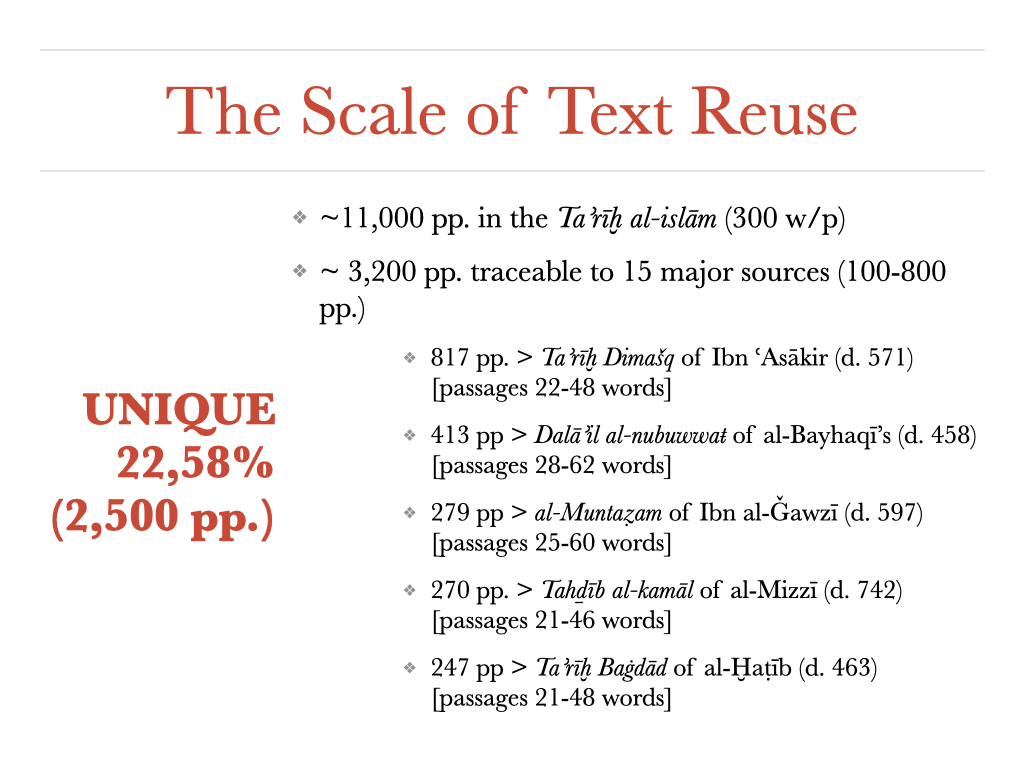
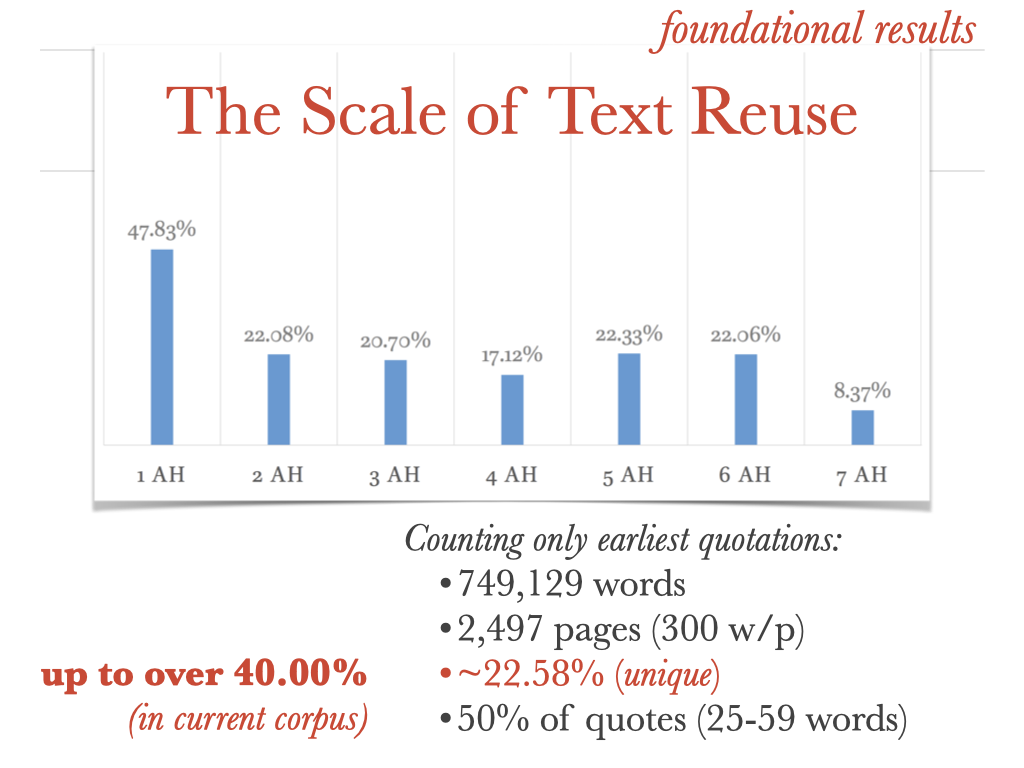
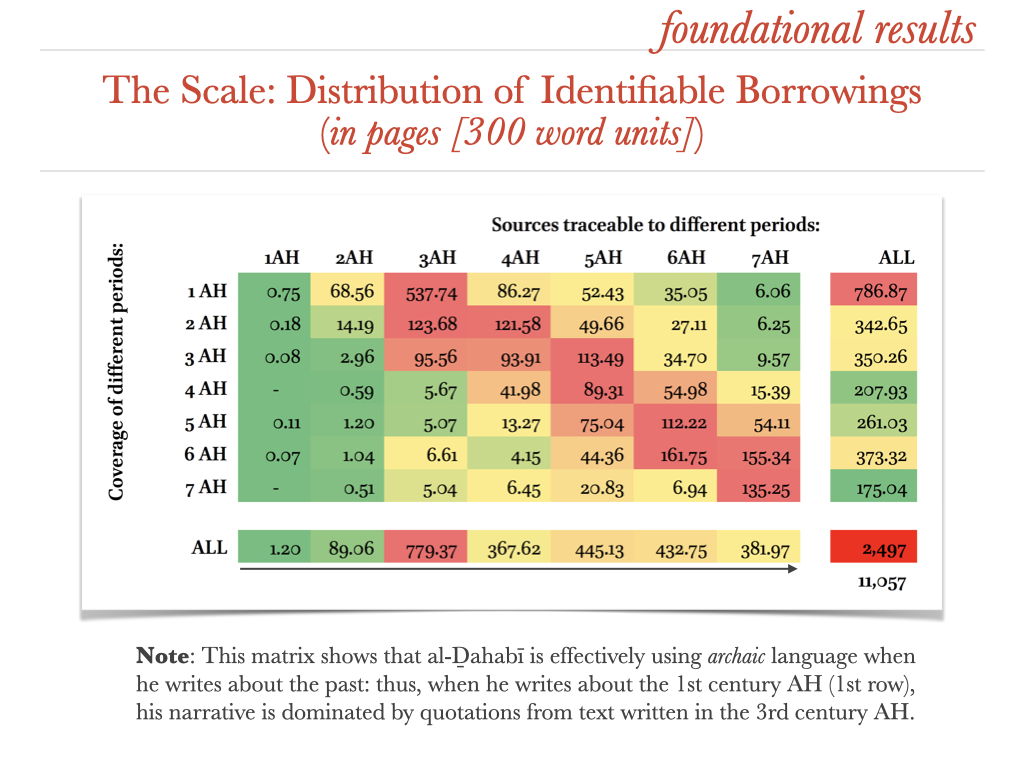
By tracing at scale how later texts reuse earlier texts we can understand how each book fits into the tradition and how all the books form a network of interconnections
Šams al-dīn al-Ḏahabī (d. 748/1348): historian, ḥadīṯ scholar, biographer.
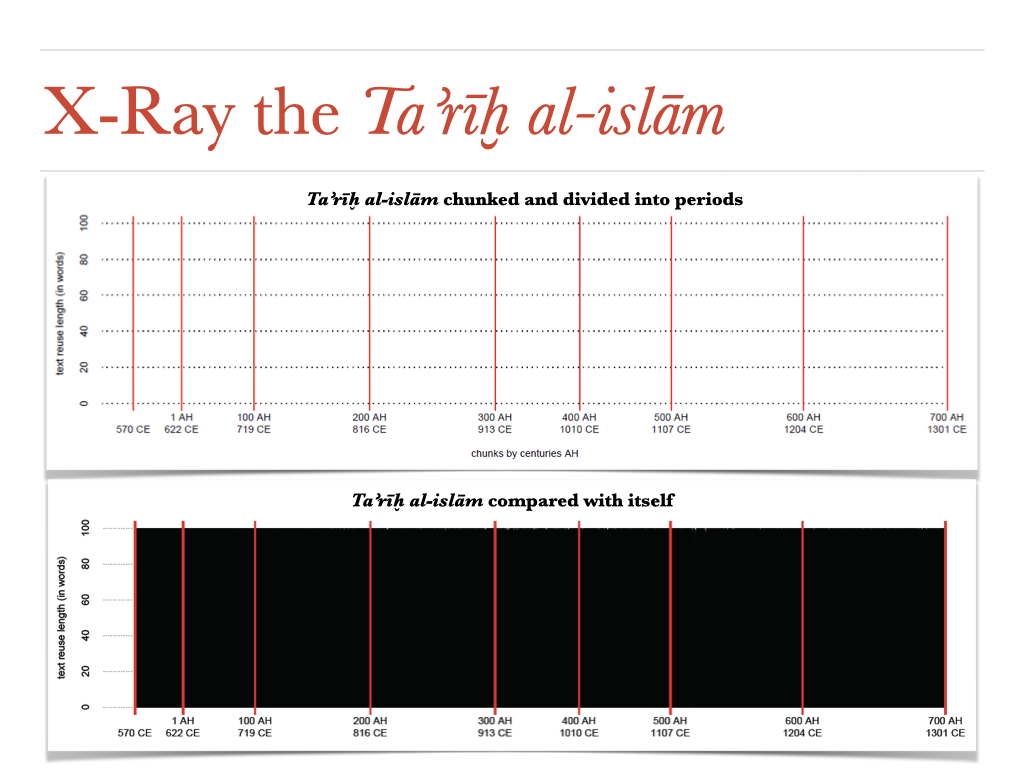
Tārīḫ al-islām — a universal chronicle-cum-biographical collection covering seven centuries of Islamic history (1–700 AH / 622–1301 CE), organized decade by decade.
Built largely from earlier sources — an ideal test case for text-reuse detection at scale.


Case 2b
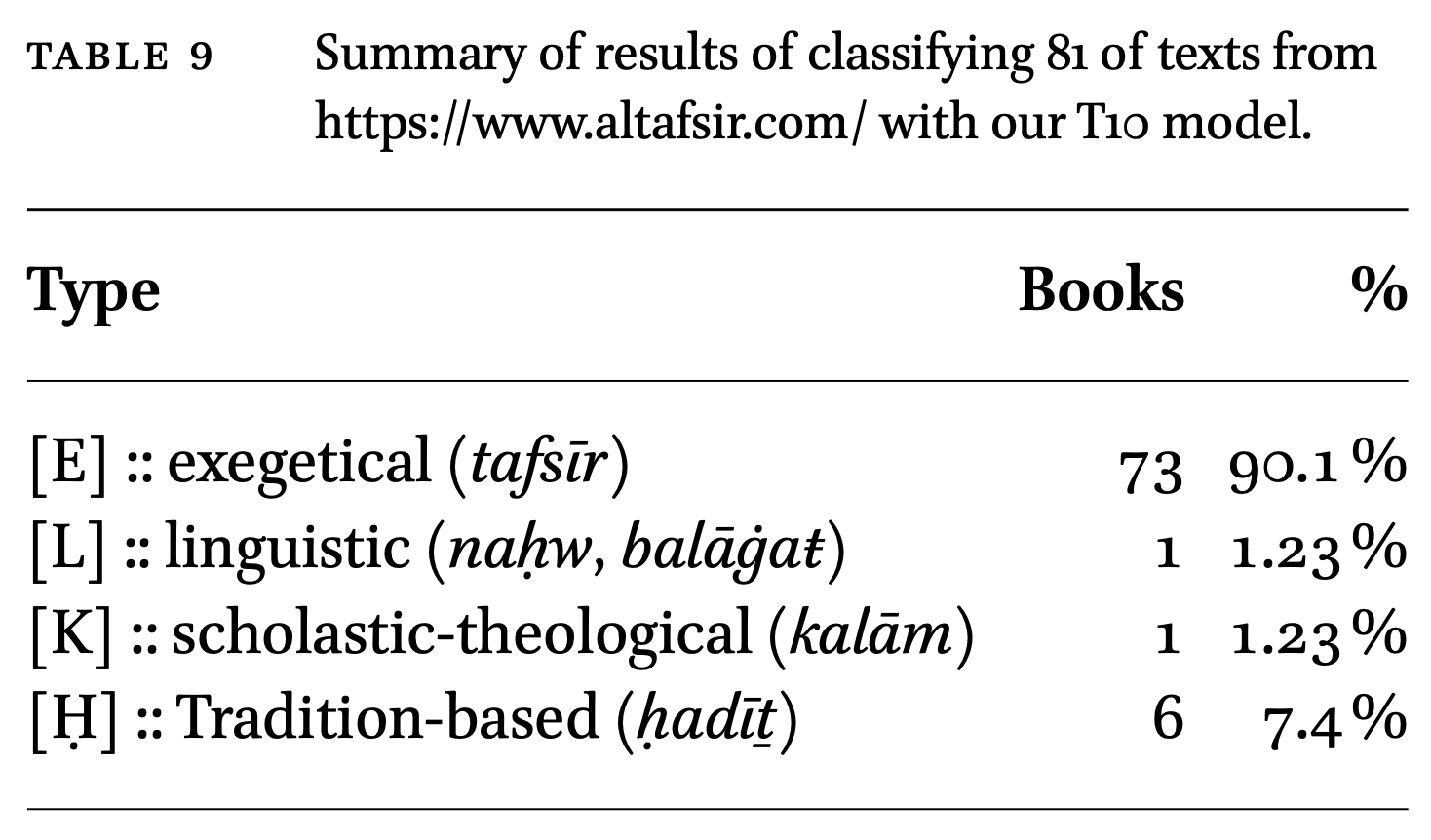
By modeling major textual types, we can identify types of unknown books and understand the structural composition of the complex books
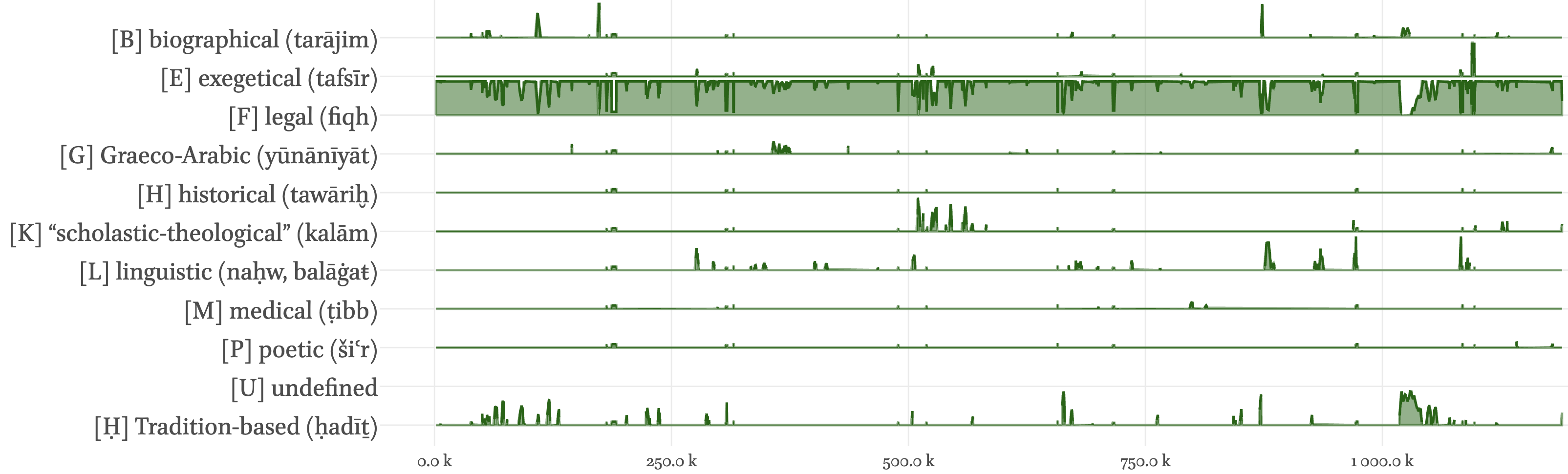
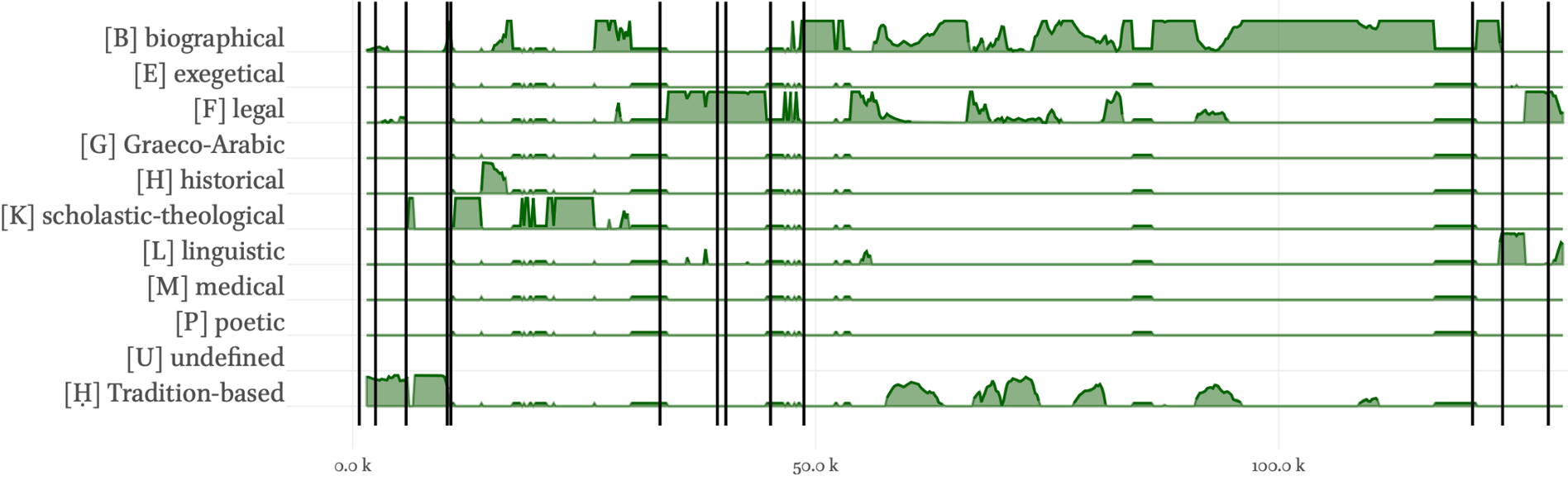
[B] Biographical type (tarājim): mostly collections of biographies[E] Exegetical type: interpretations of the Qurʾān (tafsīr)[G] Graeco-Arabic (“Greek-esque”) type (yūnāniyyāt): translations from Greek and works on the development of Greek philosophy in Arabic (falsafat, predominantly Aristotelian)[H] Historical type (tawārīḫ): mainly chronicles[F] Legal type (fiqh): a broad variety of legal texts[L] Linguistic type: a broad variety of grammatical, rhetorical, and lexicographical texts (balāġat, naḥw, maʿājim luġawiyyat)[M] Medical type (ṭibb): mainly texts on Galenic medicine[P] Poetic type (šiʿr): mainly collections of poetry (dīwāns)[K] “Scholastic-theological” type: works of kalām[Ḥ] Tradition-based type: collections of ḥadīṯ
[K] scholastic-theological: it is in fact a major work of kalām, and samples from it were used to train the [K] type[L] linguistic (still 26% exegetical signal): closer to a dictionary than to a traditional tafsīr[Ḥ] Tradition-based: composed mainly of ḥadīṯ reports, so hardly a real mistake; three still carry a strong exegetical signal (28%, 42%, 49%)73 of 81 texts (90.1%) landed correctly on the first pass; every exception is explicable.
Rolling typological assessment of Kitāb al-Umm of al-Šāfiʿī (d. 204/820) a single dominant type — [F] legal — running almost unbroken from beginning to end.
Rolling typological assessment of Talbīs Iblīs of Ibn al-Jawzī (d. 597/1201) shows that individual chapters (separated by vertical black lines) usually contain text reflecting specific types.
Value for manuscripts:
Case 3
language change and topic shifts through chronological layers of books
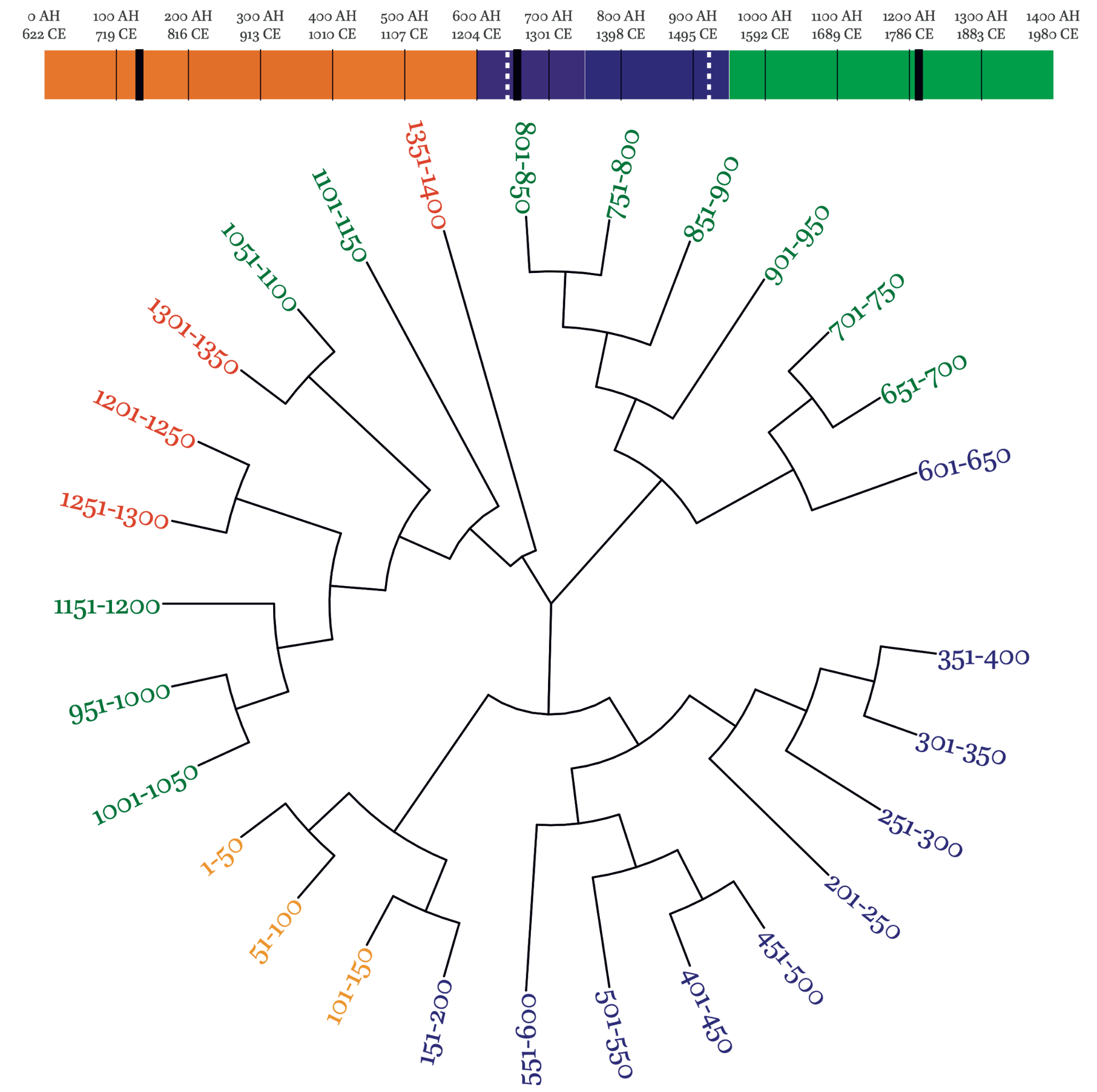
Where do these boundaries come from? What if we ask the corpus?
Geschichte der arabischen Litteratur, 5 vols. (1896–1943)
Cambridge History of Arabic Literature, 6 vols. (1983–2006)
Encyclopedia of Arabic Language and Linguistics (Brill)
Two witnesses

Keywords (TF–IDF): what texts are about
Style (MFV): how texts are written
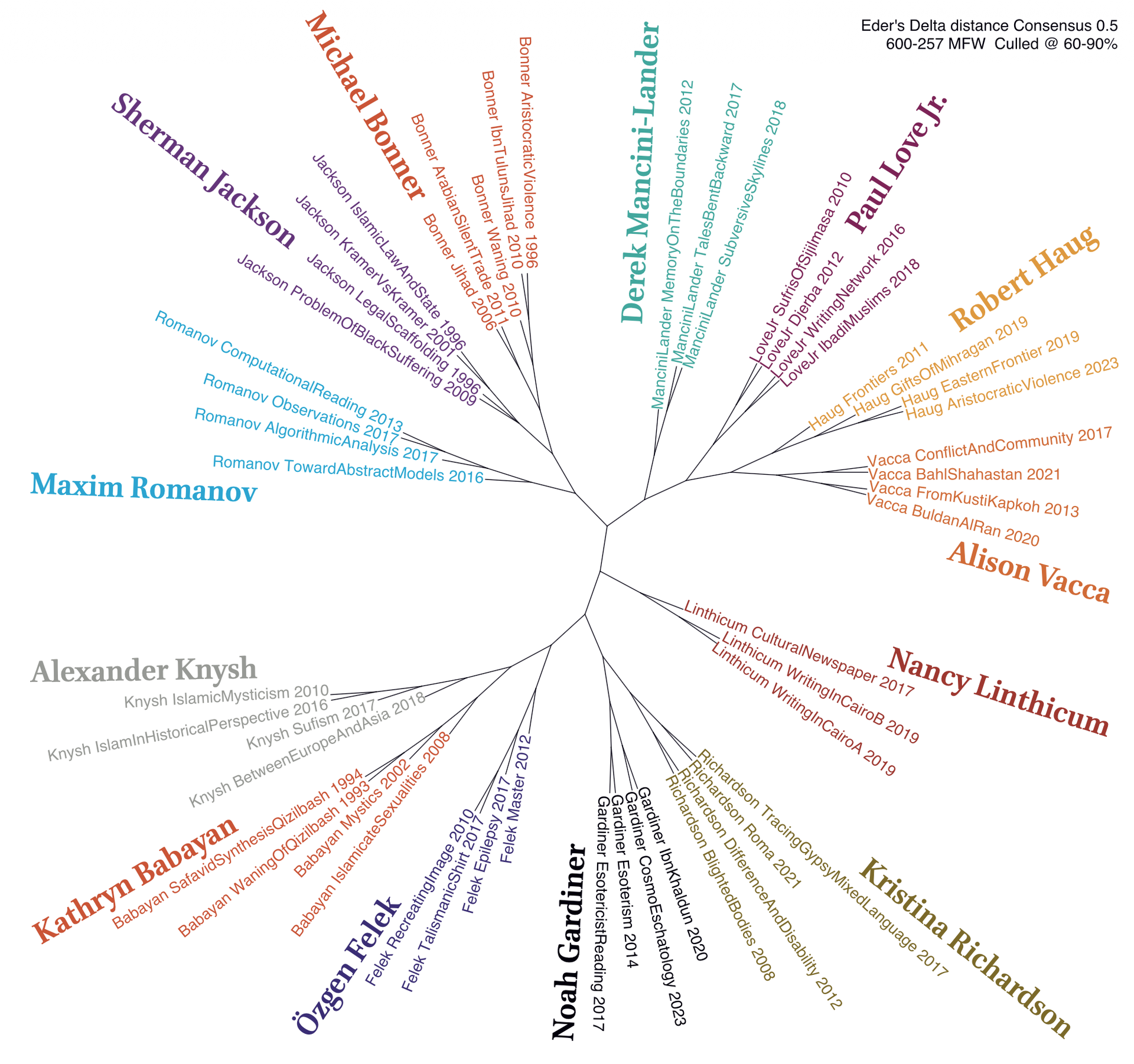
Do not trust a tree. Ask what survives across trees.
stylometry
stylometry
Jurjī Zaydān’s writings
(1) 1891–1902
(2) 1903–1905
(3) 1906–1914
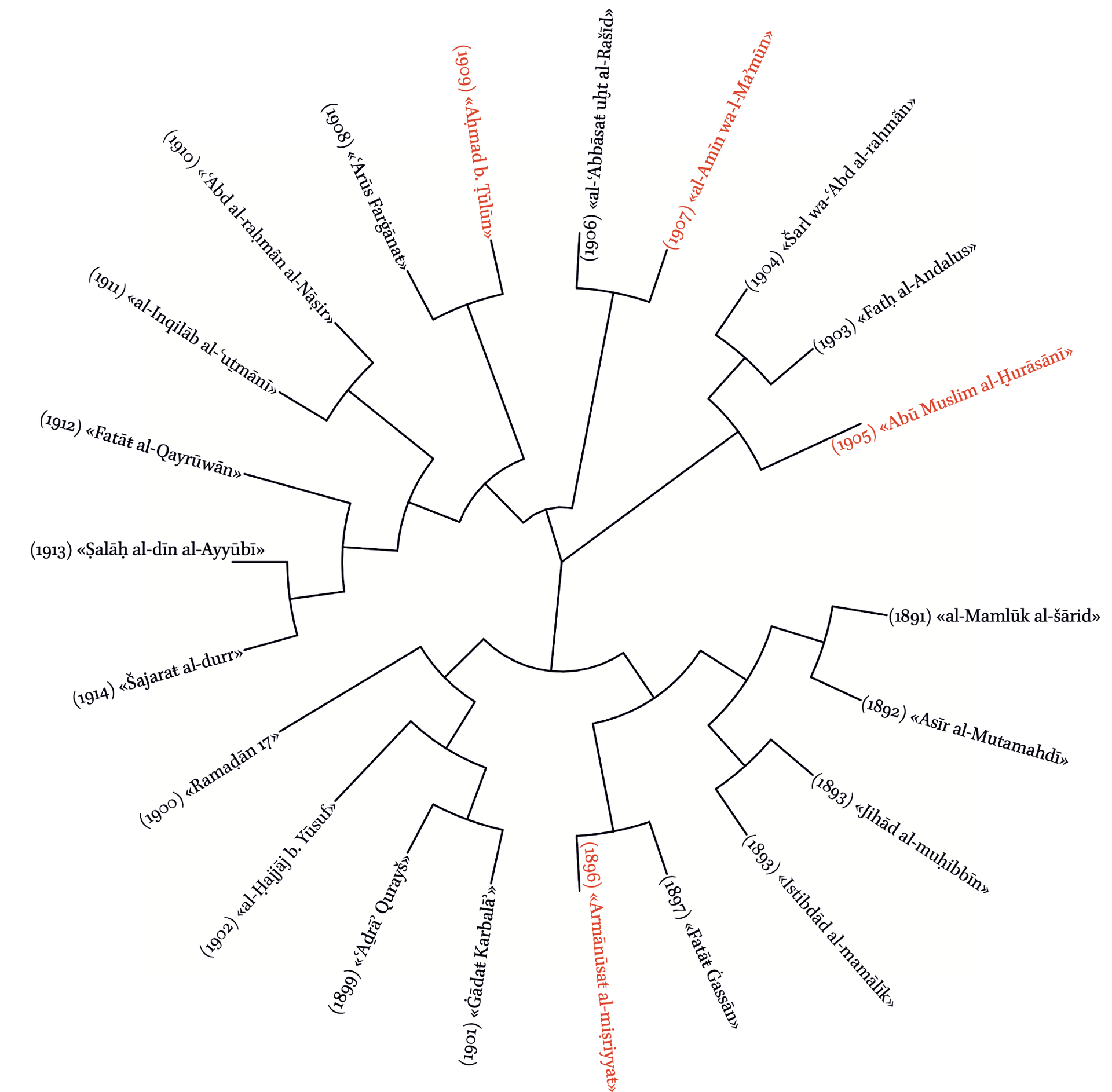


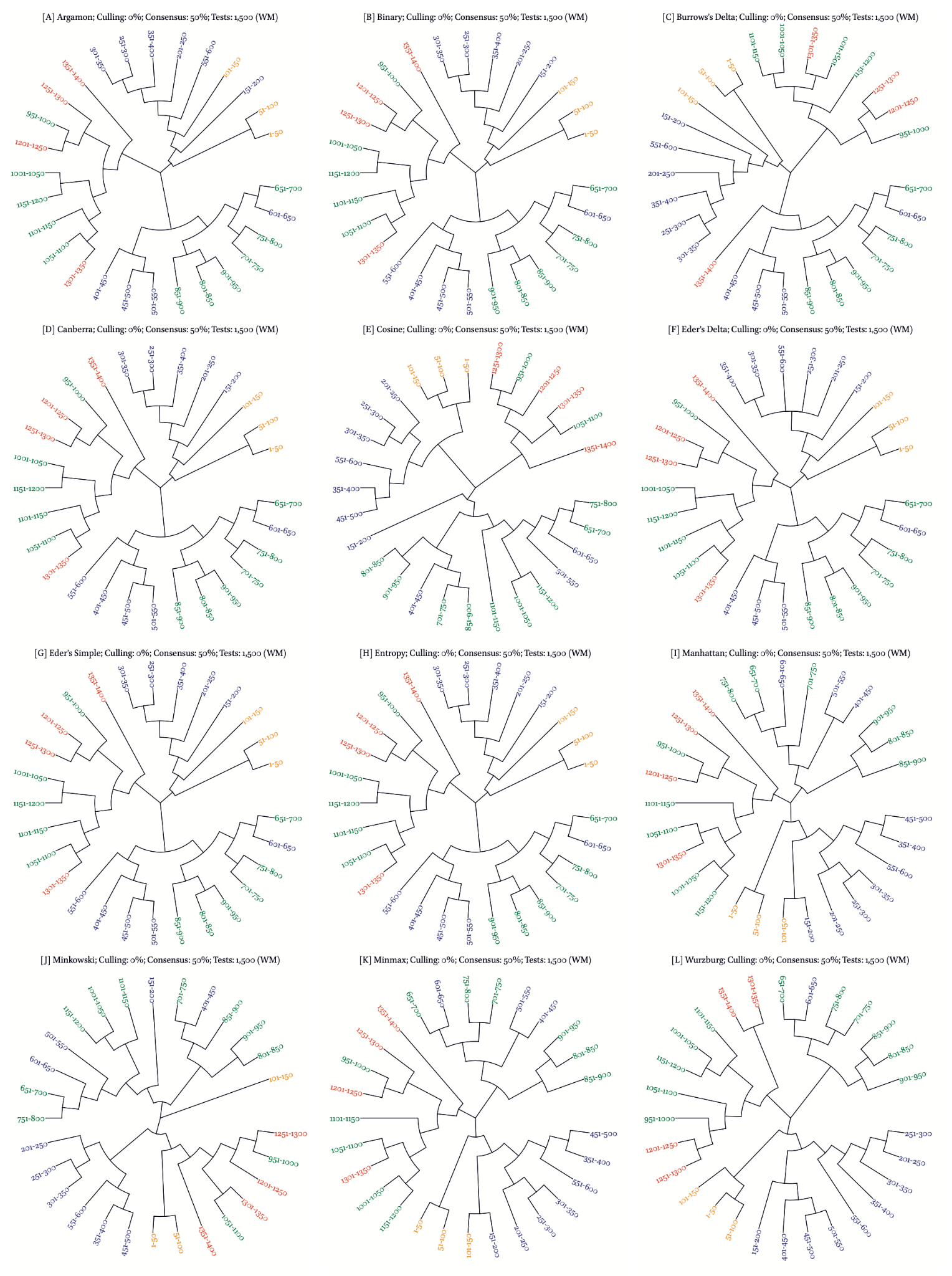
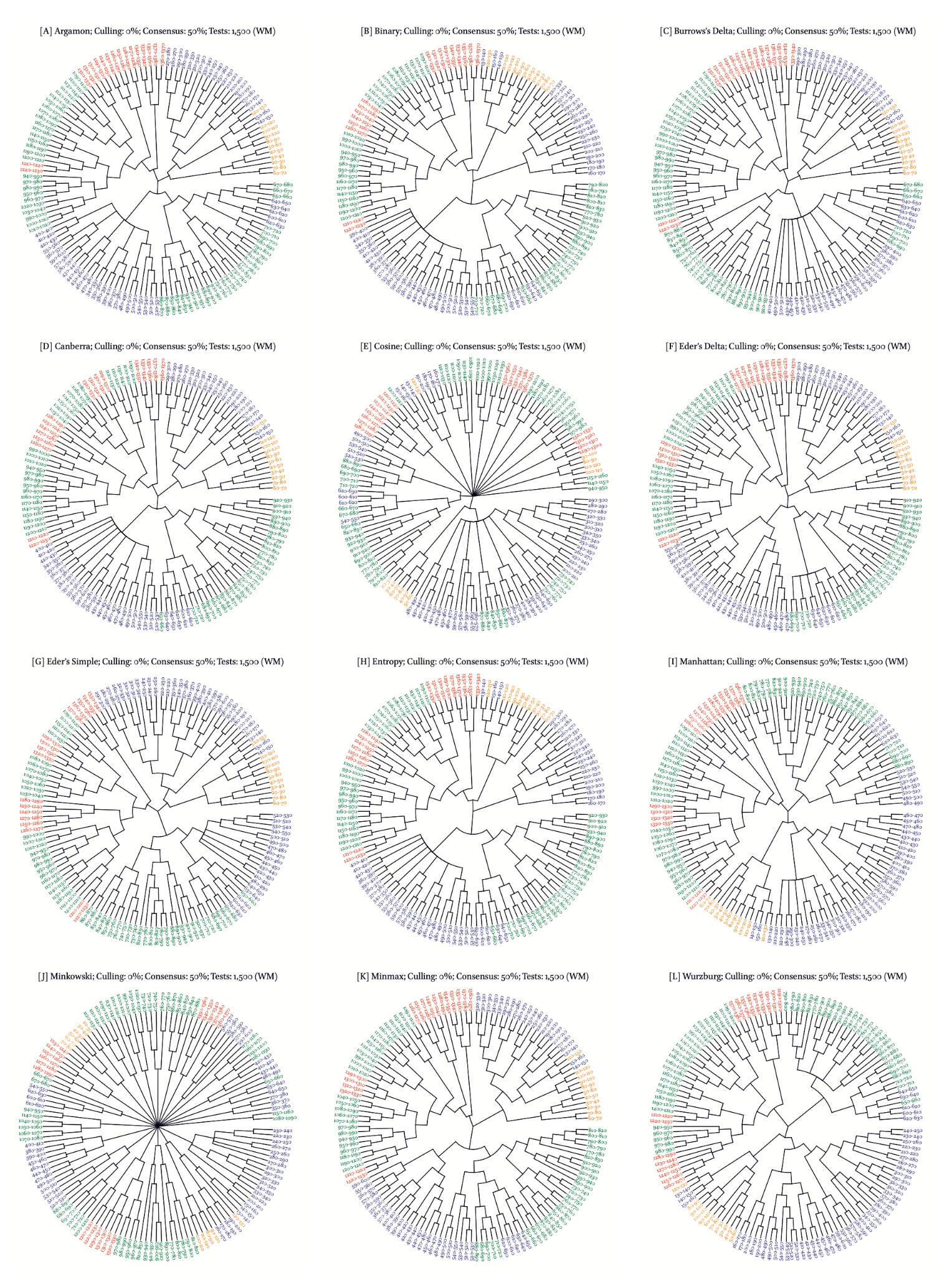
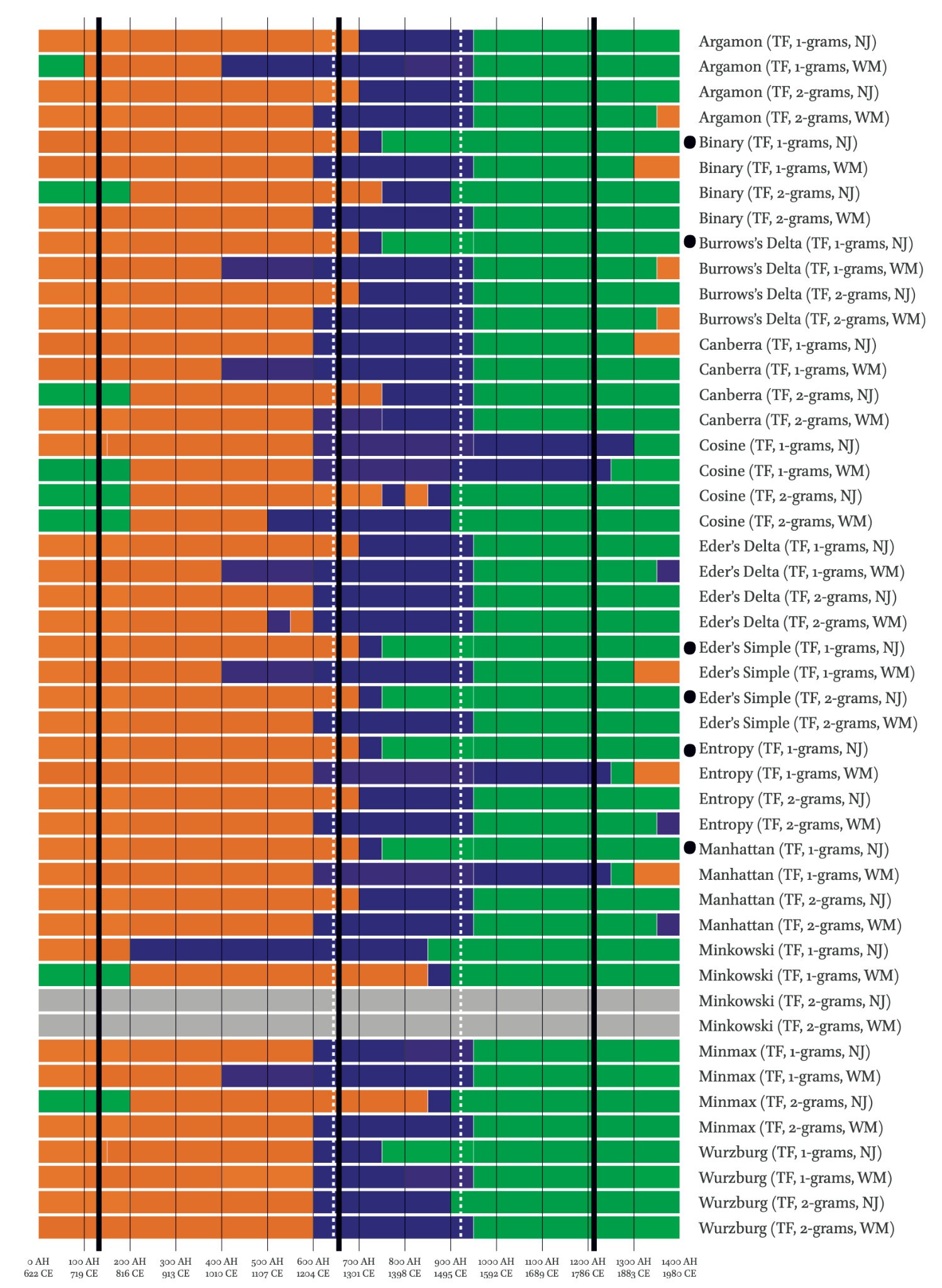
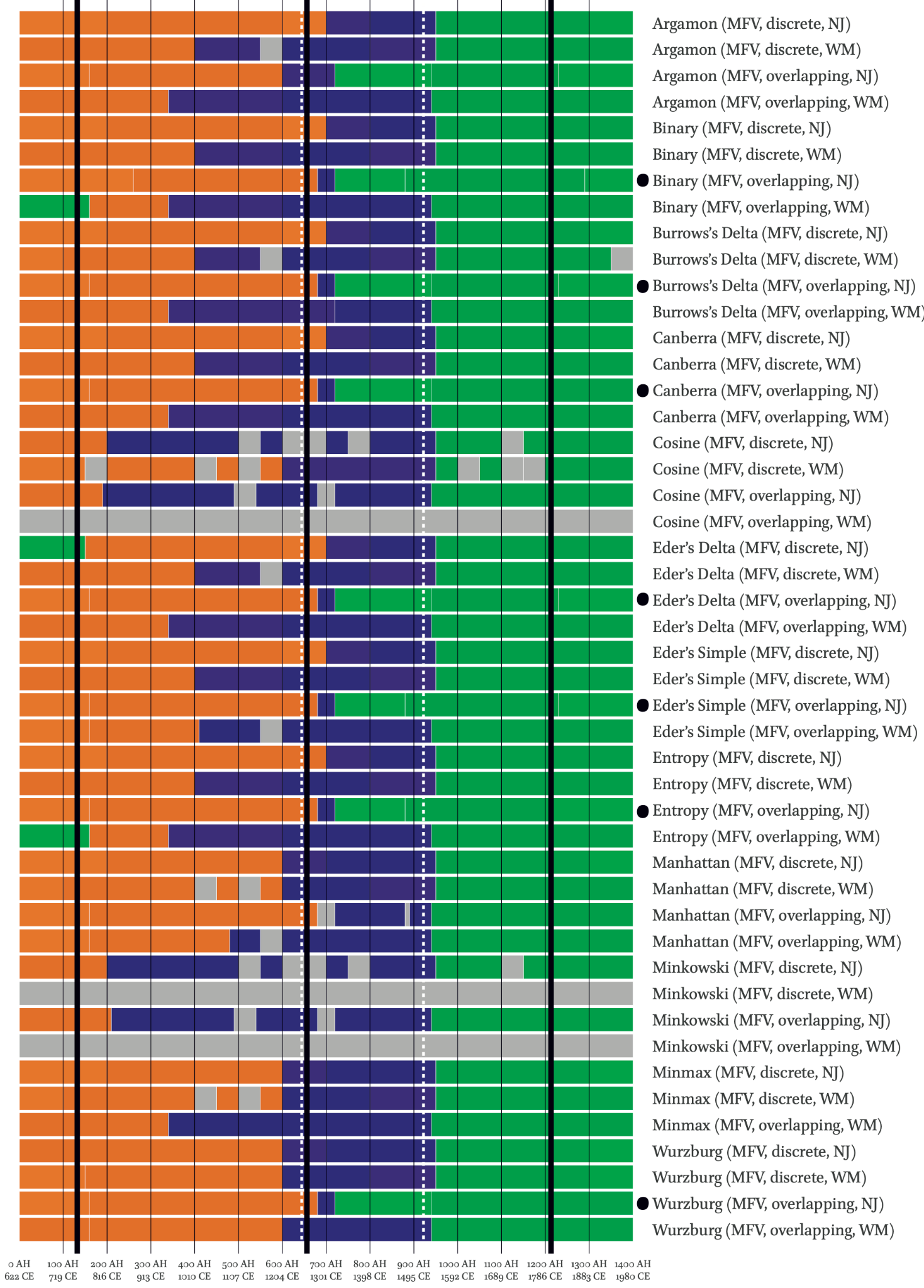
Results of majority of 72,000 dendrograms:
3,000 stylometric samples (1,500 discrete; 1,500 overlapping)
12 distance metrics, 2 major clustering algorithms;
48 tf-idf keyword tests.
Two clocks: themes shift faster than language.
Two witnesses
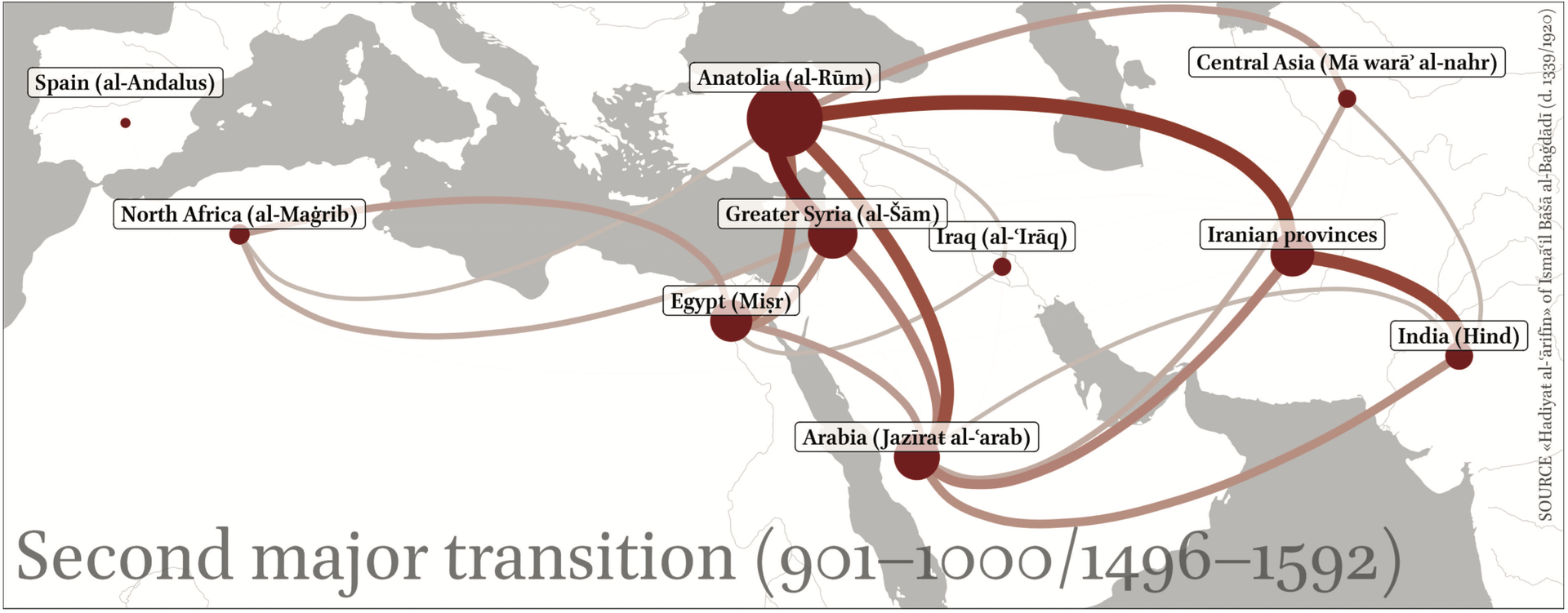
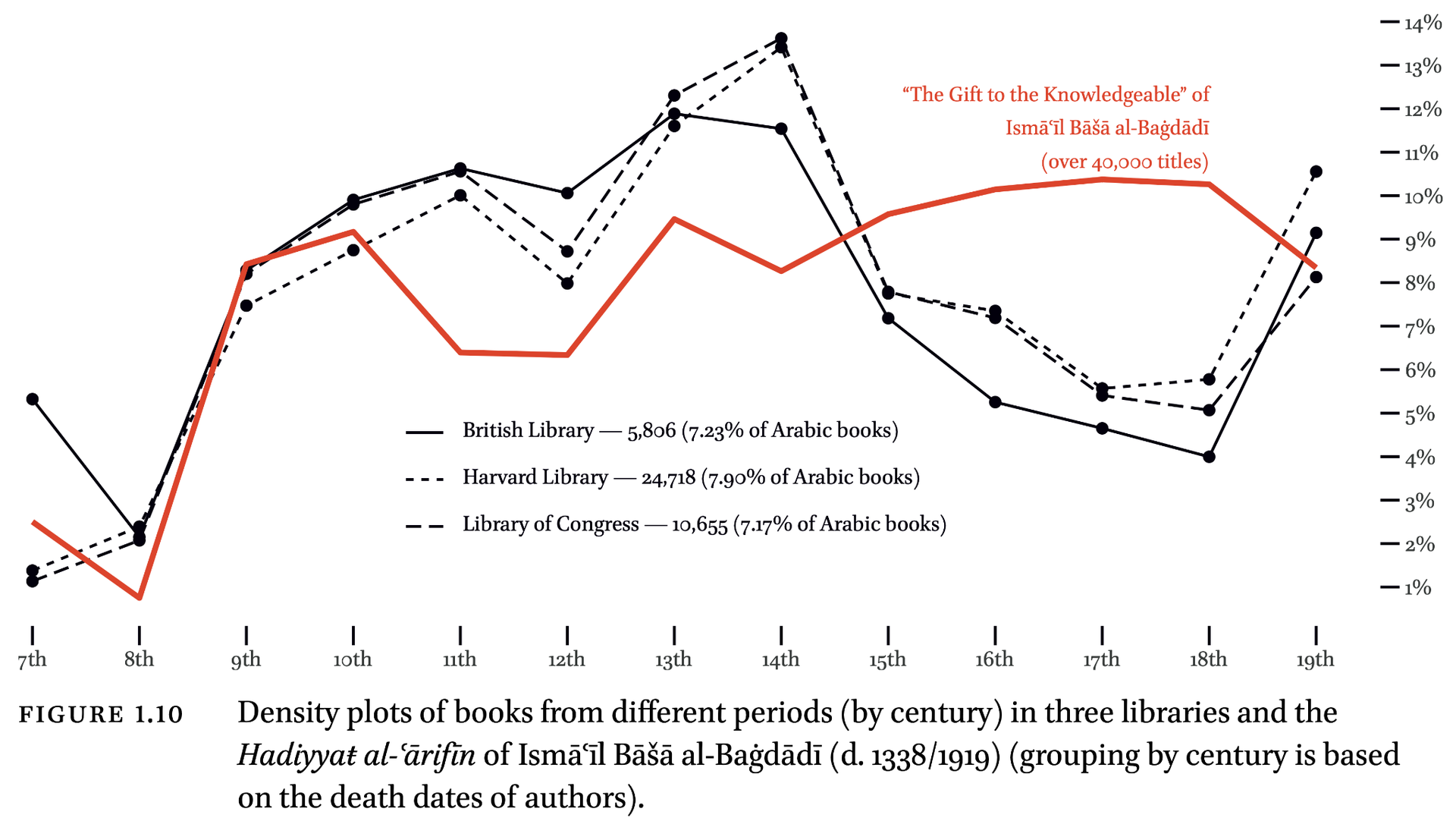
Ismāʿīl Bāšā al-Baġdādī (d. 1338/1919)
Hadiyyat al-ʿārifīn
c. 8,800 authors; 40,000+ titles
A bio-bibliographical model of the tradition
Independent of the corpus experiments
CORPUS of TEXTS
lexical/thematic and stylometric change
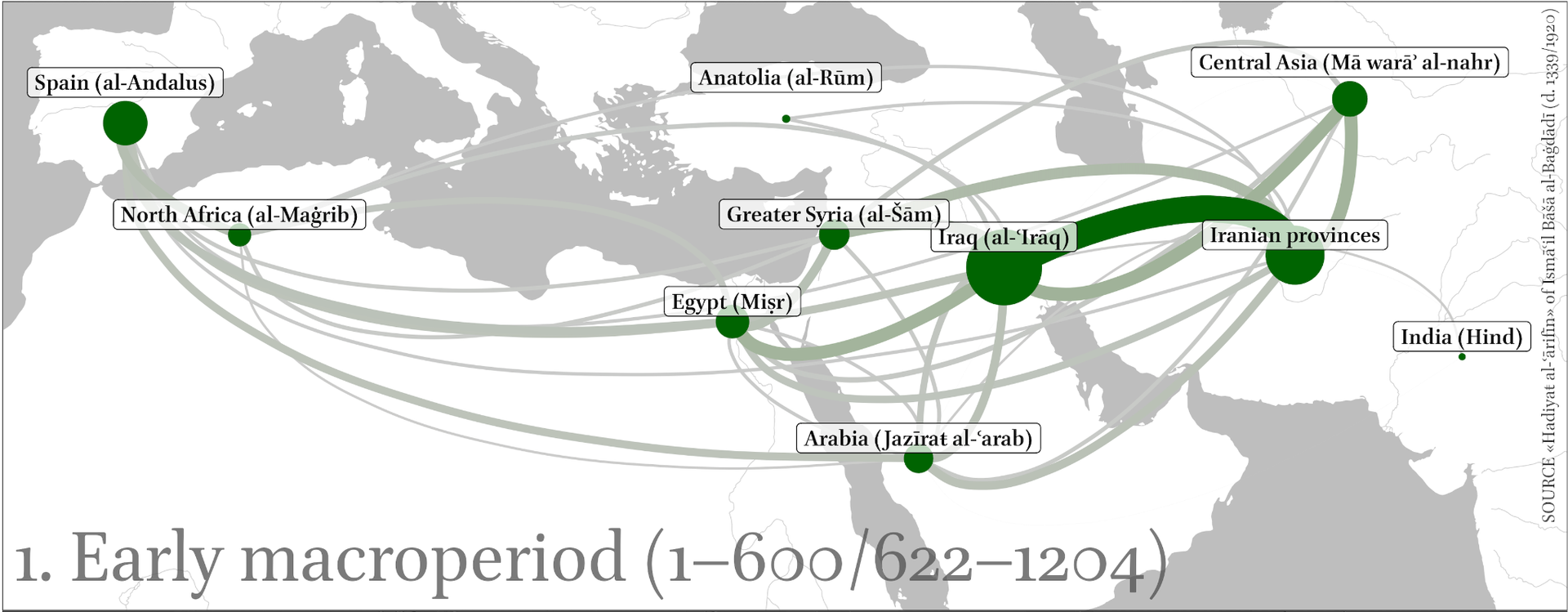
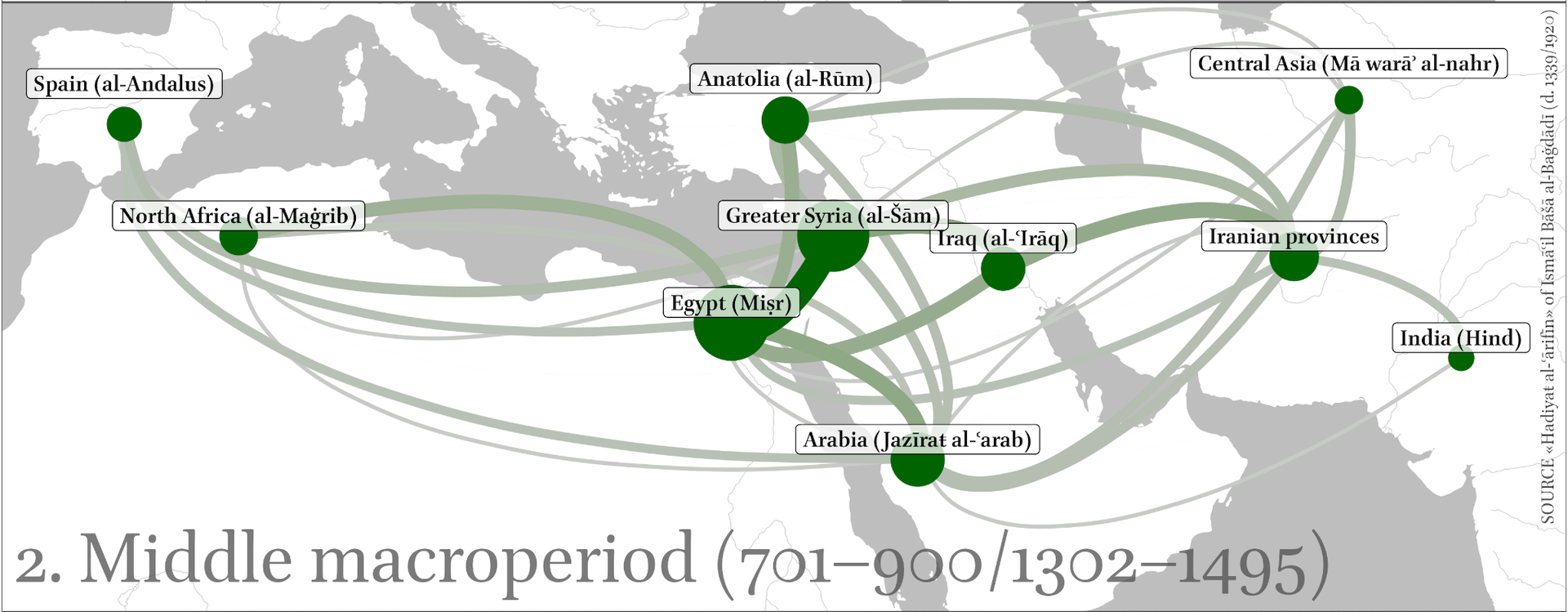
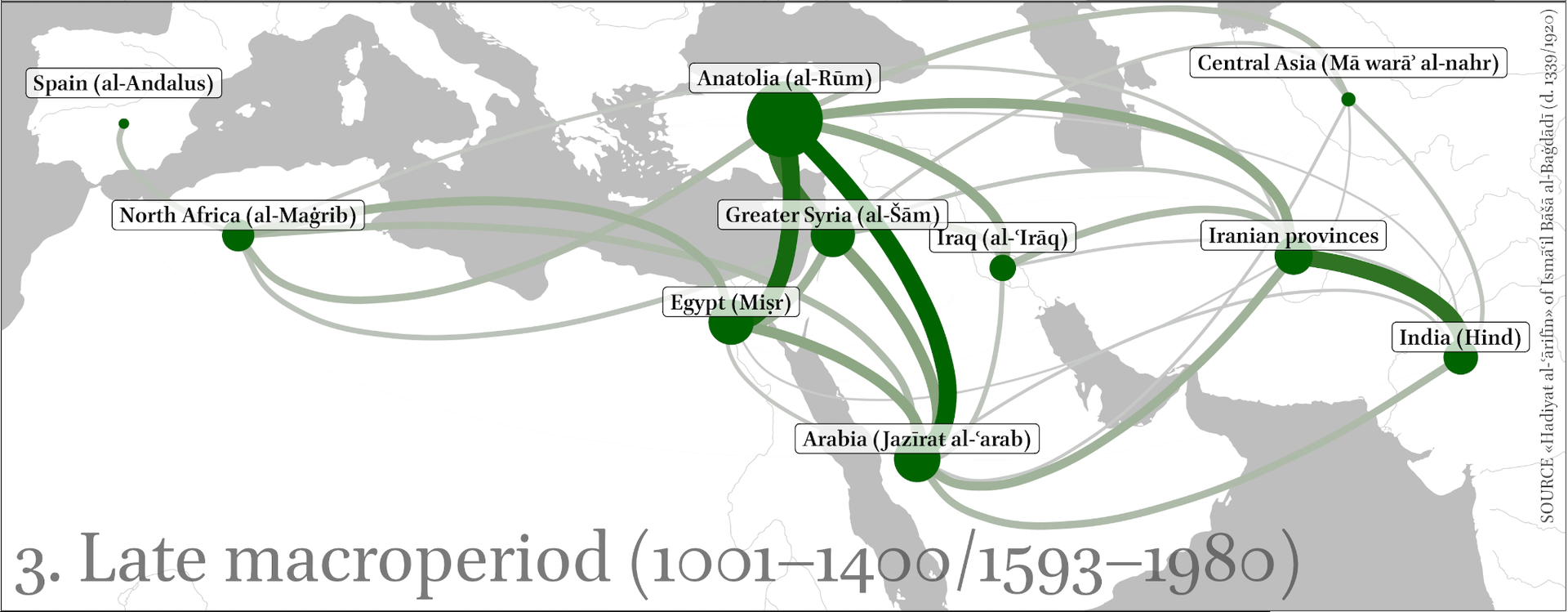
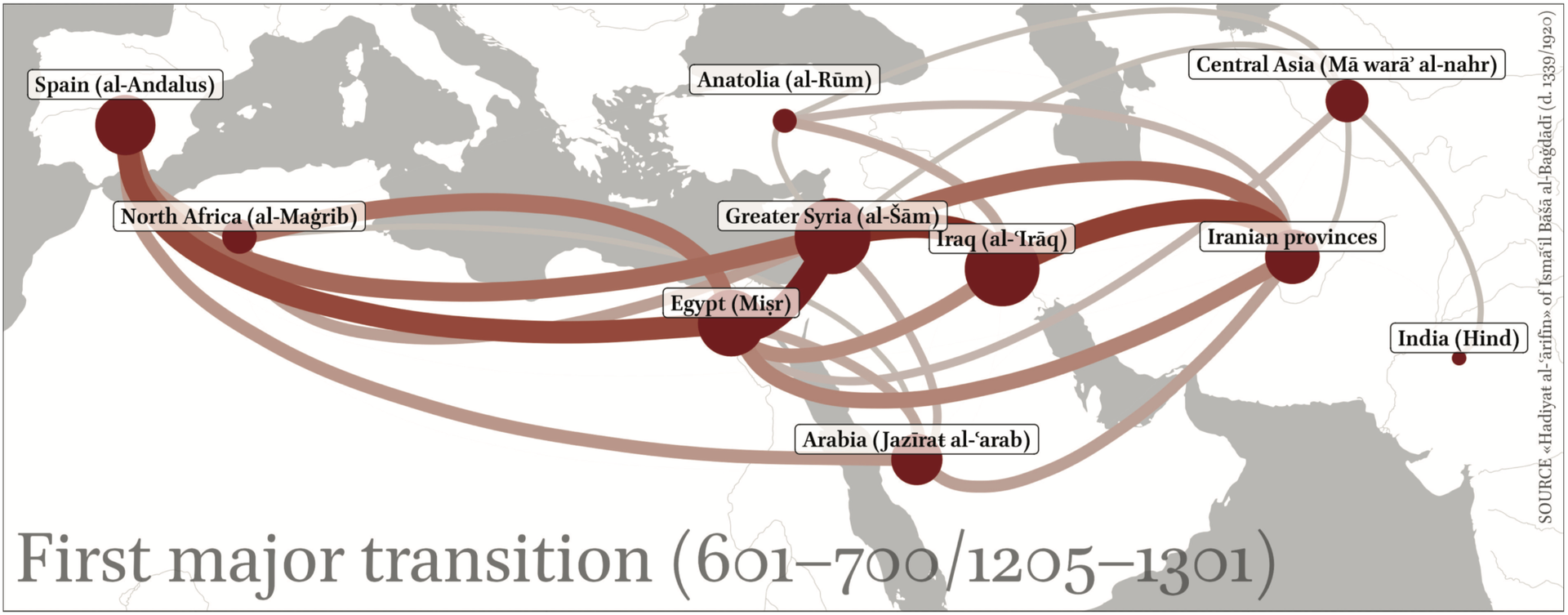
REGISTER of AUTHORS
cultural geography over time
Different biases. Different assumptions.
Similar macro-boundaries.
(with discernable sub-periods inside each)
Each period gets not just a name, but also a map.
The instrument, again
Three case studies later — what can this instrument actually tell us?
Source criticism begins with the instrument.


No text can be read alone.
Every text needs all the others.
No manuscript can be read alone.
Every manuscript needs all the others.

In short, this book asks:
«What does it mean for our field when the entire library becomes a vademecum — something that, quite literally, “goes with me” everywhere?»
Why we should even bother—a question that remains at the heart of every discussion about the digital.
How we might go about harnessing the new digital opportunities within the field.
What we can expect to accomplish:
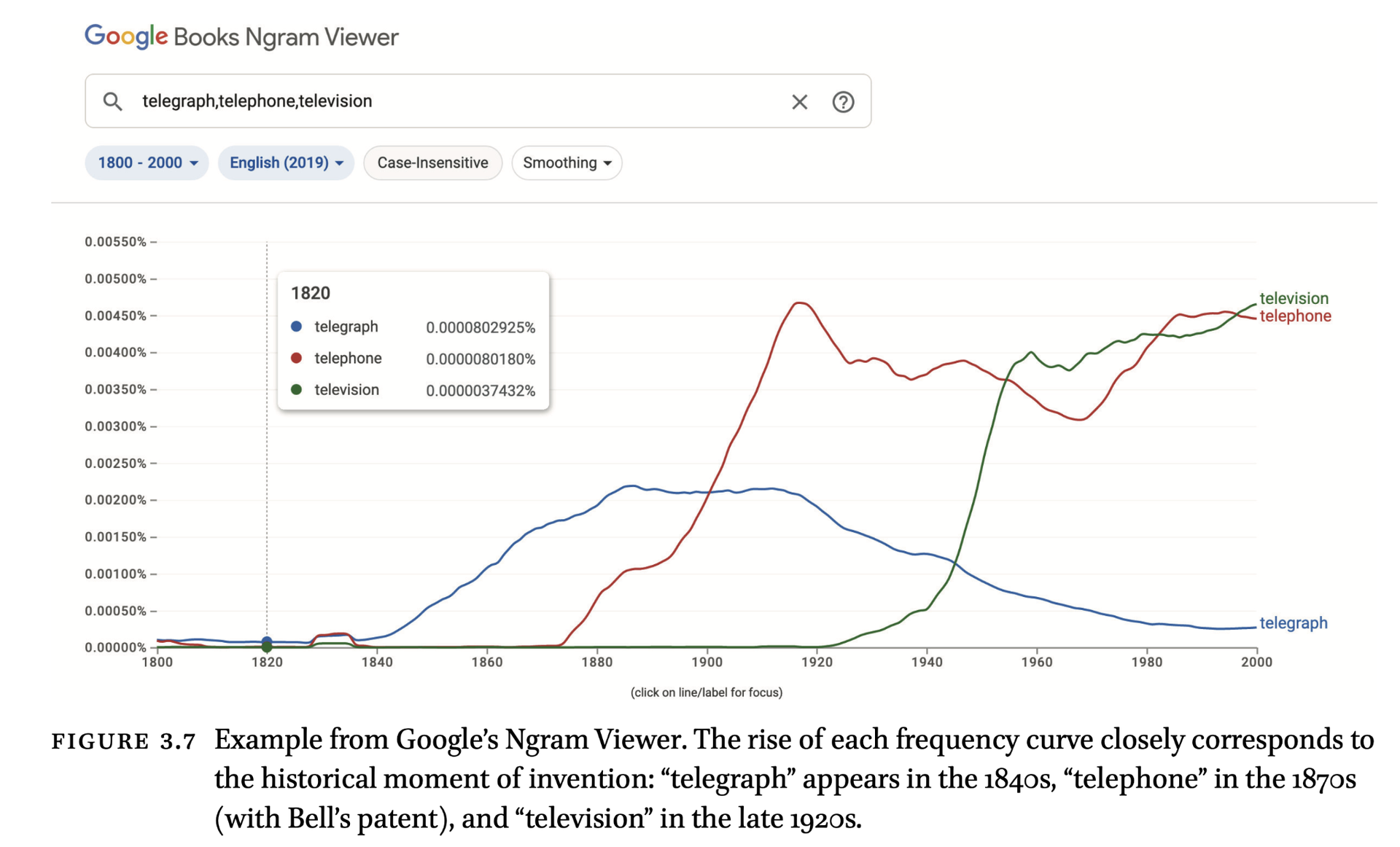
1) trace term usage
2) model textual typology
3) chart linguistic evolution
Altogether, the book proposes a vision of digital humanities relevant to the field of Arabic and Islamic studies. It argues that this venture is not about cheating, but about keeping up with the rest of the world and ensuring that the future of the field remains in our own hands.
| → space PgDn | next slide |
| ← PgUp | previous slide |
| Home / End | first / last |
| F | fullscreen |
| O | overview of all slides |
| S | speaker notes in a second window |
| T | type tester: fonts, weights, size |
| + / − / 0 | text larger / smaller / reset |
| ? | this help |
Print (⌘P) gives one slide per page. Add #12 to the address to open a slide.